Over 1,100 per day. How Škoda manufactures batteries for electric cars
Over 1,100 per day. How Škoda manufactures batteries for electric cars

Škoda Auto has launched its own large-scale production of batteries for electric cars. A new production line manufactures a new type of battery compatible with the existing MEB platform. The batteries will be supplied to Škoda electric cars as well as to models from other brands within the Volkswagen Group. Take a look at how they are made.

27. 2. 2026 eMobility

The Czech car manufacturer is becoming the Group’s largest European producer of BEV batteries. Once production reaches full capacity, the new plant will supply 1,122 batteries per day. This corresponds to the daily processing of more than 9,000 battery stacks, requiring a total of 234,000 battery cells. 

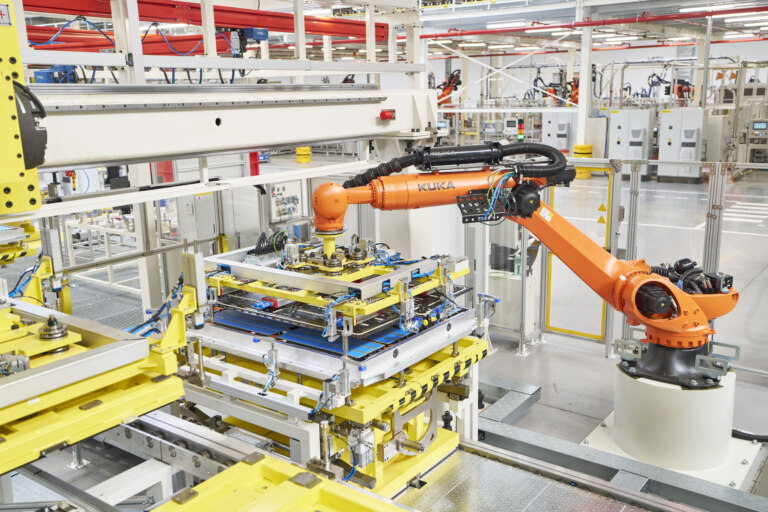
Maximum automation  

To ensure smooth production, the new factory integrates a battery-cell warehouse with stock levels sufficient for approximately one week of production. Two key pillars of local production are already clearly visible in the warehouse: a high degree of automation and a strong emphasis on safety. 

Battery cells arrive from an overseas supplier in containers which, following inspection, are transferred via a loading line into the warehouse fully automatically. The warehouse itself requires only minimal human operation. From there, the cells are supplied to the production lines via a series of fully automated conveyor systems. 
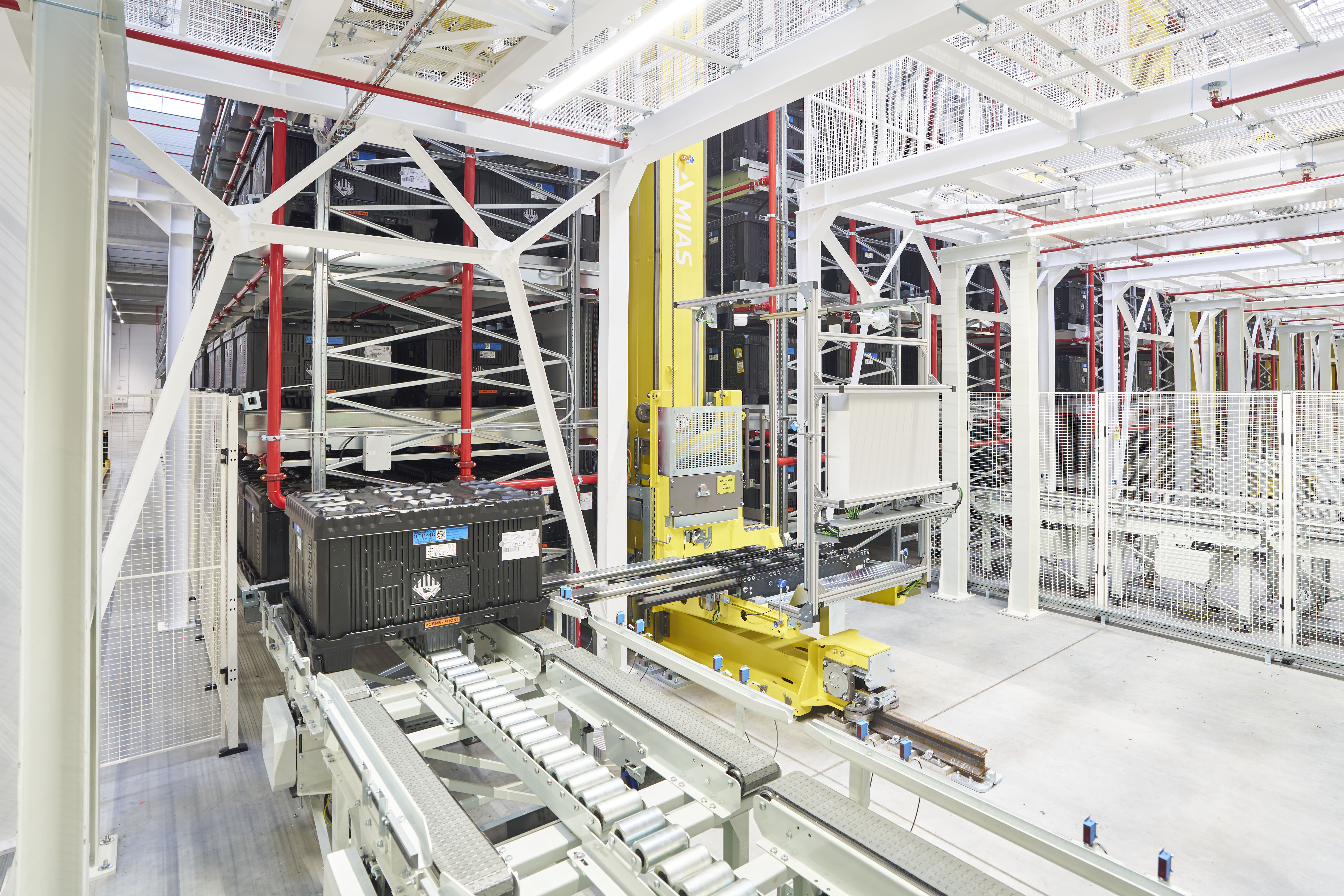
DSF9728_8c72e420 The article warehouse is fully automated, conveyors deliver articles to production without human assistance
Battery production in numbers 

● The warehouse can accommodate up to 5,000 returnable containers, equivalent to 1.2 million cells 
● A total of four production lines for manufacturing battery stacks from individual cells 
● One line produces four stacks every 30 seconds 
● The lines process 234,000 cells and produce 9,000 stacks per day 
● A total of 600 employees are involved in production (three-shift operation, five days a week) 
● During stack production, robots perform more than 936,000 welds per day 
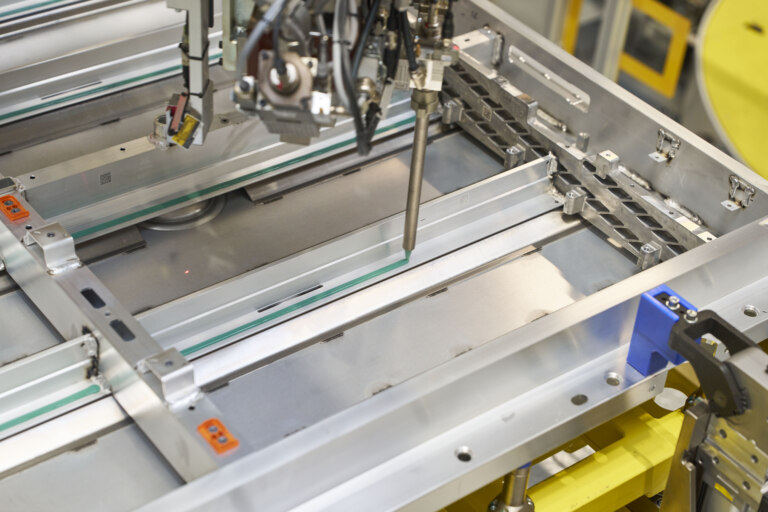
● Dimensional tolerances of battery stacks are measured in hundredths of a millimetre 
● Quality control and fire safety are monitored by 270 cameras 
● The total length of conveyors from the warehouse to stack installation in the battery is 2,500 metres 

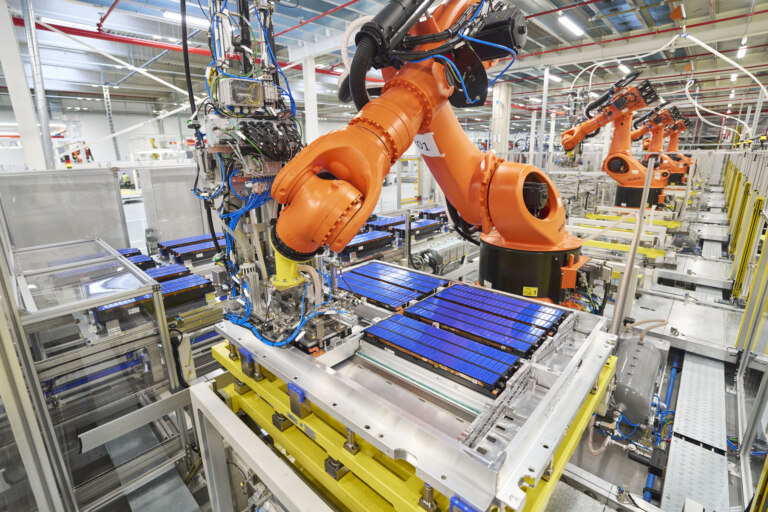
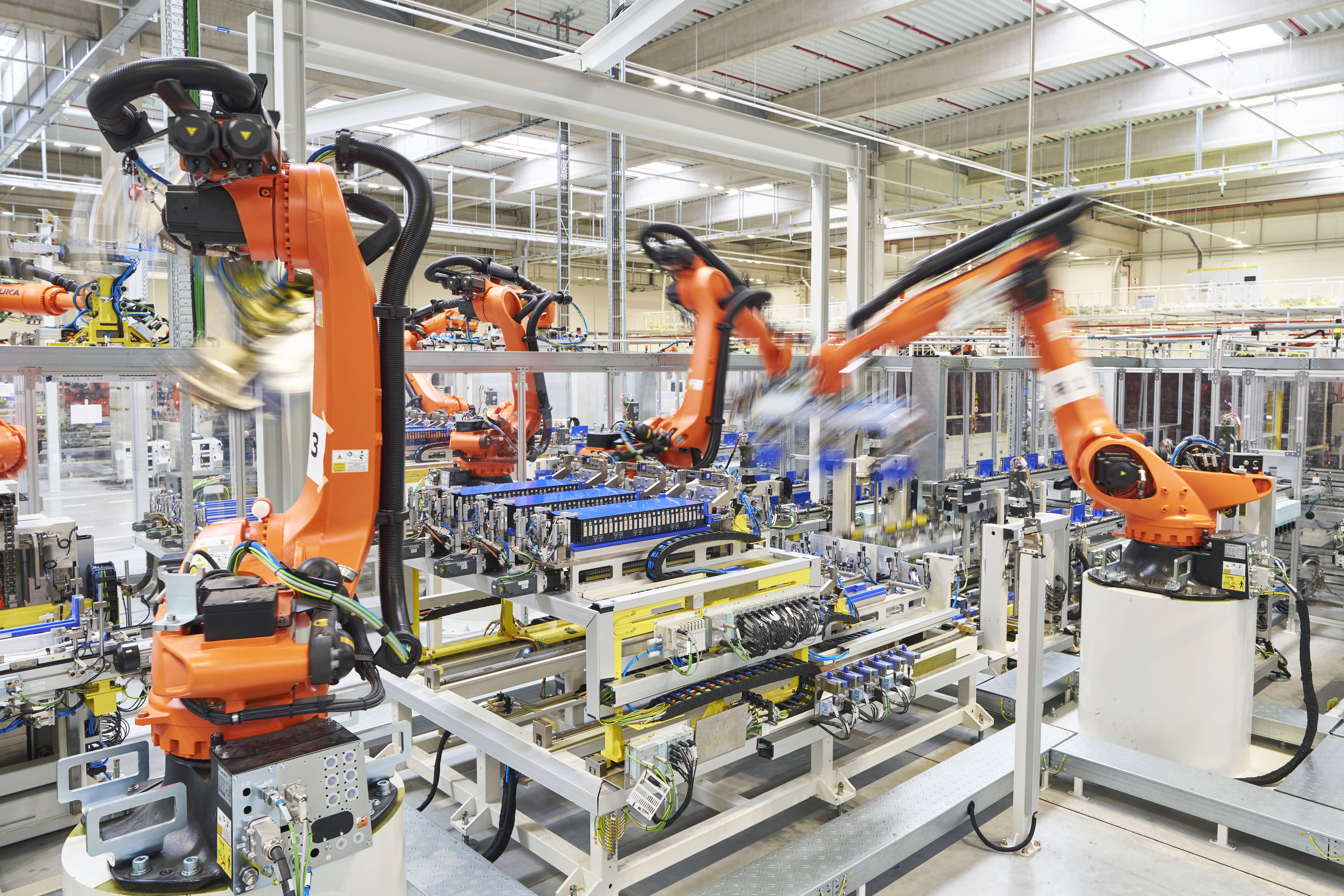
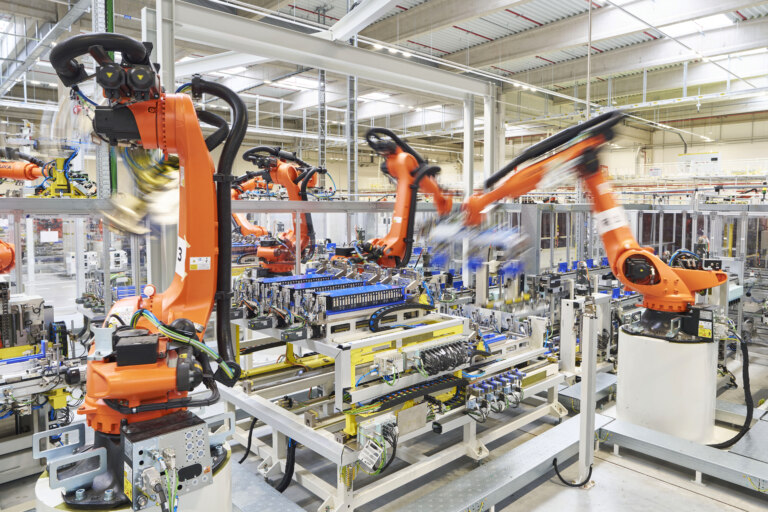
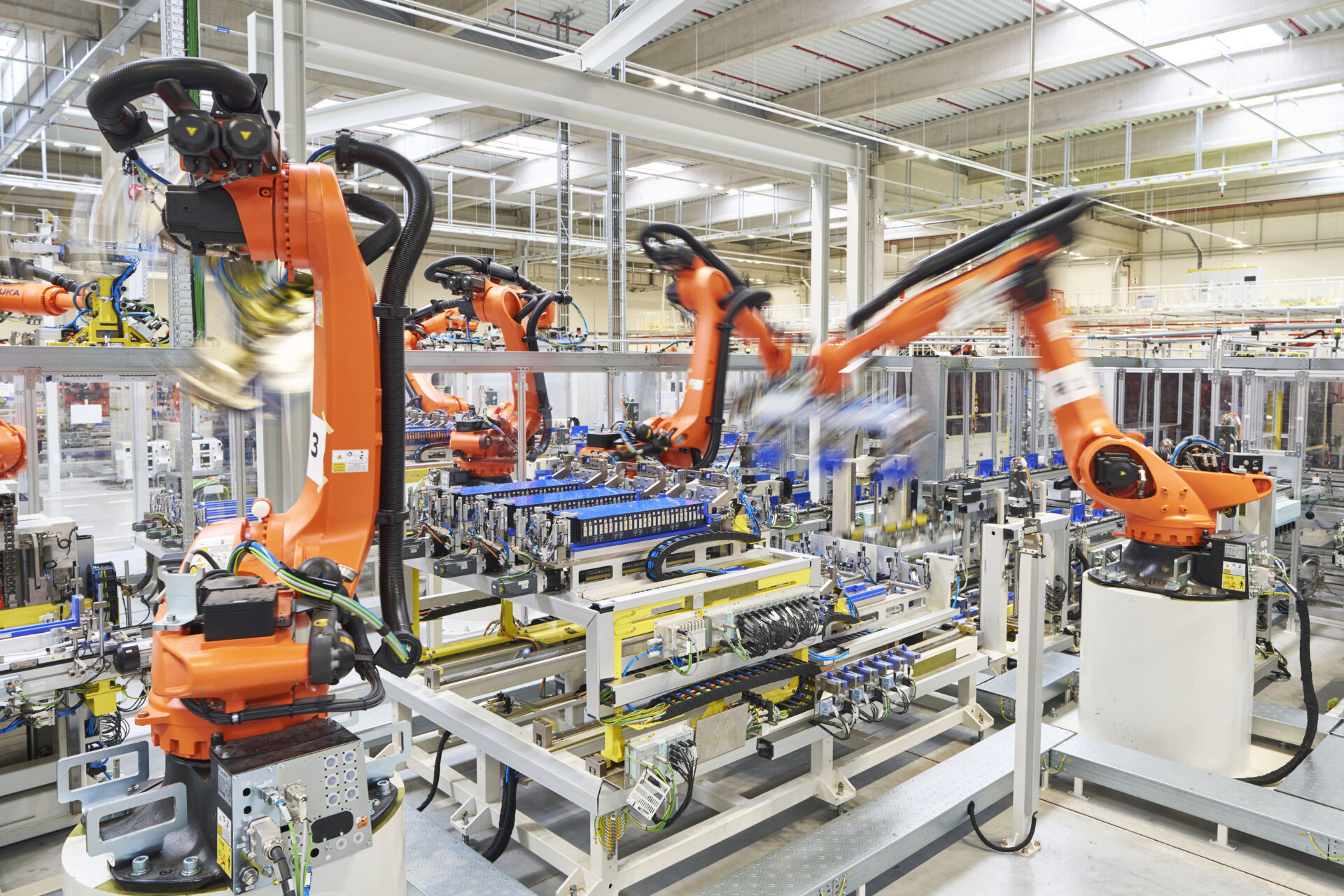
The production process itself is also highly automated. “Robots are responsible for around 85 per cent of all operations here. When Škoda Auto started battery production approximately six years ago [Editor´s note: at that time for plug-in hybrid batteries] the situation was almost the opposite,” says Jan Houser, Battery Production Coordinator in the new hall. A significant proportion of employees are, for example, production technicianssupervising functionality and servicing of all machinery, as well as specialists involved in testing and quality control. 

Smart solutions  

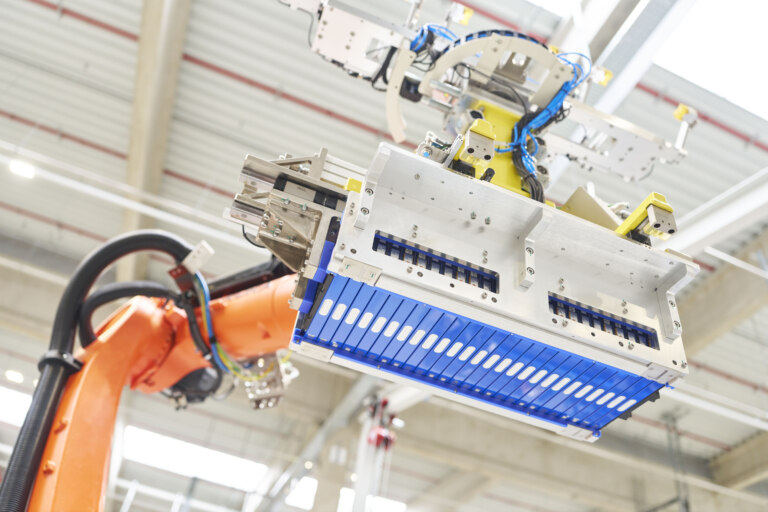
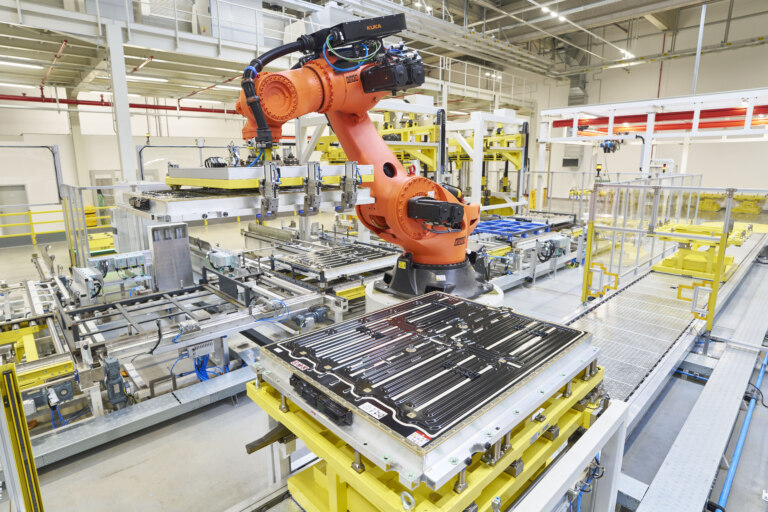
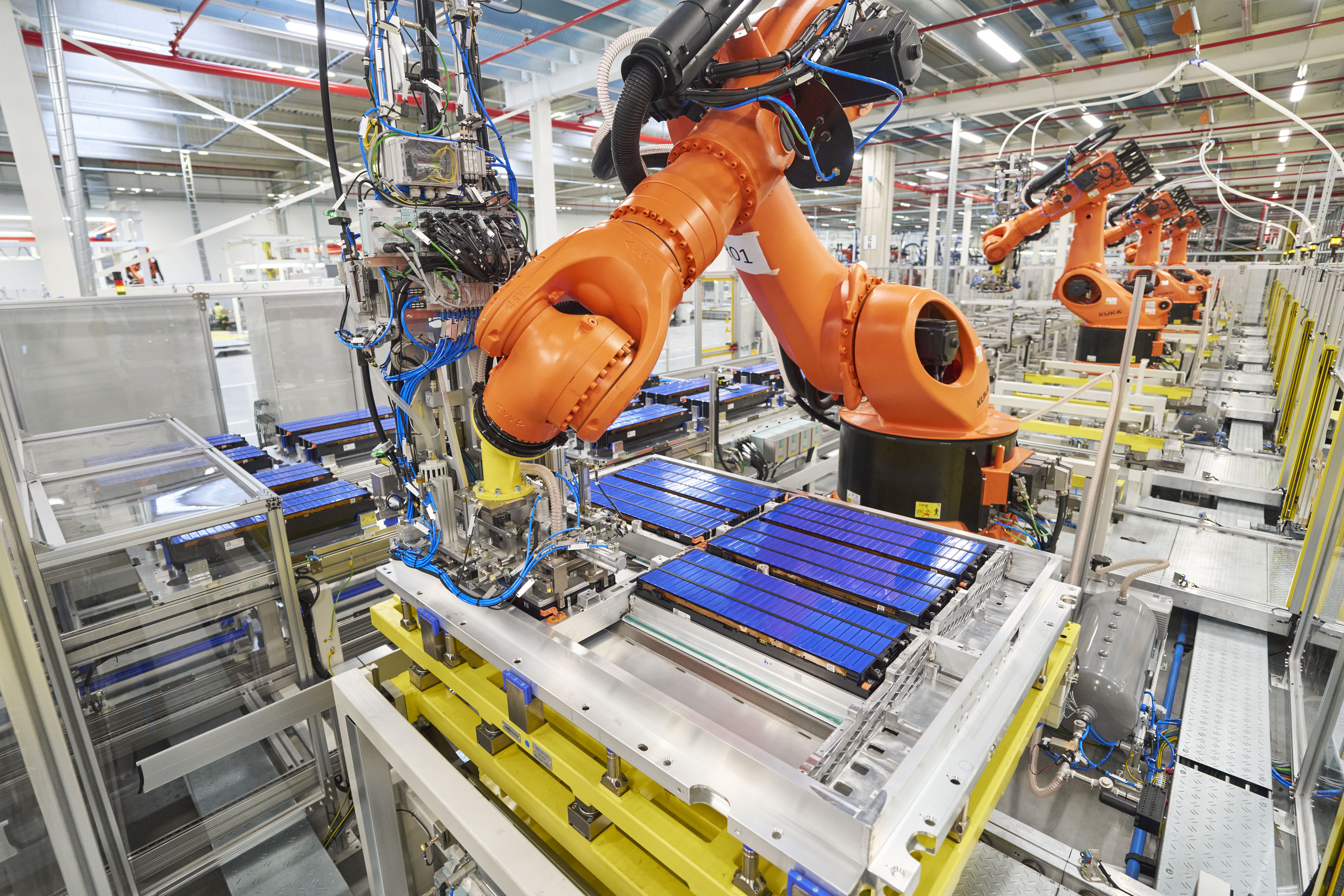
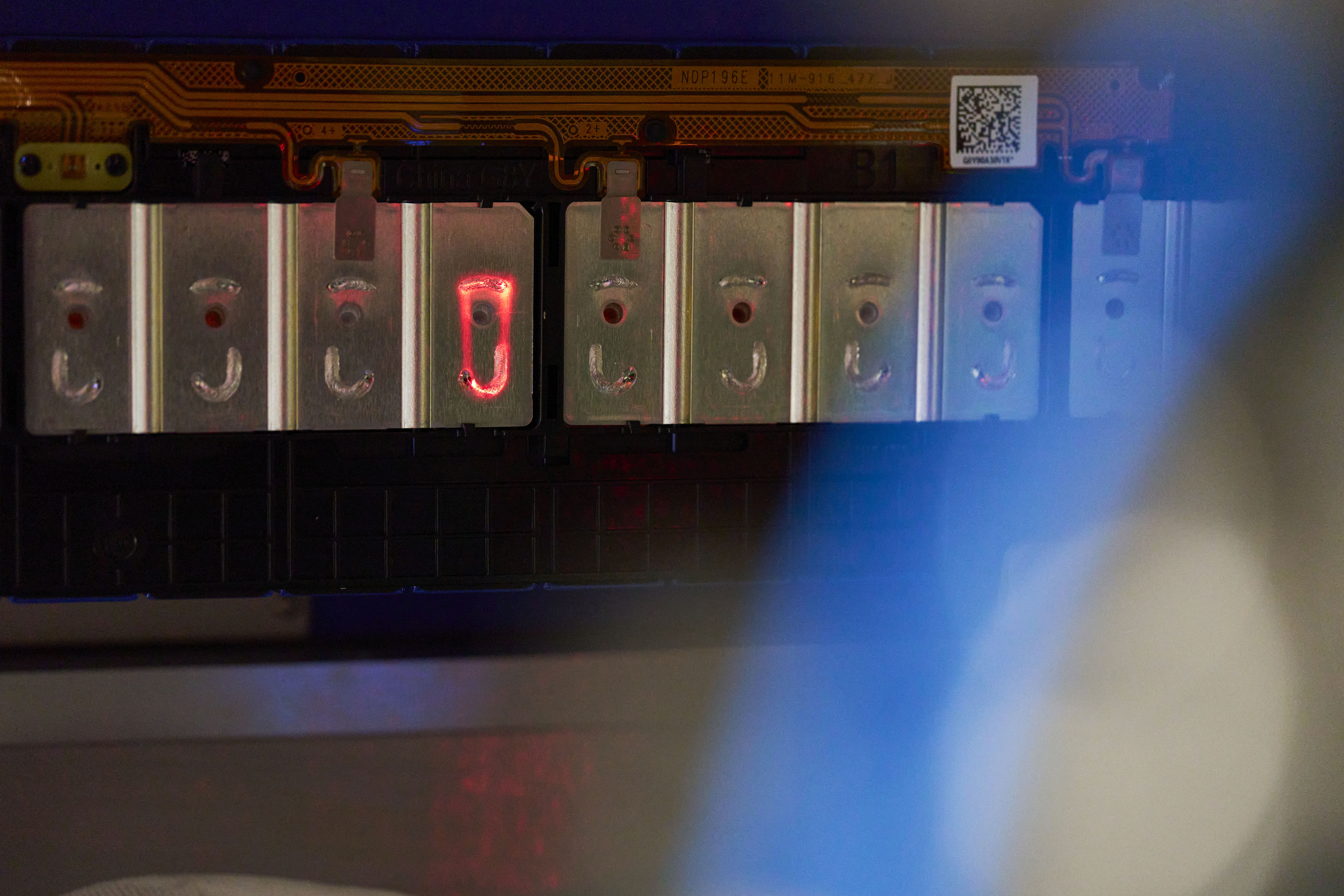
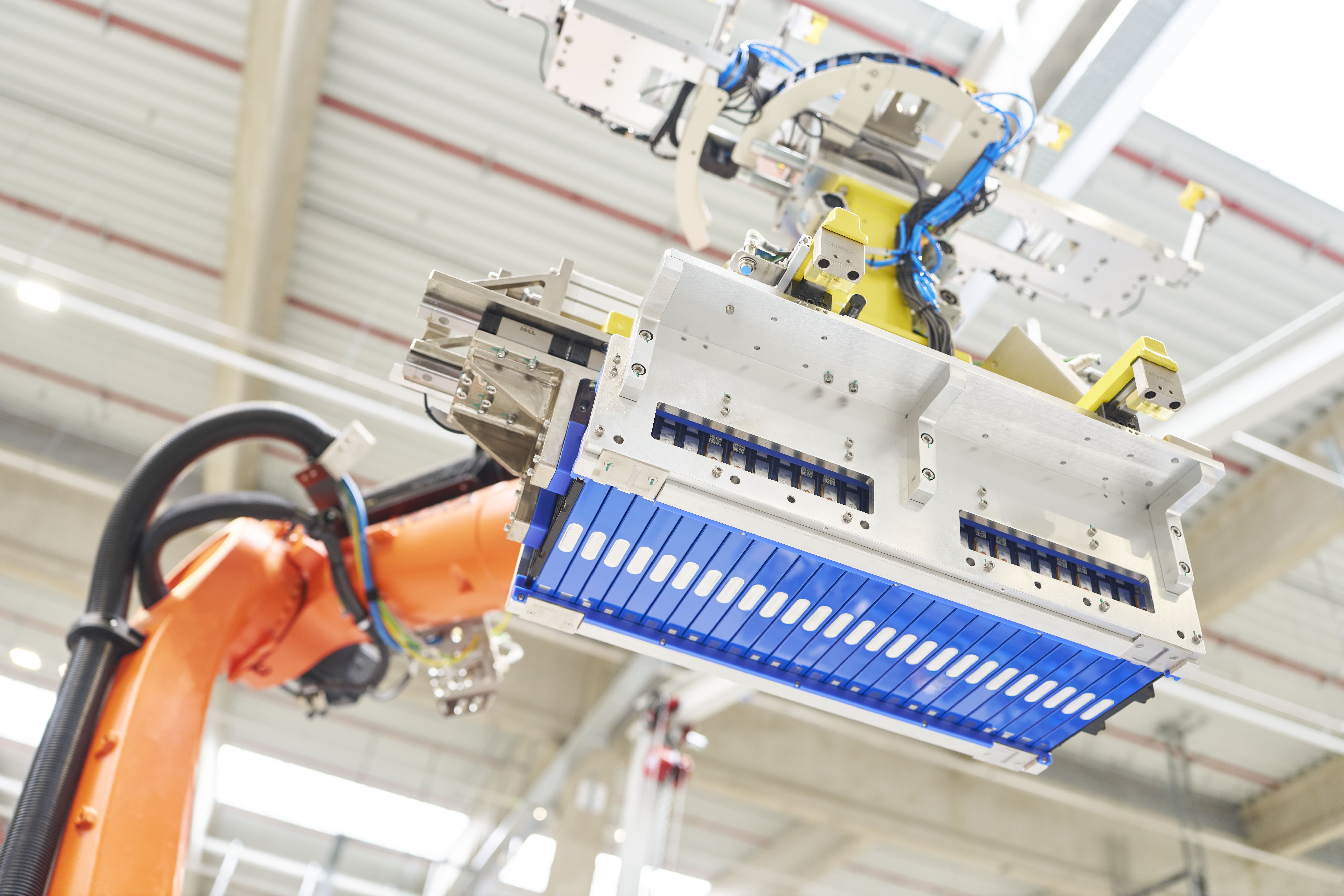
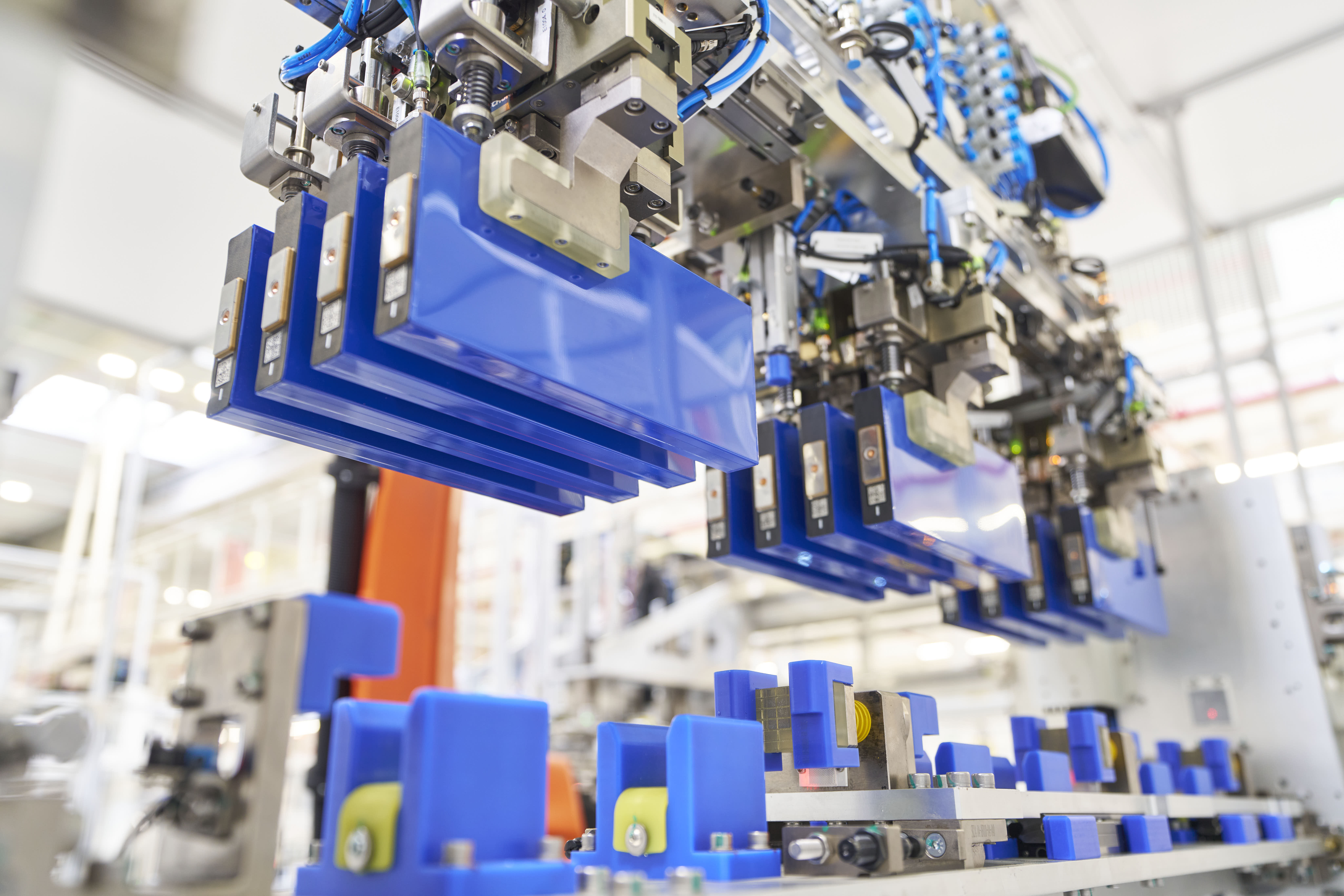
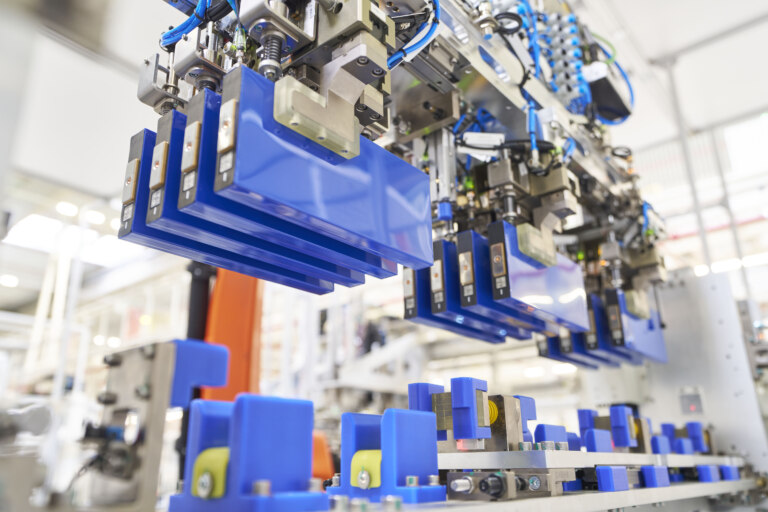
The key innovation is that Škoda now processes the individual cells itself to manufacture battery modules, known as stacks. These are no longer enclosed modules as used in the previous battery generation, but rather interconnected assemblies of cells, which subsequently facilitate integration into the battery pack. Robots stack and bond the cells into assemblies using a special double-sided adhesive tape and then weld side rails to reinforce and interconnect the assembly. “We regularly carry out sample weld inspections and verify in the laboratory that quality meets the required standards,” says Jan Houser. 

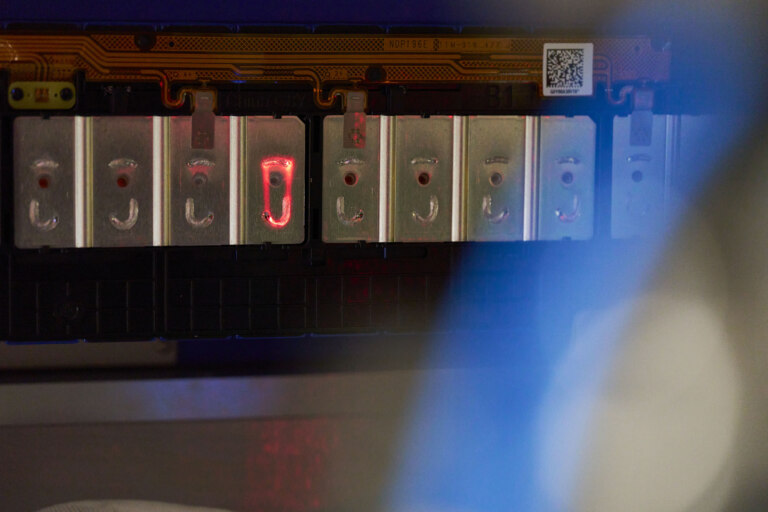
The completed assemblies undergo intensive inspection, both in terms of precise dimensions and electrical parameters. “All measured parameters are recorded and stored and can subsequently be traced back to each individual battery produced,” Jan Houser explains. 

MEB+ battery versus the original MEB  

The batteries produced by Škoda Auto in the new hall in Mladá Boleslav differ significantly from the existing ones. While the battery frame for vehicle installation has remained unchanged, the internal architecture and technology are entirely new. Instead of NMC (nickel-manganese-cobalt), LFP (lithium-iron-phosphate) chemistry is used. This is more environmentally friendly, less costly to manufacture, and LFP batteries are also more thermally stable than NMC. Production follows the cell-to-pack method, whereby the complete battery is assembled virtually directly from individual cells. 

Battery cooling has also been redesigned. This time, the cooling system is integrated into the upper cover rather than the lower section, increasing cooling efficiency. LFP batteries will be gradually introduced into Škoda vehicles as well as models from other Volkswagen Group brands, including the Elroq and Enyaq electric vehicles. 

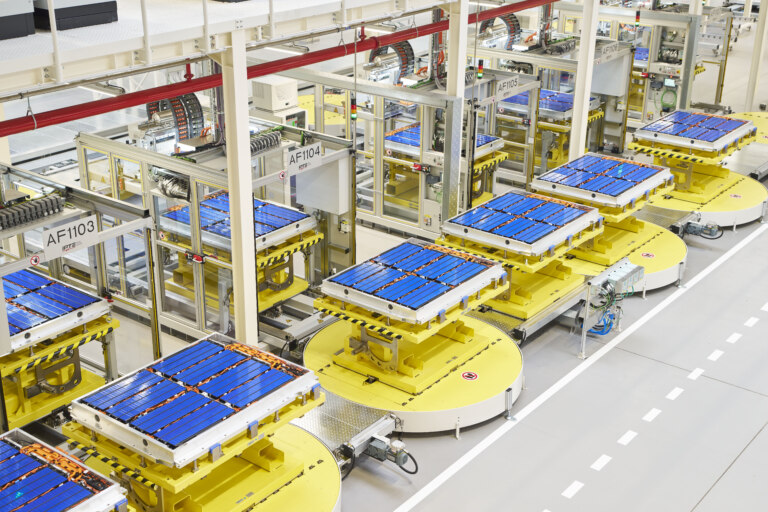
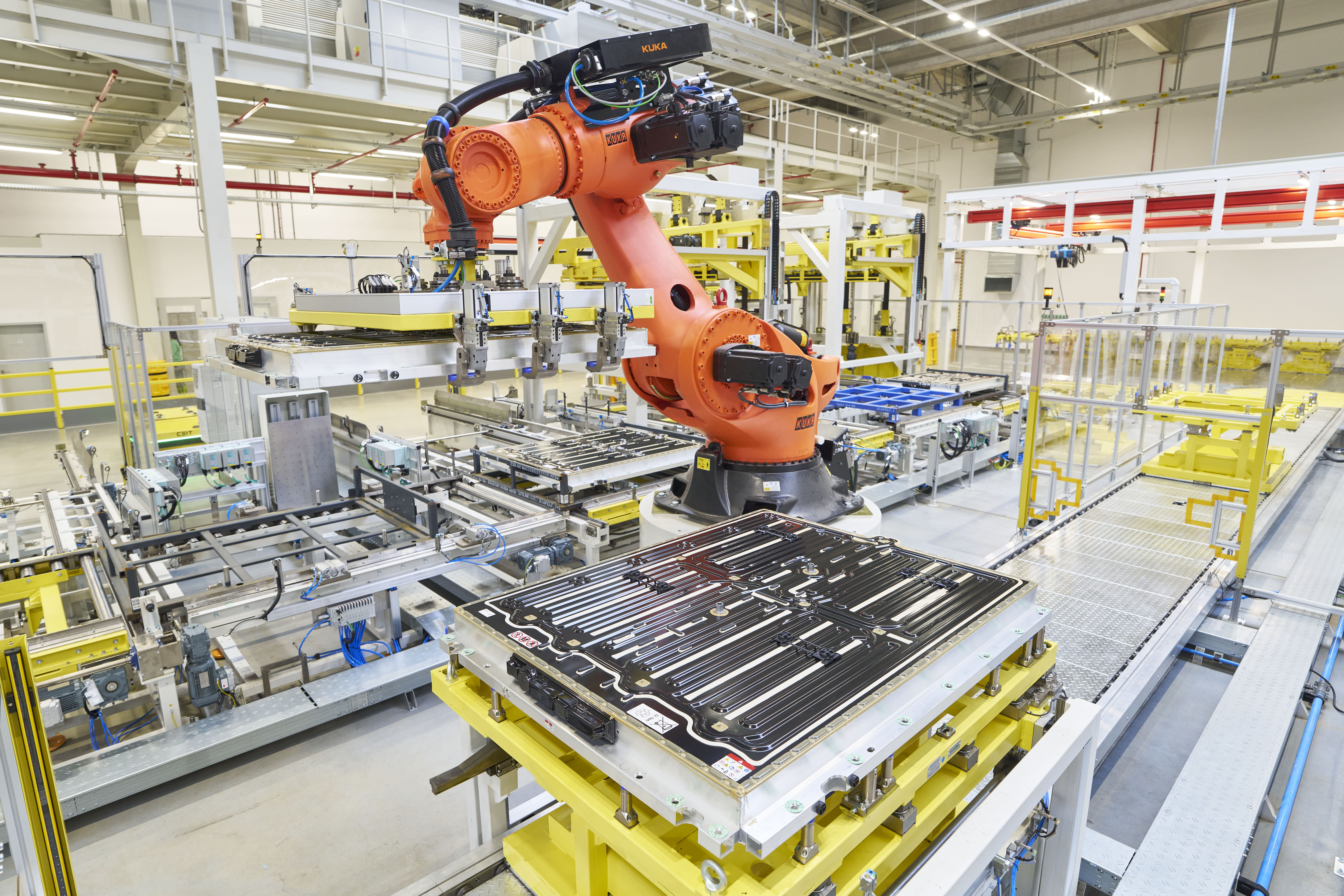
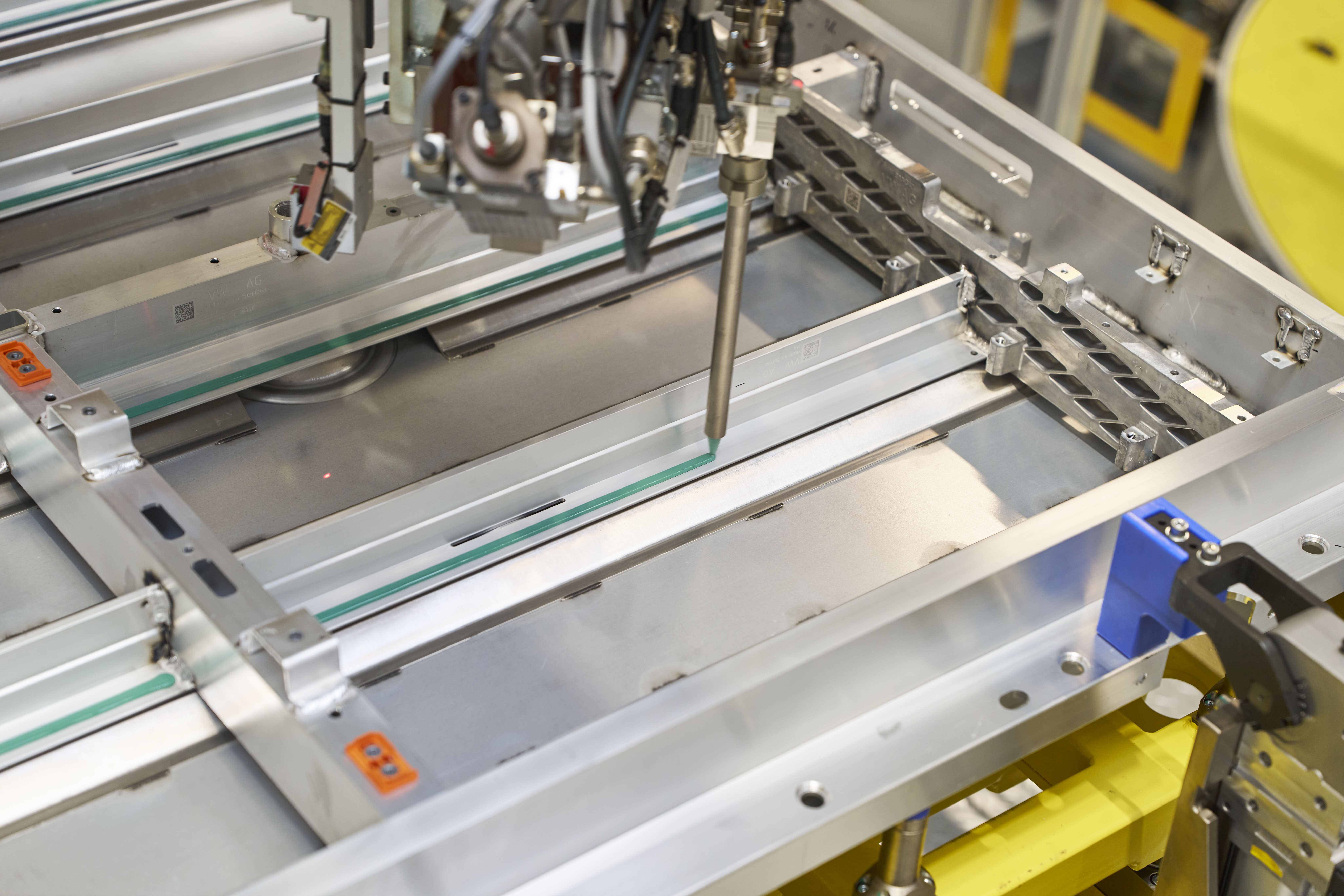
Once completed, the stacks are transferred to the battery assembly line, where the process begins with joining the frame and the lower cover. Perfect sealing is ensured by a special sealant which also repels water, while a solid mechanical connection is achieved using dozens of screws. The frame does not feature pre-drilled holes; instead, the screw head spins the screw at high speed, melting the aluminium wall of the frame upon contact and cutting the screw directly into the material. Škoda has used this technique previously and rates it very highly. “It significantly simplifies assembly and is a reliable solution,” says Houser. 

Completion with a time limit  

Robots then bond the cell assemblies into the frame with the lower cover. After application of a two-component adhesive, a time window of approximately 25 minutes begins, during which the subsequent steps must be completed. Electrical interconnection of the battery then follows, with high-voltage contacts once again connected by robots. 

The battery subsequently receives the remaining wiring and control units, undergoes demanding in-line testing, and proceeds to final closure. The upper cover is installed by robots using the same method as the lower one. In addition to insulating foil, a special thermally conductive compound is applied between the cells and the cover with integrated cooling channels to support heat dissipation. Before final tightening of the cover, the battery travels along the line under a 500-kilogram weight, ensuring even distribution of the thermally conductive compound beneath the cover. 

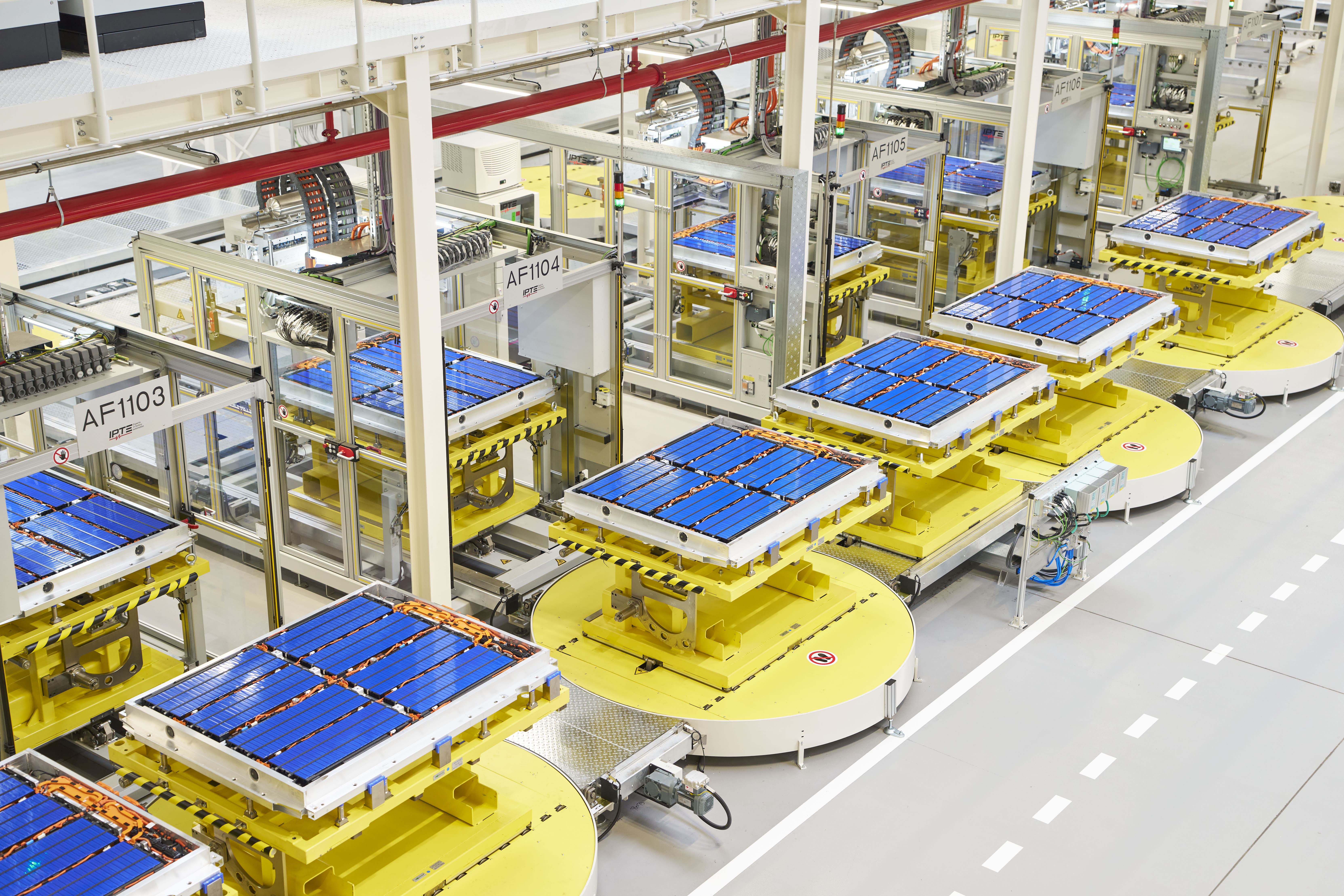
Final inspection follows, including electrical tests as well as pressure testing. Once the battery is fitted with all required labels, it is transferred to the warehouse on special steel pallets developed by Škoda Auto’s logisticsdepartment. An autonomous transport vehicle can carry four pallets at once, with the complete load exceeding two tonnes, as each finished battery weighs approximately 450 kilograms. 

Throughout production and storage, batteries are under continuous monitoring. If the systems detect any risk of rising battery temperature, qualified specialists are immediately alerted to analyse the battery. Should there be any risk of fire, the factory is equipped with fire-protection containers into which batteries can be placed and flooded with water. “With this battery technology, the risk of fire is minimal, and any outbreak is relatively slow, so we have sufficient time to safely remove the battery from the line and place it in a container,” Jan Houser explains.