Make your tyres last. Pay attention to storage
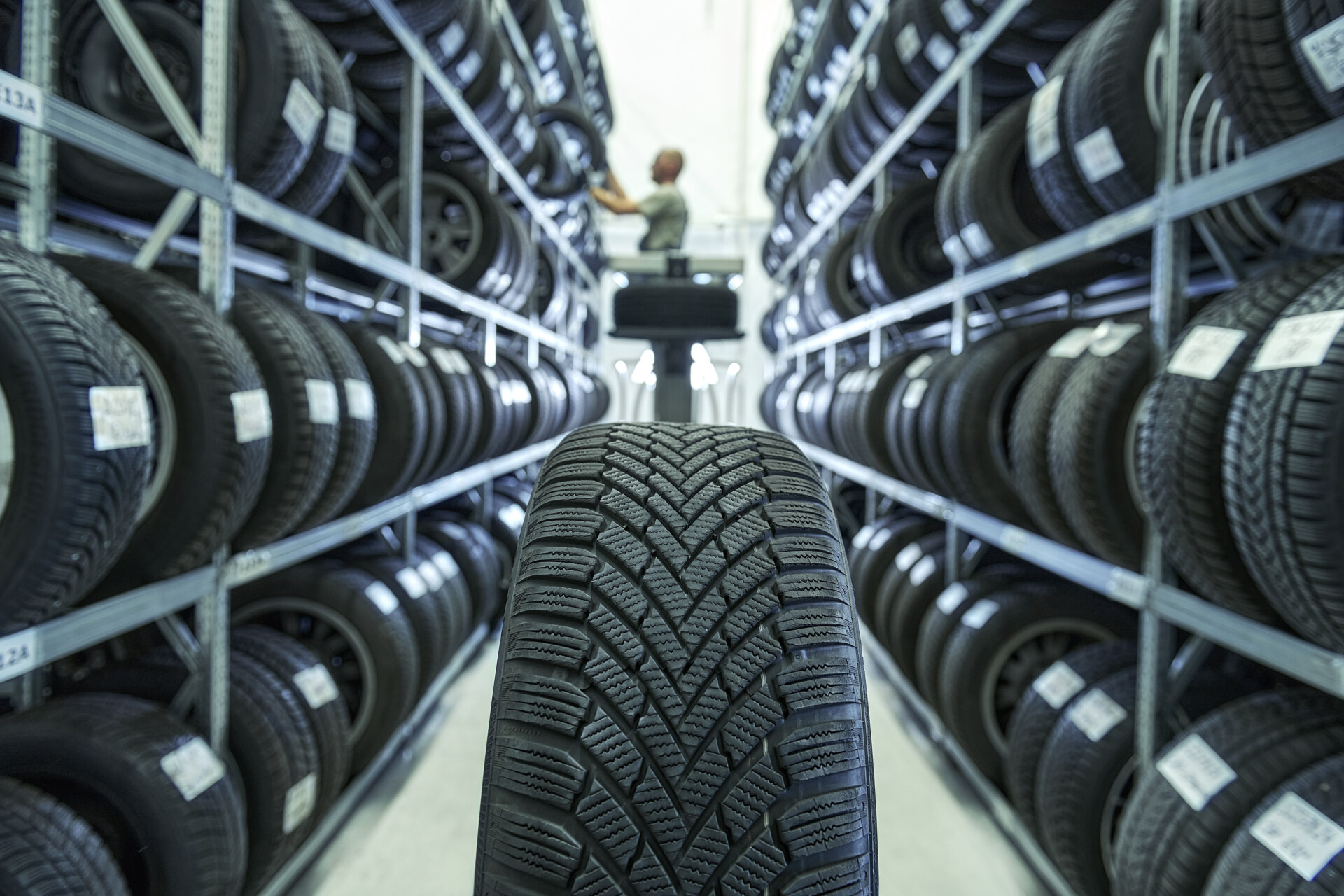
Tyres are a key component of any car and its only point of contact with the road. For that reason, they require proper care even when they are resting in the garage. How to store them properly, and when is it necessary to replace them with new ones?
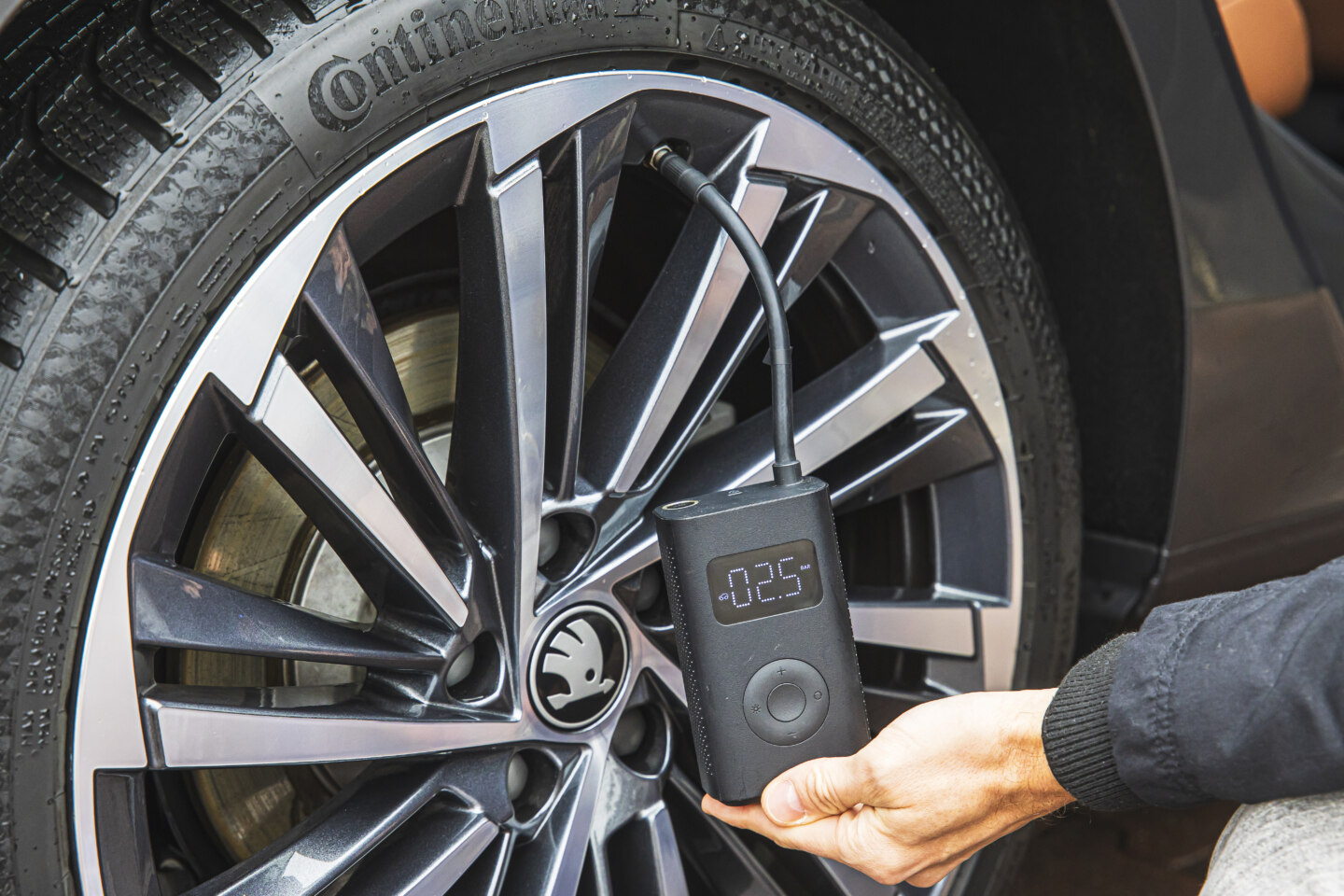
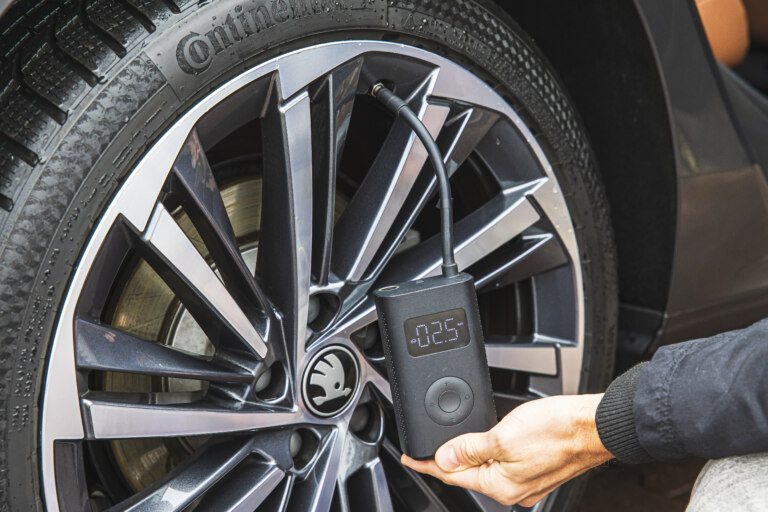
2. 4. 2026 LifestyleA tyre’s service life is influenced by a number of factors. One of the most important is the inflation pressure; excessively dynamic driving is also detrimental to tyre longevity. Drivers should also pay attention to the condition of the vehicle’s suspension components, as their degradation may lead to uneven tyre wear.
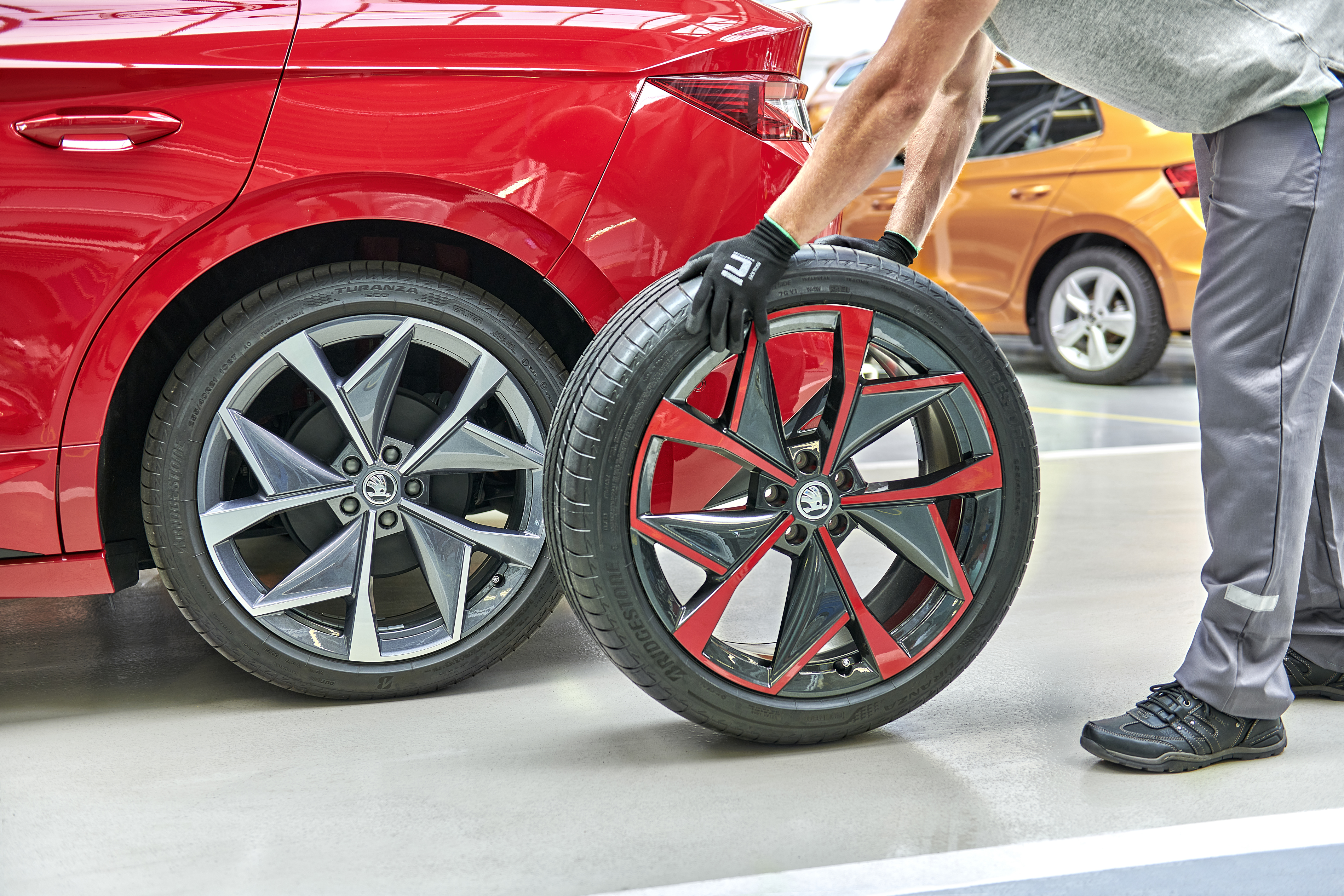
However, tyres also deserve attention during regular seasonal tyre changes, a routine that many drivers in a number of countries are accustomed to. Seasonal tyre replacement provides an opportunity to easily identify any potential issues with the tyres. The method of storage is also important for maintaining the tyres’ service life.
Storage is not rocket science
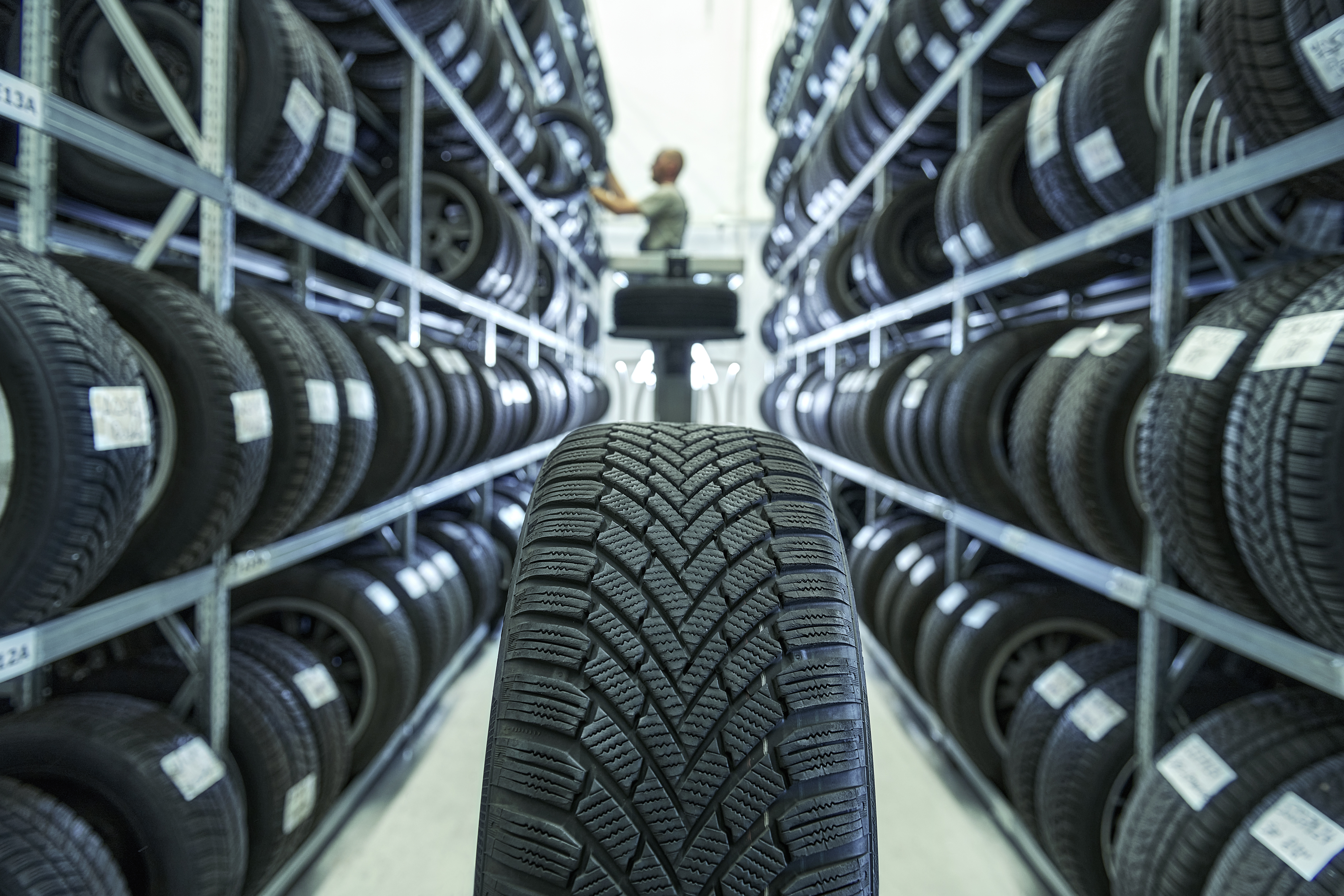
Improper storage of a set that is not currently fitted to the vehicle may have a negative impact on both its lifespan and operational characteristics. However, it is certainly not necessary to store tyres at a tyre service facility; even at home it is sufficient to follow a few simple principles. “In general, Škoda does not recommend using tyres older than six years,” says Jiří Pazděrný, a tyre specialist at Škoda Auto.
Before storing tyres, it is advisable to wash them with water and remove stones and other debris. Afterwards, allow them to dry thoroughly, as moisture is not good for them. For this reason, they should not be stored in airtight covers, because moisture may condense inside and cannot escape. Each tyre should also be checked before storage to ensure that it is not damaged and that it has sufficient tread depth.
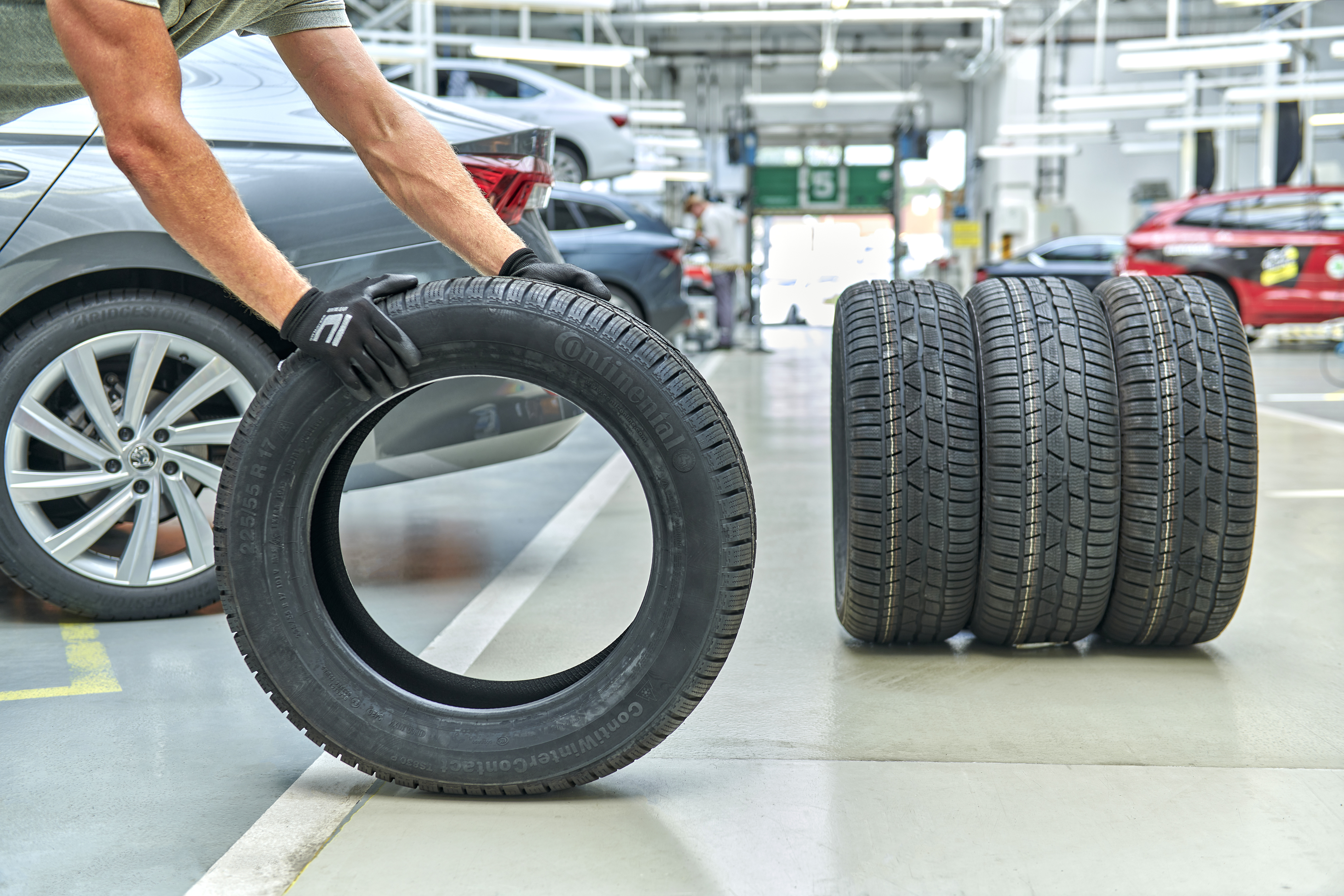
How to store tyres correctly
● store tyres in a dry place
● keep them out of direct sunlight
● try to maintain a temperature range between 5 to 20 °C
● frequent temperature fluctuations are detrimental to tyres
● keep them away from oils, petrol or solvents, as these substances degrade tyres
● complete wheels with rims should be stacked horizontally, with a maximum of one set
● wheels with rims may also be hung on a suitable holder
● tyres without rims should be stored upright next to each other and rotated occasionally
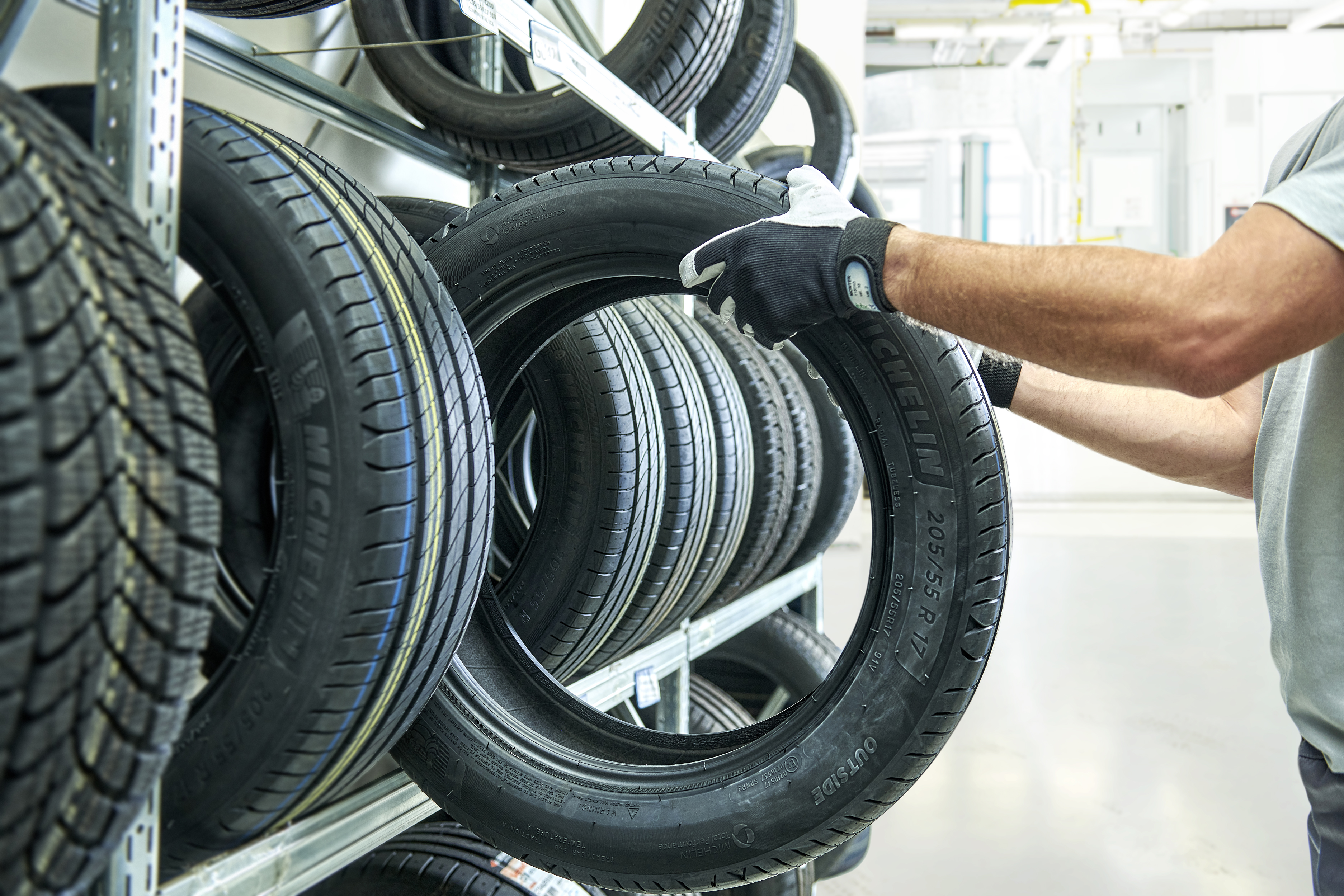
If a balancing weight is missing from the rim or vibrations occur while driving, have the entire wheel set rebalanced. It is also advisable to mark the position of each tyre on the respective wheel. In order for tyres to reach their full-service life potential, their position on the vehicle should be changed during each seasonal changeover. Wheels from the front axle should be mounted on the rear axle and vice versa.
“This ensures even wear across the entire set,” the expert explains. However, this does not apply to vehicles with mixed tyre fitment, meaning cars that have tyres of different sizes on the front and rear axles. Such vehicles include certain versions of the Škoda Enyaq and Škoda Elroq models. “It is also necessary to pay attention to the correct installation of directional tyres, which cannot be swapped between the right and left sides of the vehicle,” adds Pazděrný.
Do not underestimate damage
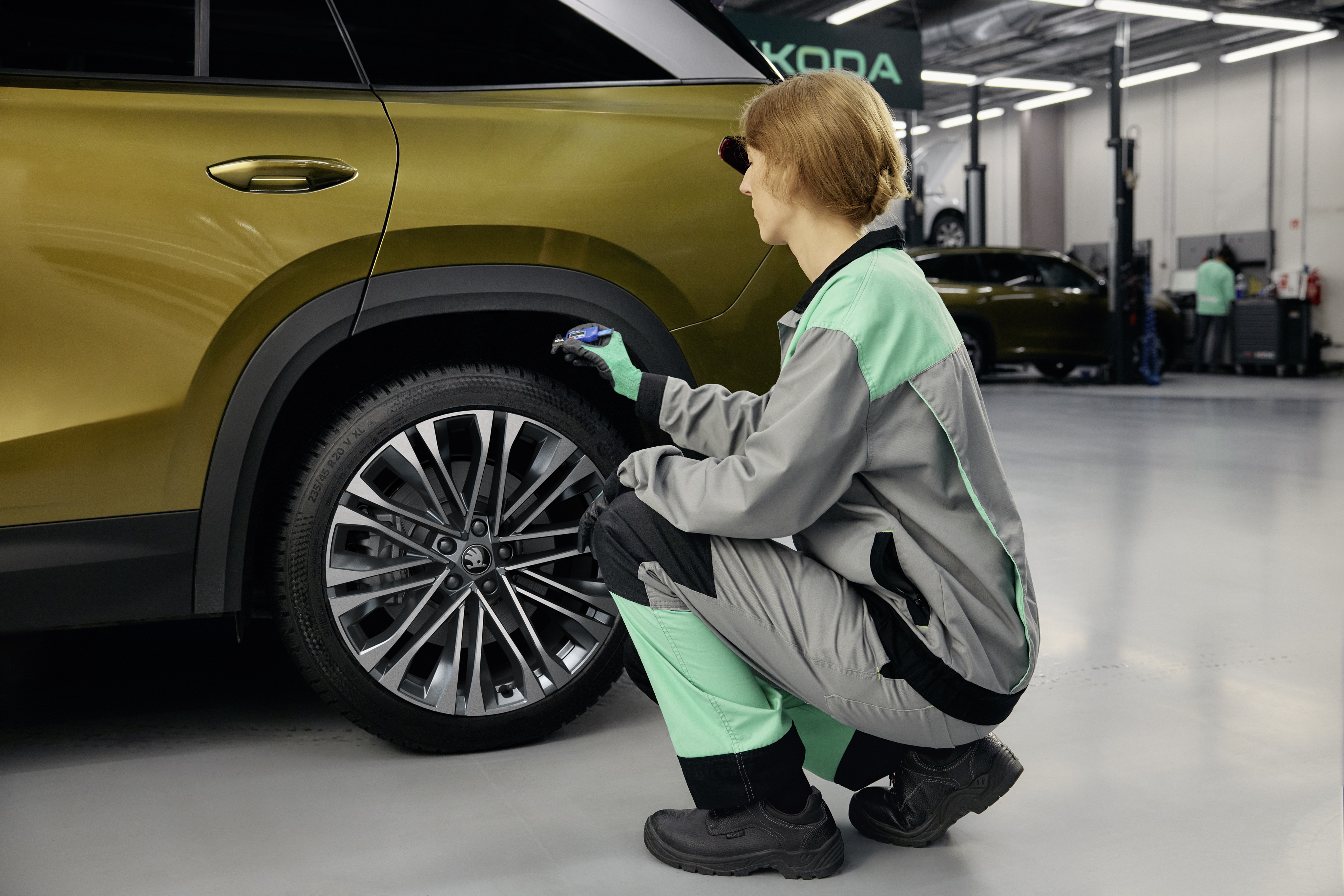
If a tyre is damaged, for example if there is a bulge on the sidewall, it must be replaced with a new one. A bulge indicates damage to the tyre’s internal structure, most often the cord fibres, and therefore represents a significant safety risk requiring immediate replacement.
It goes without saying that, just like tyres with a bulge, a punctured tyre cannot be reused. However, even seemingly small punctures can be problematic. In general, experts do not recommend repairing tyres after a puncture. Replacing damaged tyres with new ones is always in the interest of safety, as a damaged tyre could fail at a critical moment. “A puncture in the shoulder or sidewall area means the end of the tyre,” emphasises Pazděrný. Whenever a tyre needs to be replaced, both tyres on the same axle should always be replaced together.
Tyres with a Plus
Tyres supplied by Škoda Auto for its vehicles have carried a + symbol on the sidewall since the spring of this year. This indicates that they are original equipment tyres for Škoda vehicles. “The tyre has the same commercial name as the one available in standard distribution, but the Plus designation indicates differences in construction. The tyre is developed through cooperation between the tyre manufacturer and the car manufacturer specifically for a particular vehicle,” explains Pazděrný this subtle but important distinction. Tyres marked in this way ensure optimal vehicle performance when properly maintained. At the end of their service life, these original tyres can be purchased again from Škoda dealers.
Customers may, of course, choose any tyres for their vehicle, provided they match the dimensions listed in the vehicle’s registration documentation. “In general, we recommend not economising on tyres and choosing products from proven premium suppliers. This applies doubly to all-season tyres,” adds Pazděrný. All-season tyres are recommended for vehicles with an annual mileage of around 15,000 kilometres, primarily used in urban and suburban areas with well-maintained roads outside mountainous regions. They may be particularly suitable for a second car in the family. However, some compromises in performance must be expected, as an all-season tyre will always fall short compared to a dedicated summer or winter tyre.