How aerodynamicists work their magic
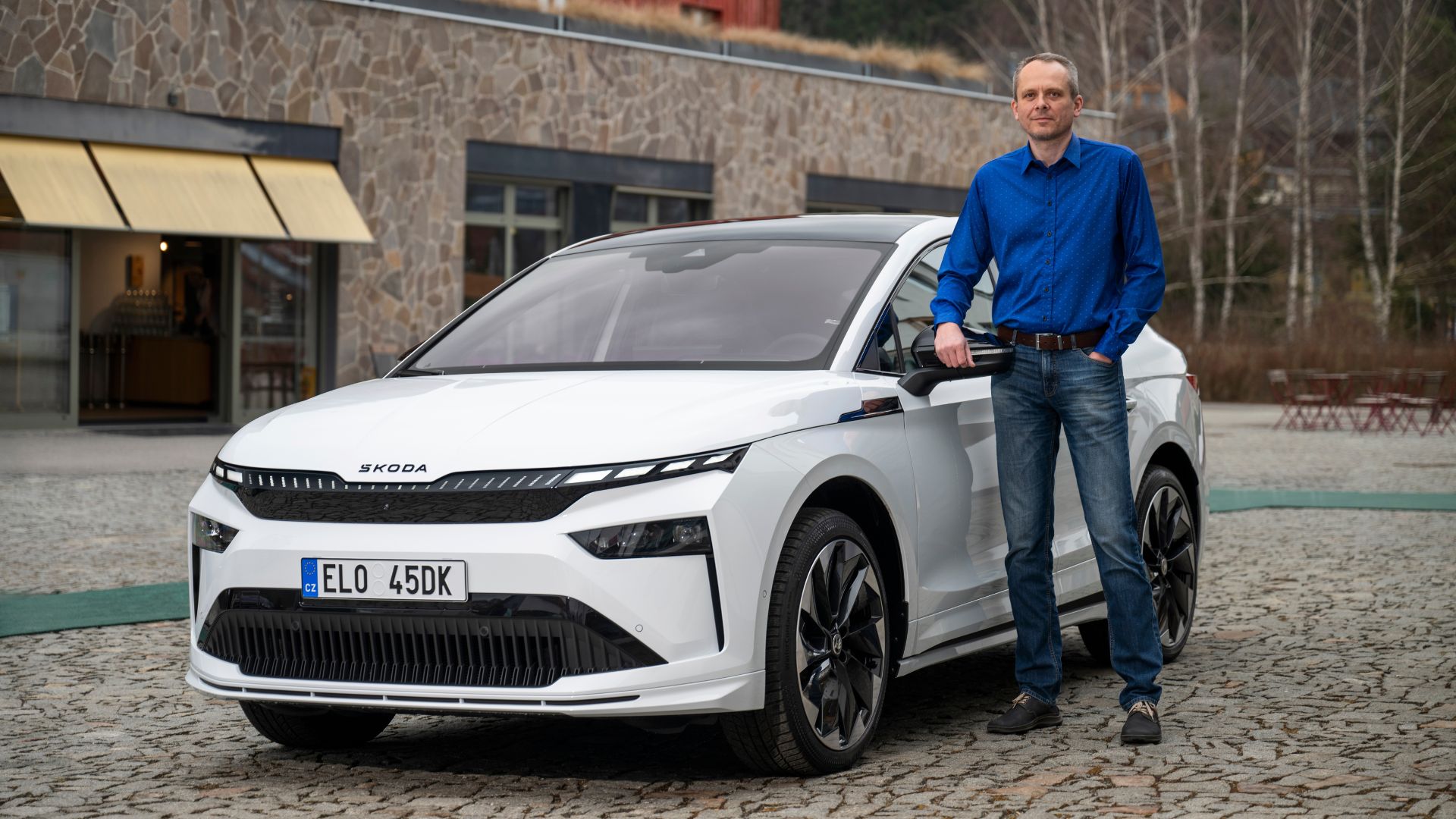
Smooth airflow is extremely important, especially for fuel economy and a pleasantly quiet ride in the car. That's why the aerodynamics department pays attention to every detail of the new model. How the experts fine-tune it to perfection is illustrated by the Enyaq Coupé, currently the most aerodynamic car in the Škoda range.
7. 8. 2025 eMobilityThe new front end is a big plus
The opportunity was provided by the Modern Solid design language, which significantly changed the look of the car's front end. "The new bonnet itself does not play a major role because it is not the main place where the air literally stops when it meets the car," explains Štěpán Janda, who worked on the aerodynamics of the models with his colleagues. The so-called stagnation point, i.e. the place where the air hits the car most intensely is slightly lower, roughly in the area of the front registration plate. That's where the air hits and then chooses different directions to go around the car.
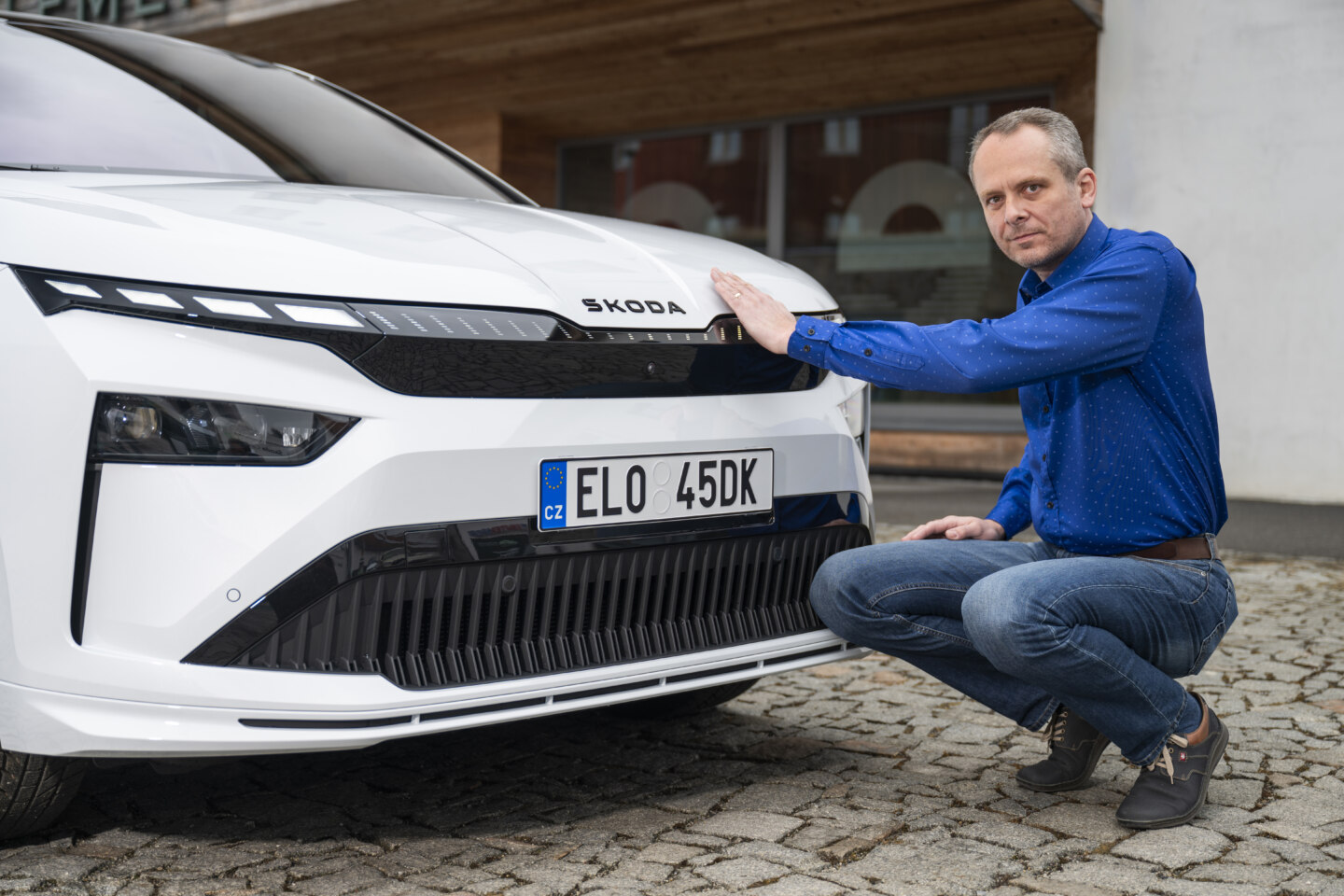 The new front end of the car gave designers the opportunity to improve the aerodynamics of the Enyaq model.
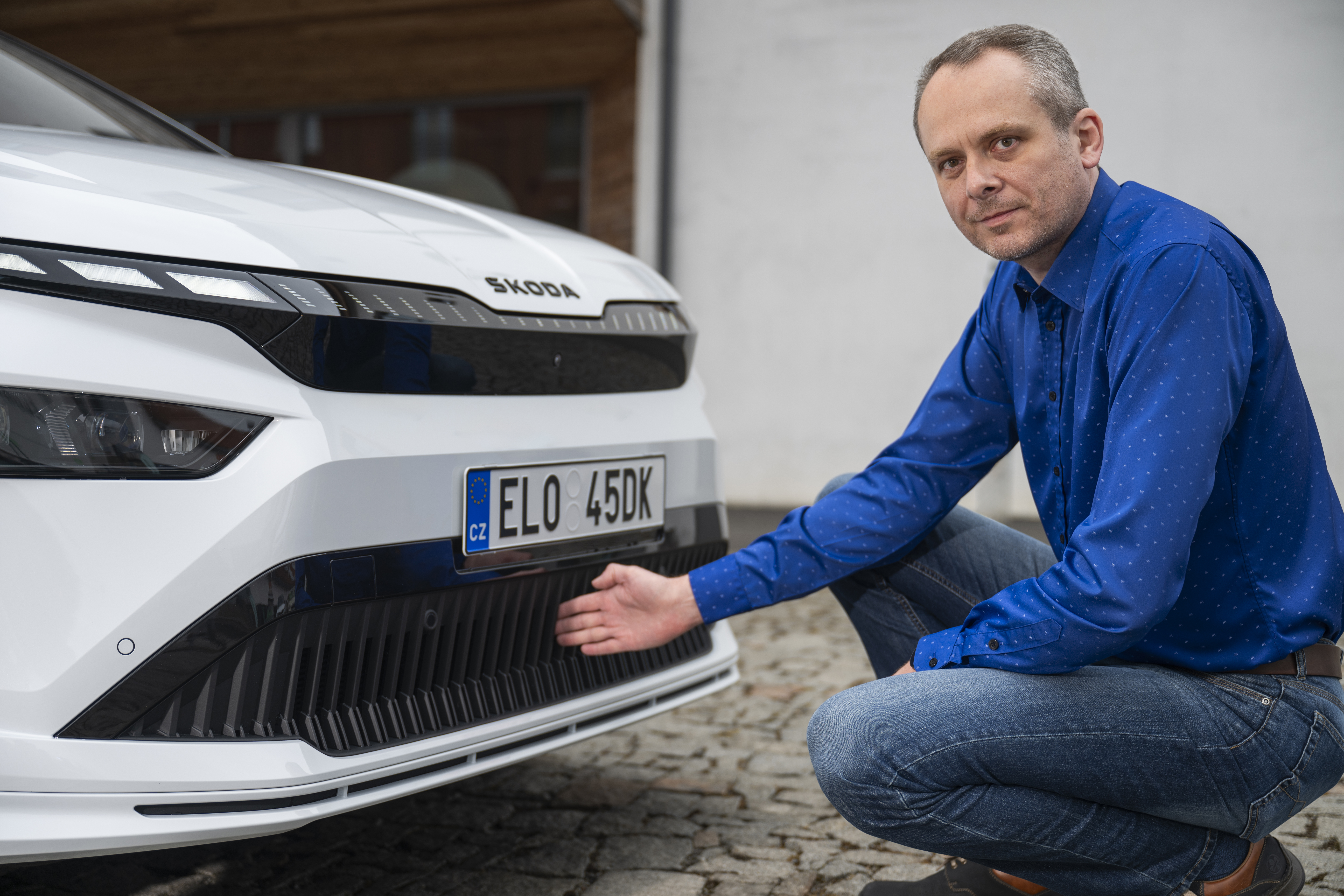
One of the significant areas of flow is below the registration mark - the cooling grille, where air flows to several radiators. The new Enyaq and Enyaq Coupé have a grille shaped the way that only the exact amount of air which cars need for reliable cooling flows through it.
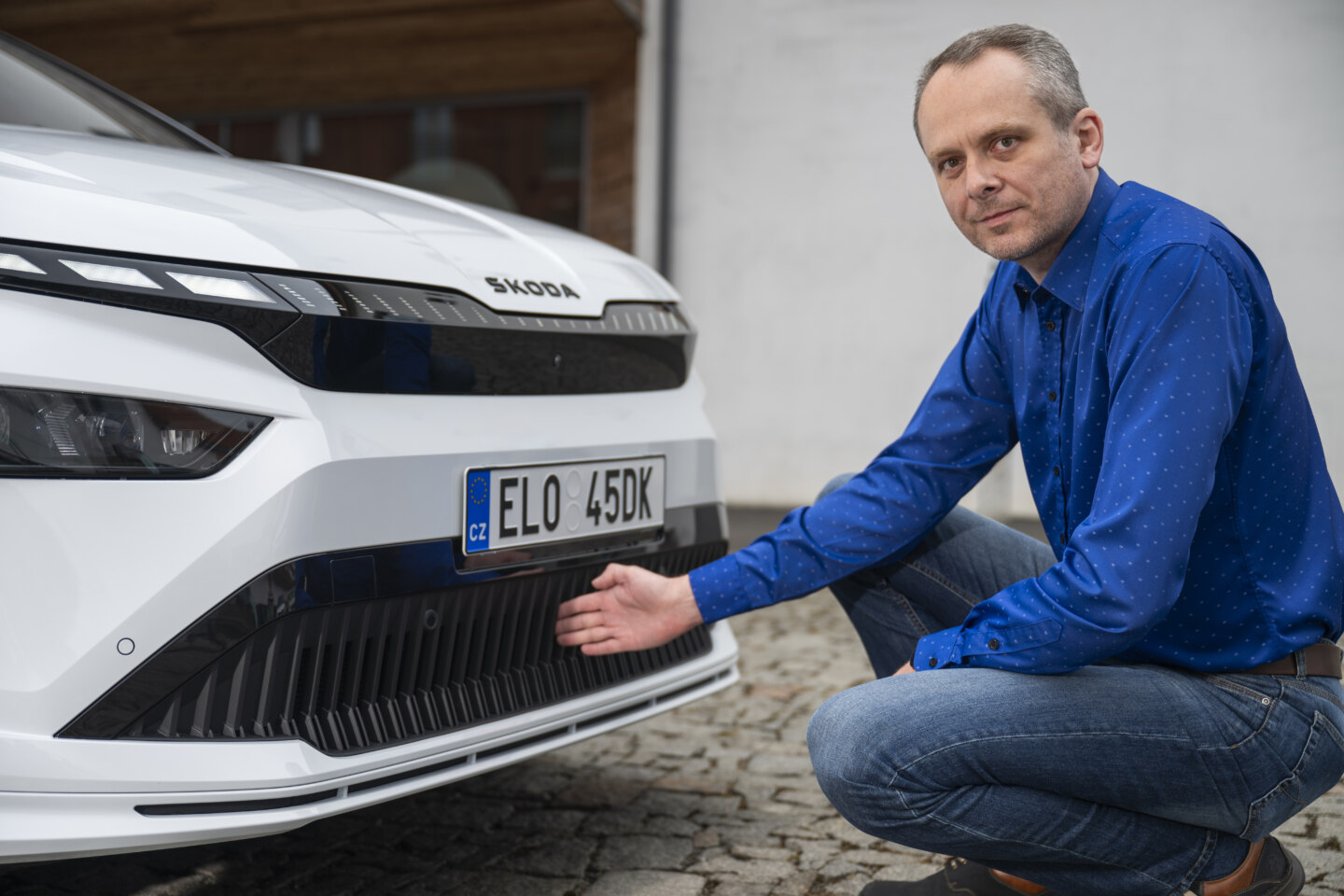 The cooling grille brings the right amount of air into the car. The aerodynamics have also been improved by sealing the parts hidden behind it.
"Compared to the previous design, the opening has been optimised and reduced in size because we have been able to improve and seal the air routing to the radiators. There are no sideways air leaks," says Janda about the improvements. The combination of the right materials is also important: hard plastic ensures precise guidance, soft plastic ensures a good seal.
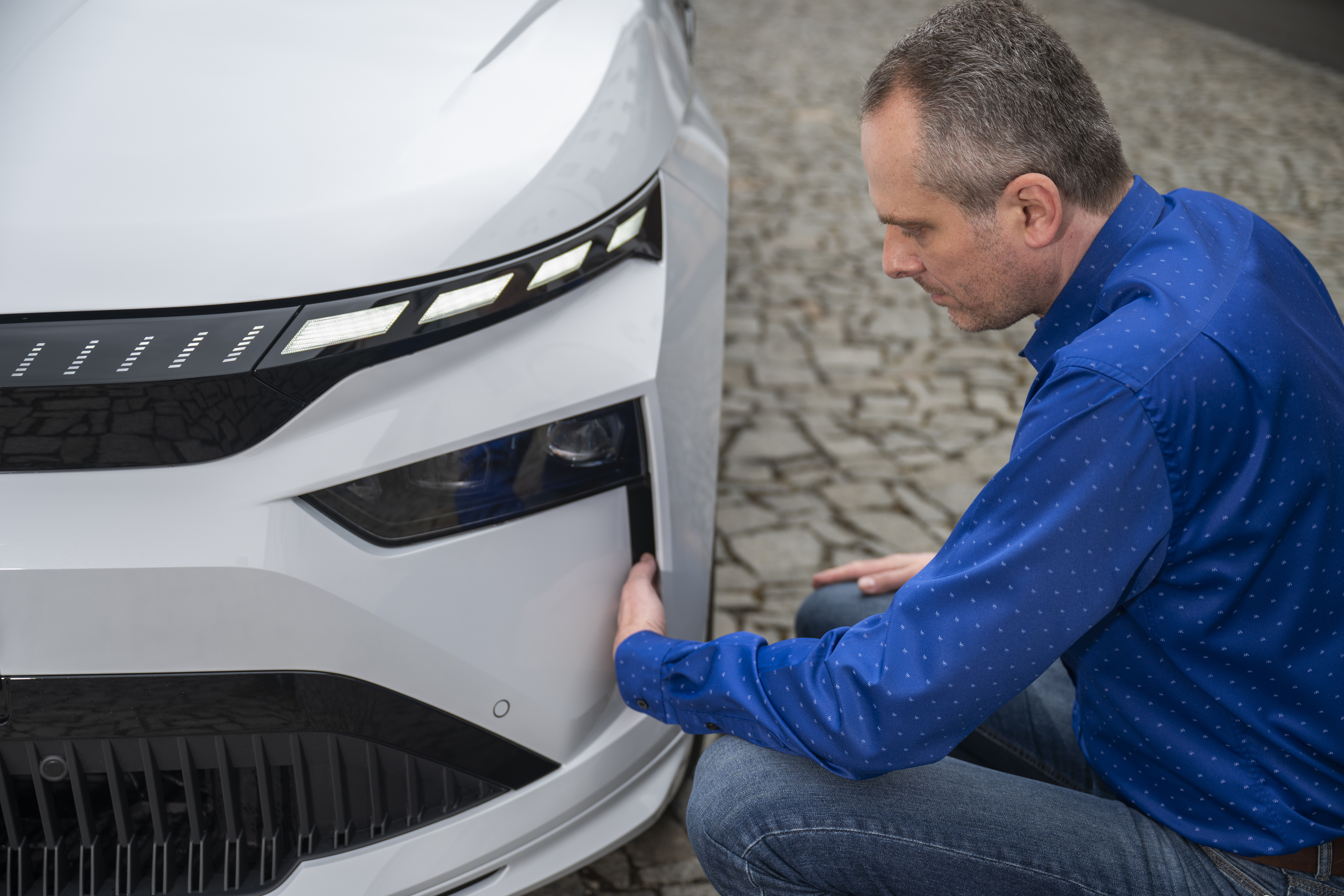
The so-called Air curtains are also important which are vents on the sides of the front bumper that direct air outside the wheels to create a kind of an air screen. "The wheels are the area where turbulence is most intense, which increases air resistance," says Janda, explaining why this solution is so important. Here alone, the engineers have gained a full four thousandths to the good in reducing air resistance as part of the upgrade. The shape of the wheels has also been optimised, with five new designs also helping to reduce drag.
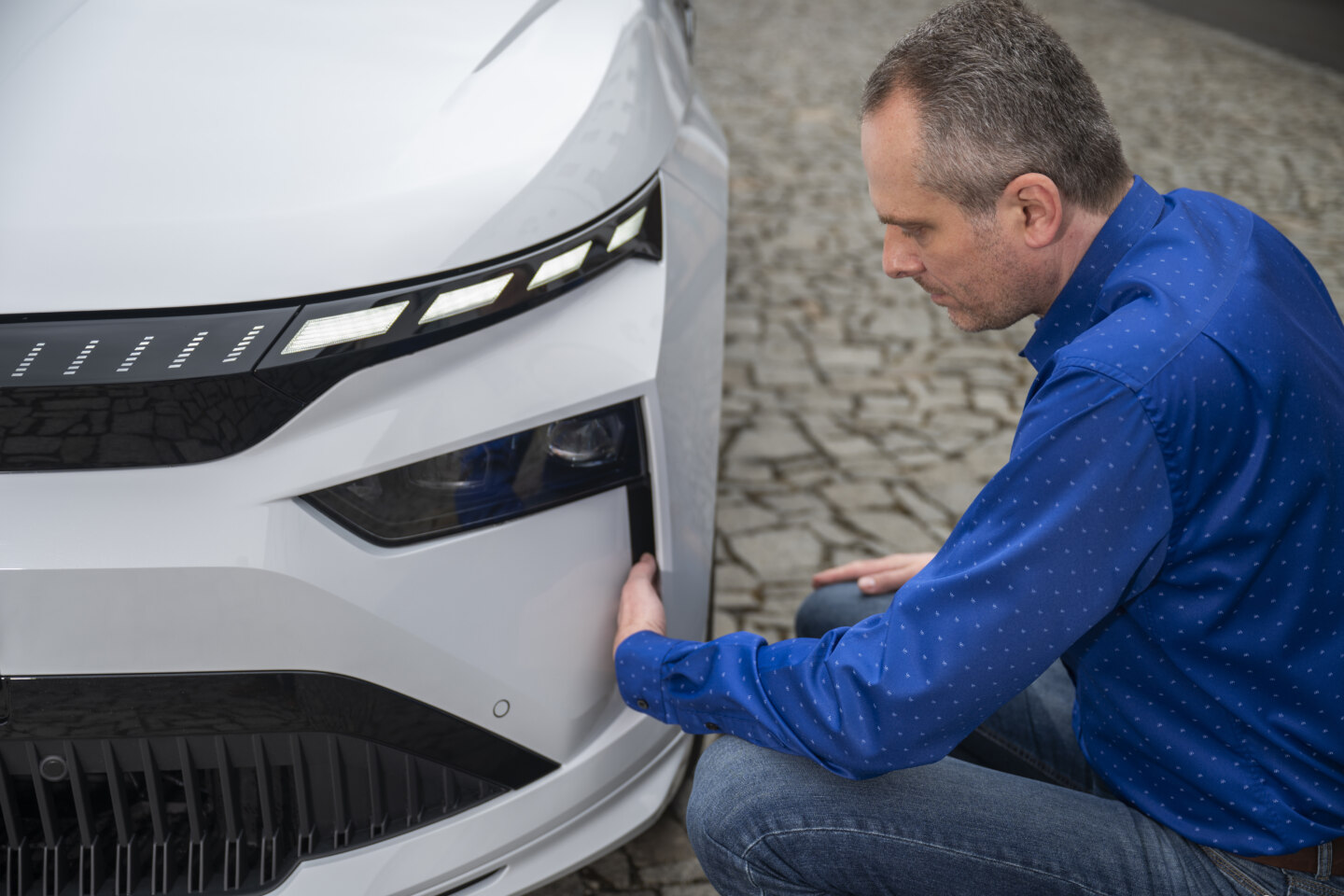 The vents on the sides of the bumper direct air outside the wheels and create an aerodynamic shield around them.
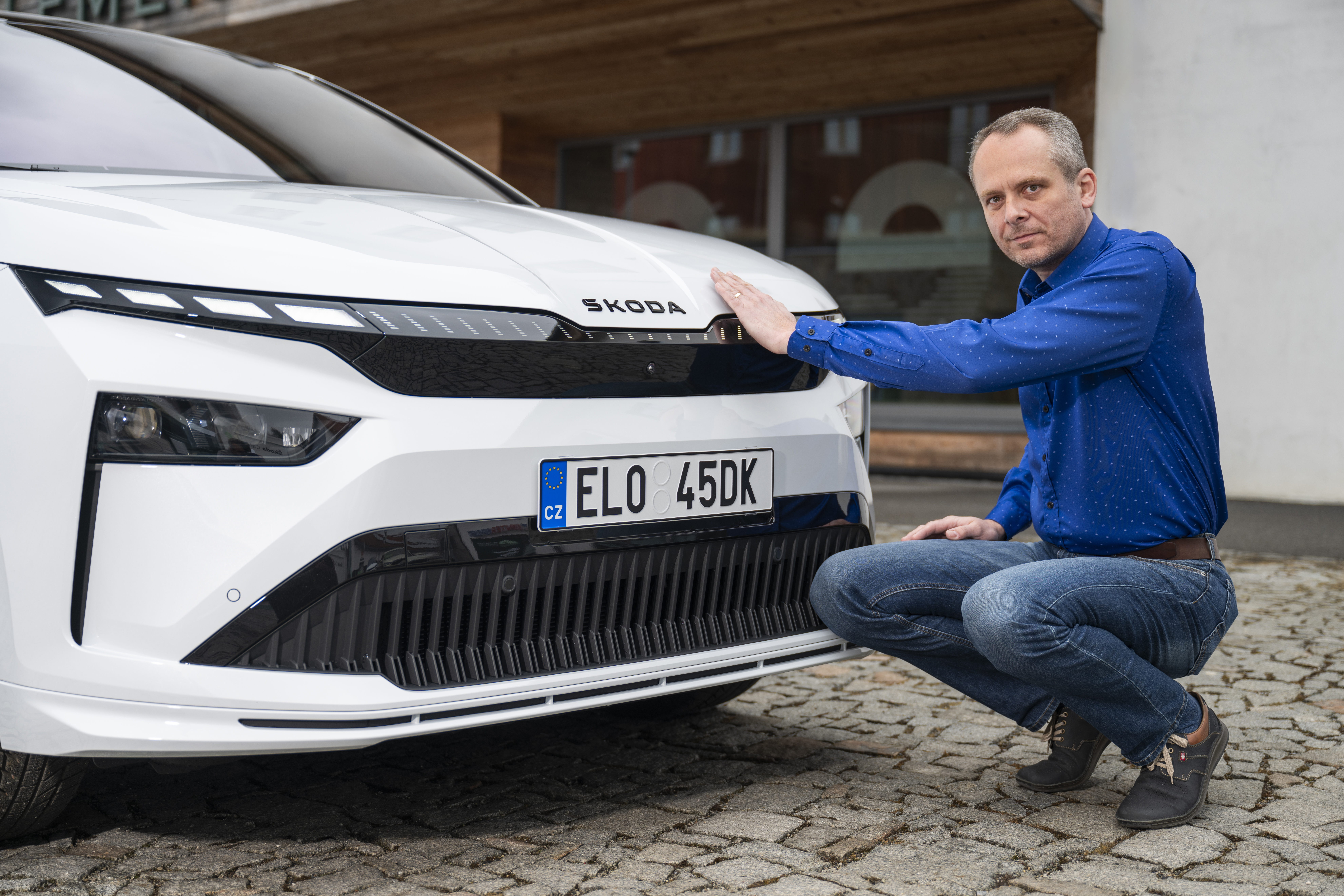
The new bonnet design has also brought a big positive change. It is now more rounded at the front, which has been made possible by the redesigned front grille. The rounded connection of the bonnet to the hood has improved the air resistance coefficient by around two more thousandths. "Whether the bonnet has a round logo or the Škoda lettering has virtually no influence in this case," Janda mentions one of the design innovations of the modernised Enyaq.
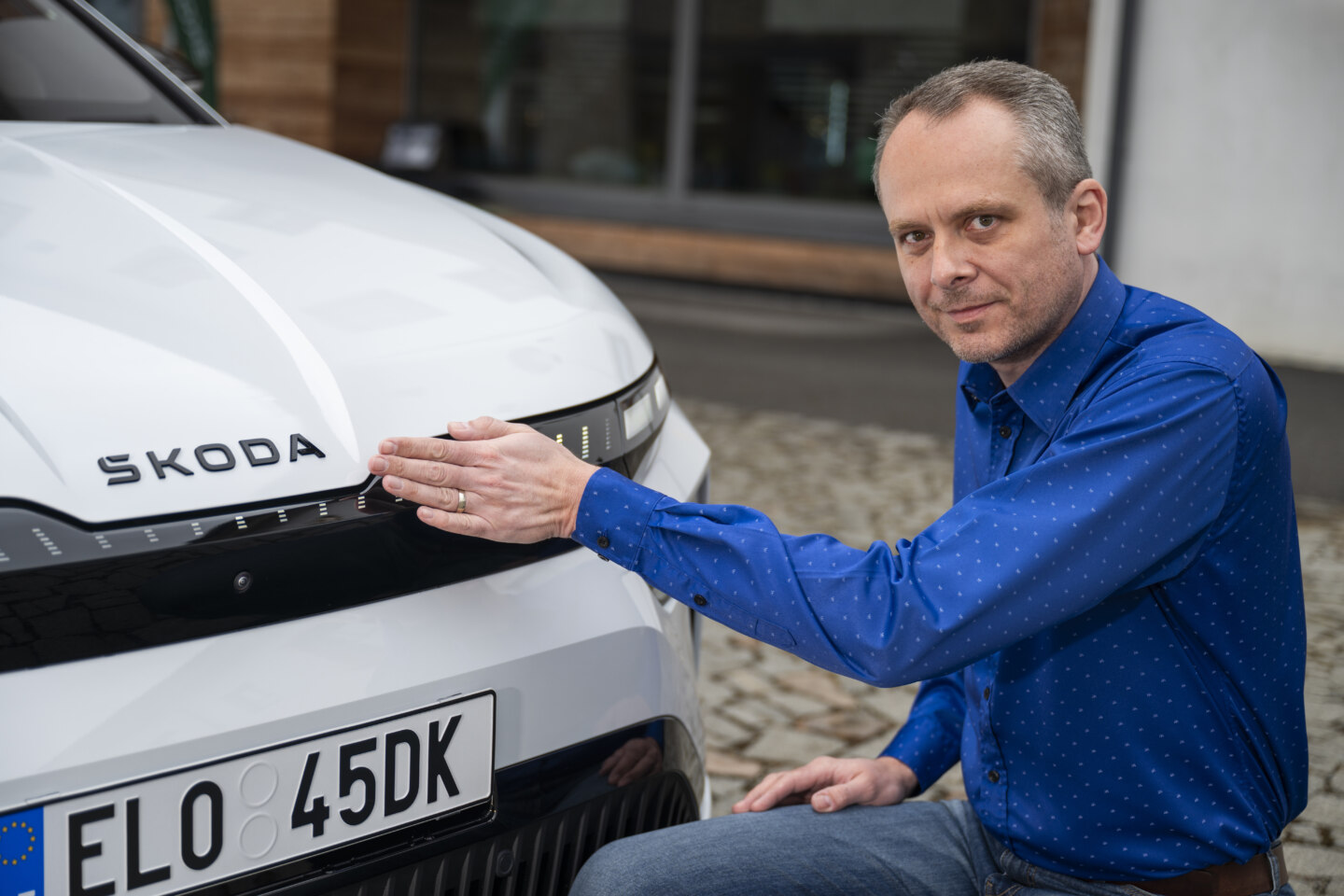 The more rounded hood improves airflow in this part of the car.
Anyway, the results of optimisation are cars with top performance in both cases. "The Enyaq Coupé has the air resistance as if you put a 70-centimetre-square plate in its flow," says Janda. That's roughly the size of a washing machine. The actual dimensions of the car are many times larger but ensuring good airflow around the body effectively reduces the air resistance.
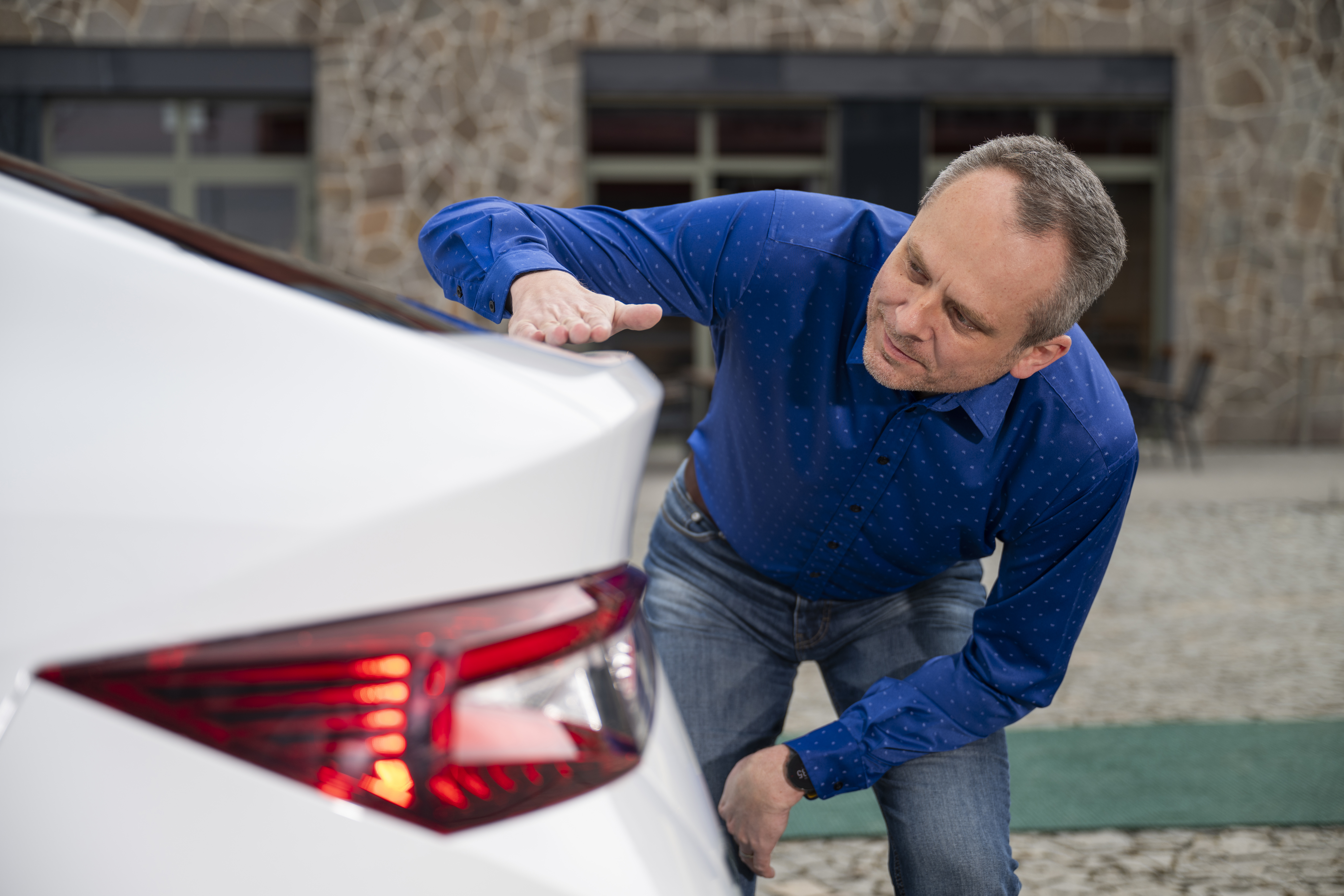
The rear of the car also plays an important role, although it hasn't changed with the modernisation. It is its shape that influences the overall difference between the two models. "The most aerodynamic shape is the drop and the Enyaq Coupé is closer to that," explains Janda. A so-called drift is created behind the car in which turbulence occurs. These create a vacuum that actually pulls the car back as it drives. The taller rear of a traditional SUV gives more room for such turbulence than the flat rear of a coupé.
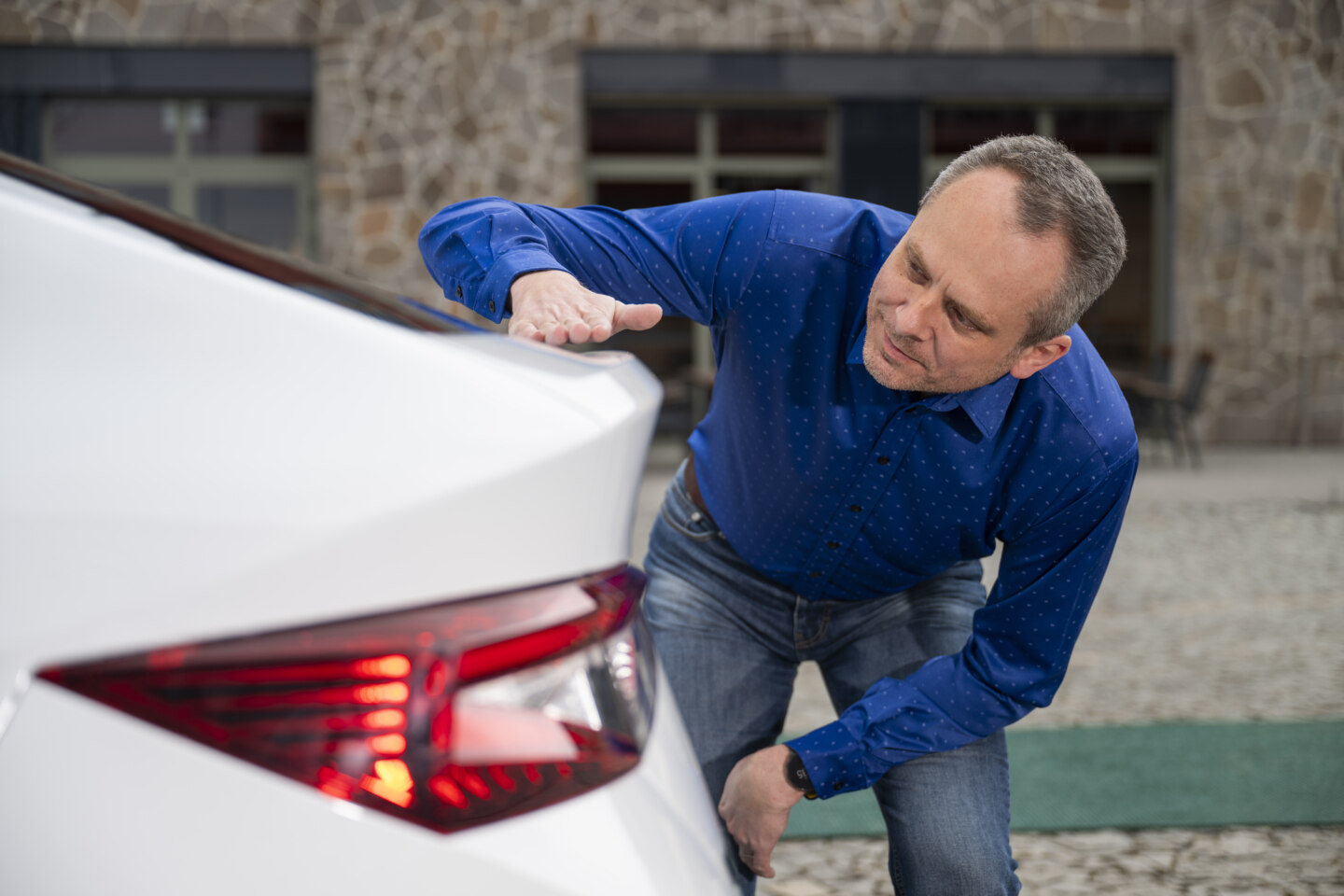 The Enyaq and Enyaq Coupé have clearly defined break lines at the rear.
Be the first
to get the latest stories
Explore more


Media Box
6 images
Show more
Show less
