Numbers, paperwork, tests. What does homologation really mean?
Homologation is a process that every new car model must undergo before it can be launched on the market. Why is it so important, and what exactly does the term mean?
19. 2. 2026 Škoda WorldHomologation is a long and demanding journey that culminates in the issuing of a Vehicle Type Approval Certificate. Without it, production lines would remain empty, as this certificate is a mandatory prerequisite for placing a vehicle on the market. It verifies compliance with legislative requirements—primarily those related to safety, emissions, and other vehicle system specifications—have been met.
Legislative requirements vary depending on the markets in which a vehicle is to be sold. As a result, the tests required for Europe differ from those for Australia or for countries in the Persian Gulf, for example.
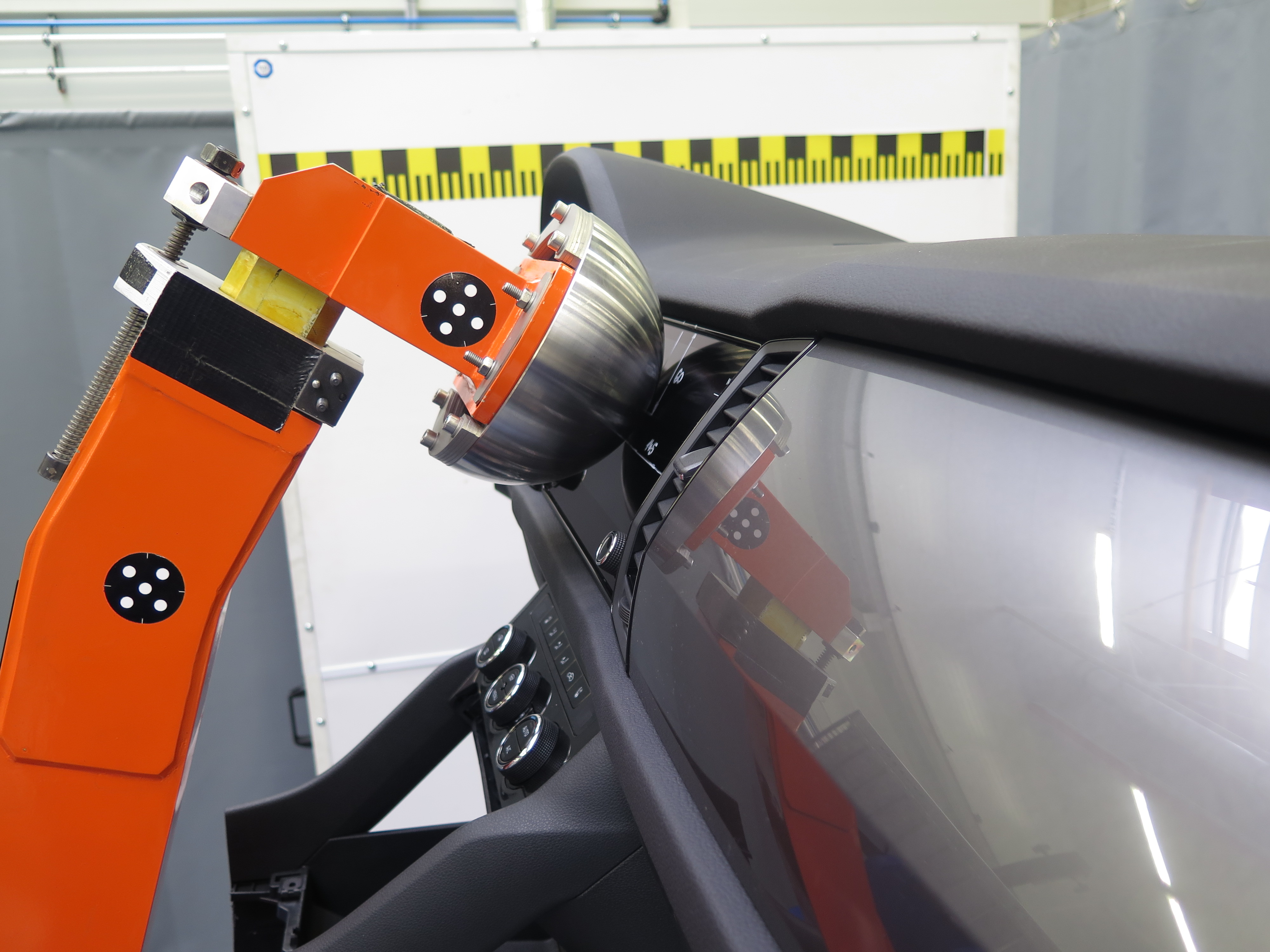
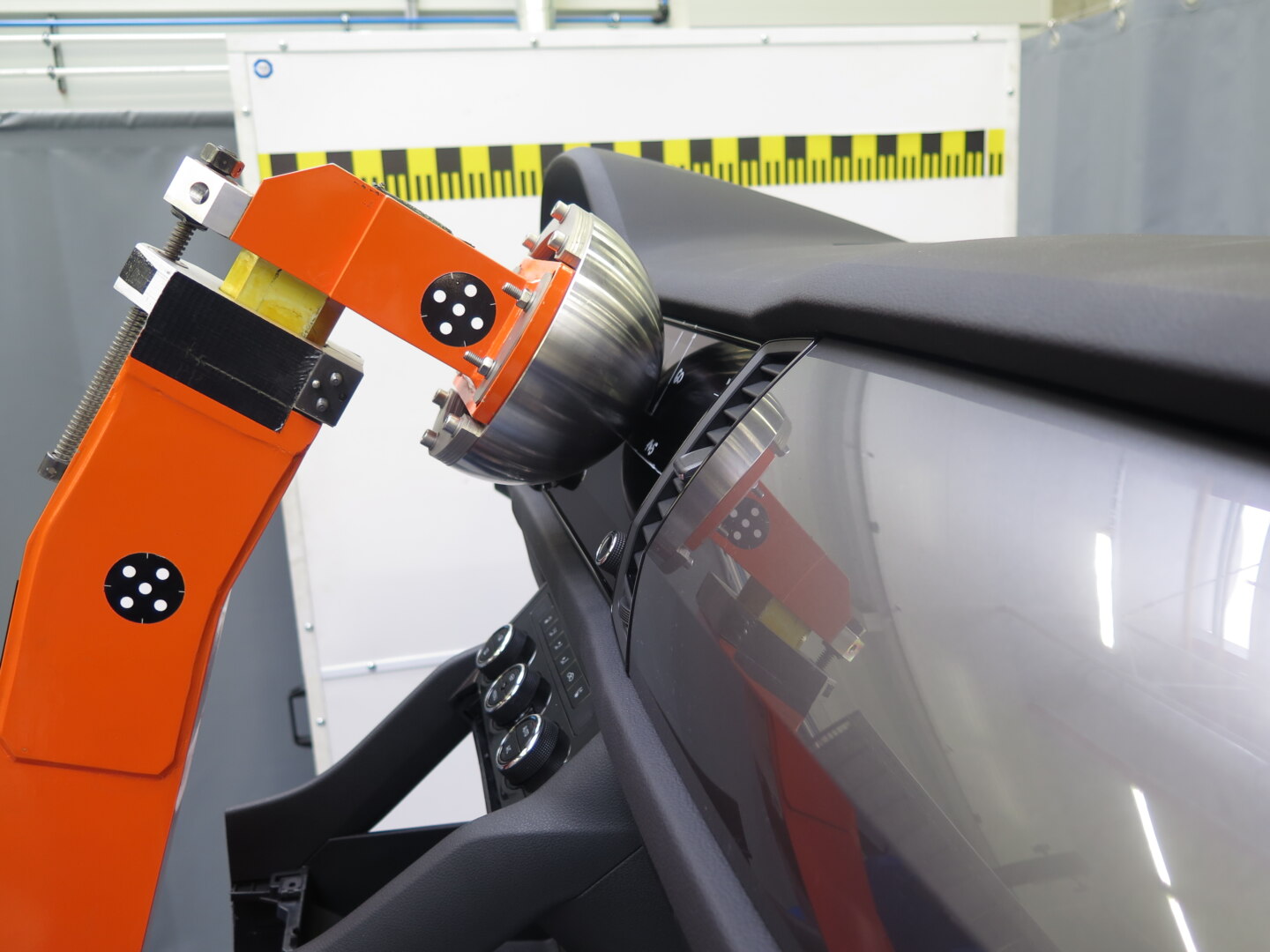 Testing of impact energy absorption by a headform. No injury may occur upon impact.
A car as a construction kit
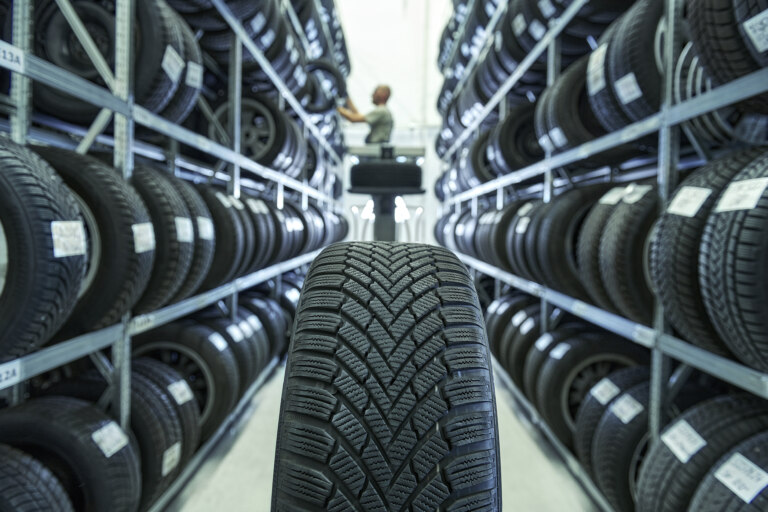
The process begins with individual components. Some of these are homologated directly by the supplier, who is responsible for them, forming the foundation of the entire approval pyramid. “In total, there are around fifty such components, including items such as glass, seat belts, headlights, and tyres,” explains Lukáš Novotný, Vehicle Homologation Coordinator. Škoda Auto requires certificates for all these components in order to proceed to the next steps, known as system approvals.
System approvals are the result of testing the entire vehicle, during which compliance with a further roughly sixty global regulations and EU standards is verified. Their number varies depending on the type of powertrain (petrol/diesel, plug-in hybrid, BEV), the level of driver assistance systems, and the safety features used. The entire homologation process is carried out in cooperation with an independent technical service (such as TÜV SÜD or DEKRA), which is authorised by the approval authority.
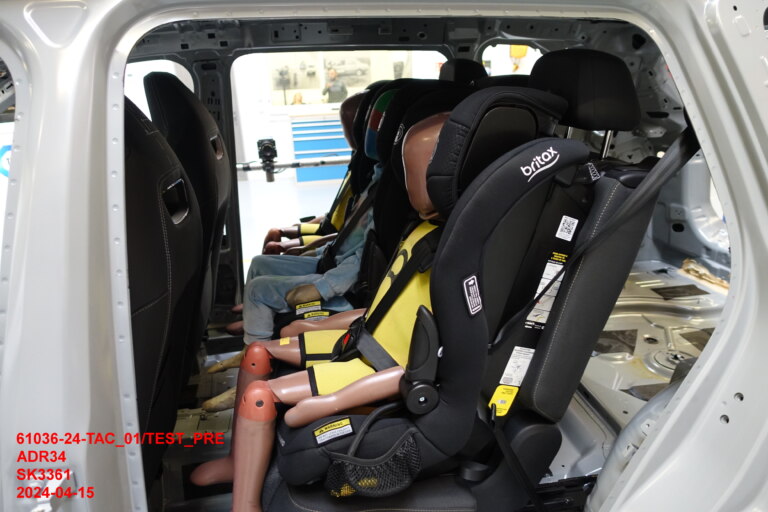
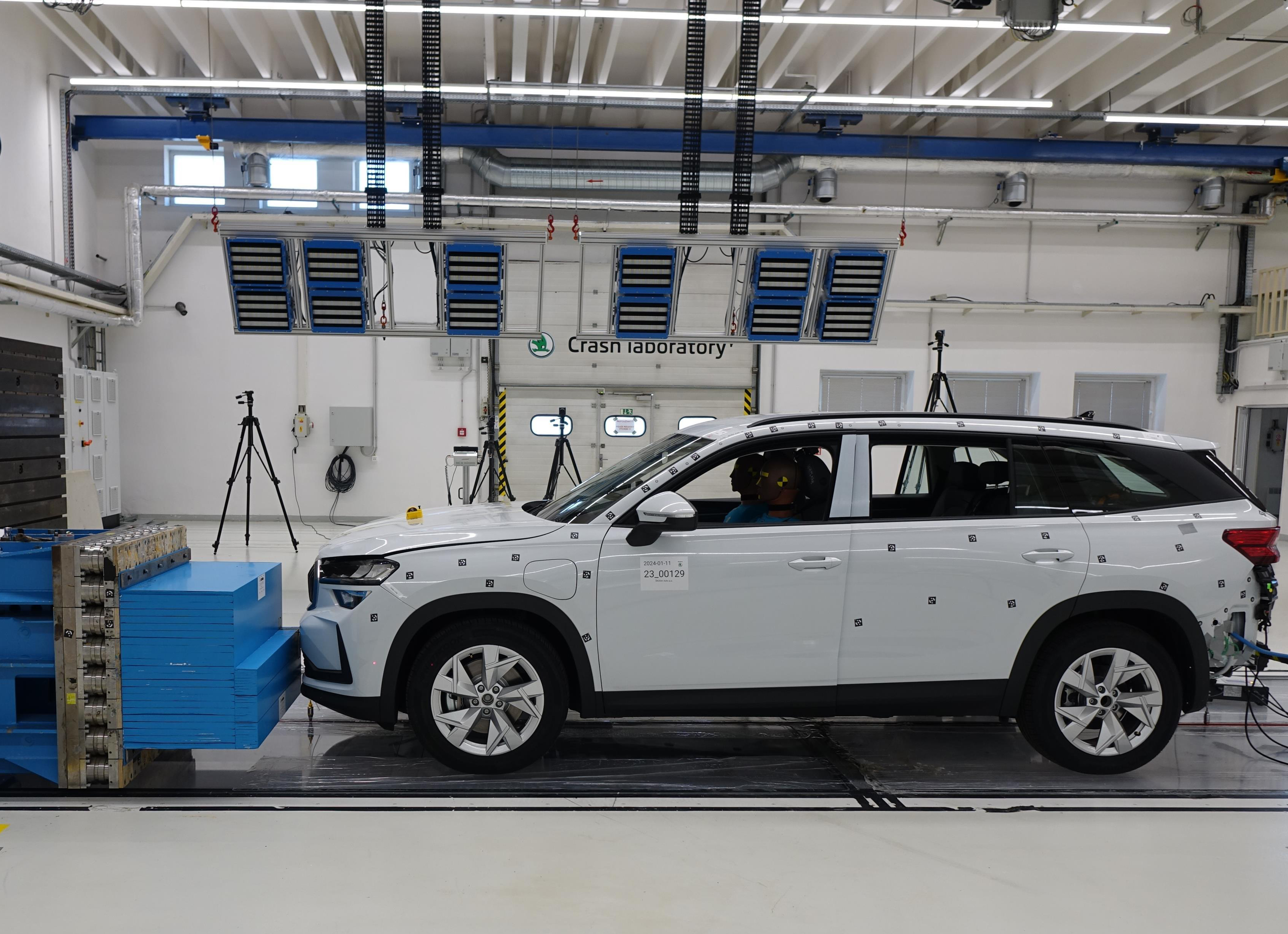
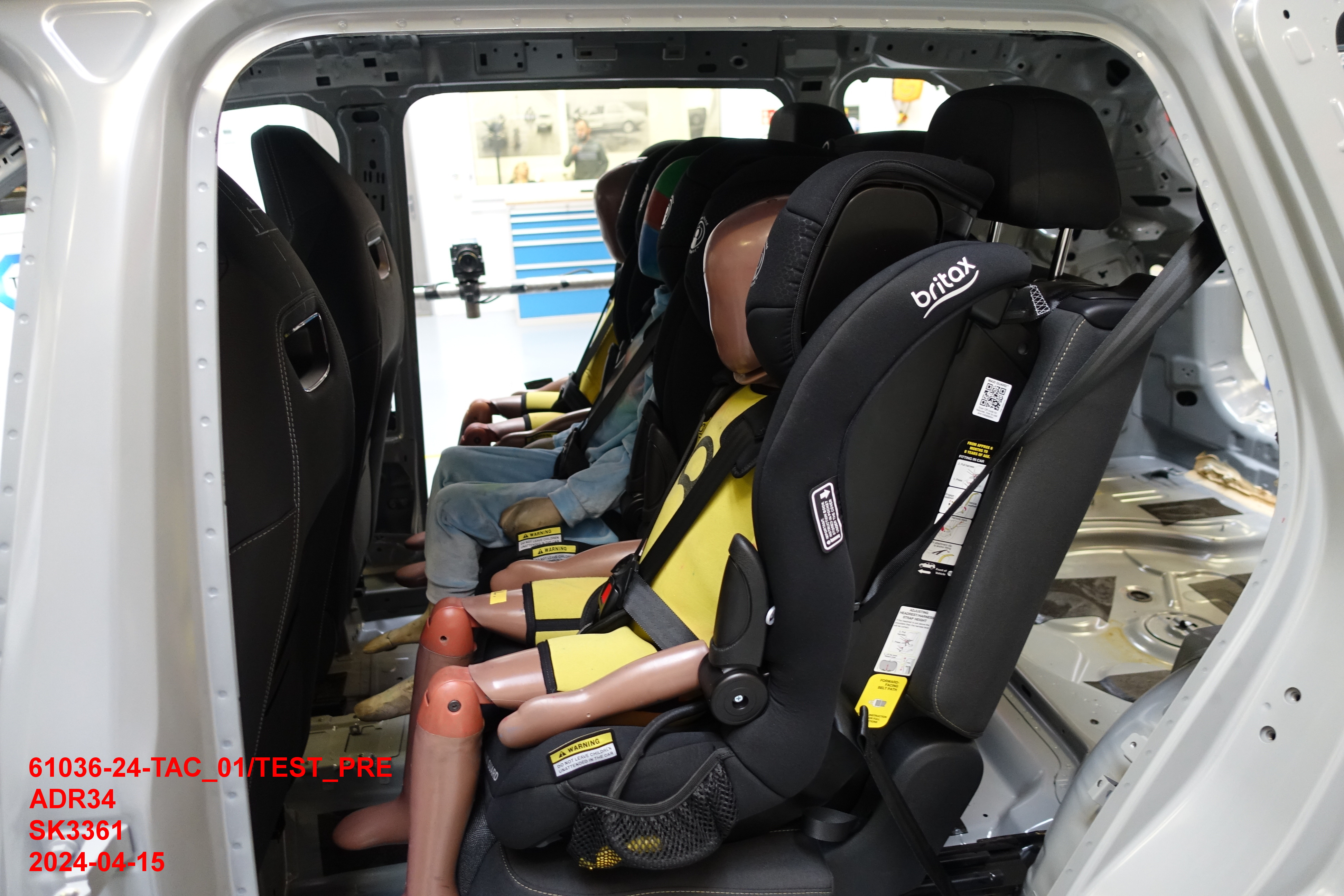
Škoda Auto is testing seat fastenings and dummy safety. The child seat itself already has component approval.
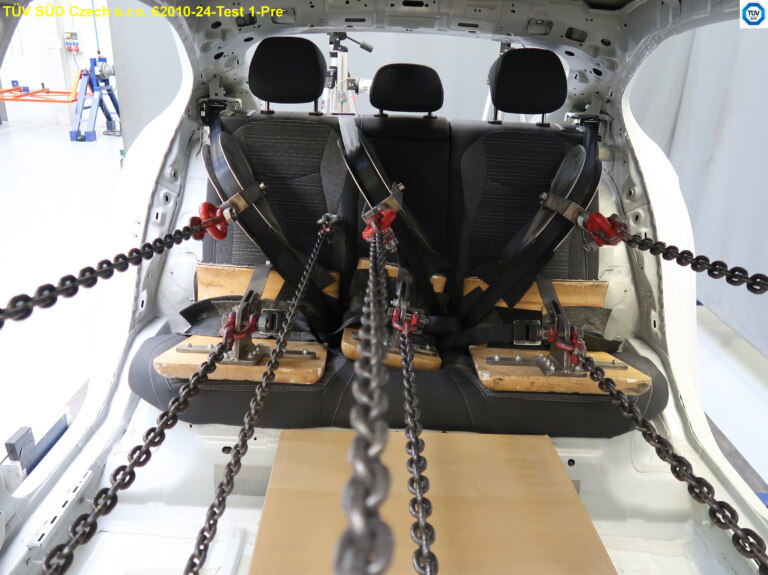
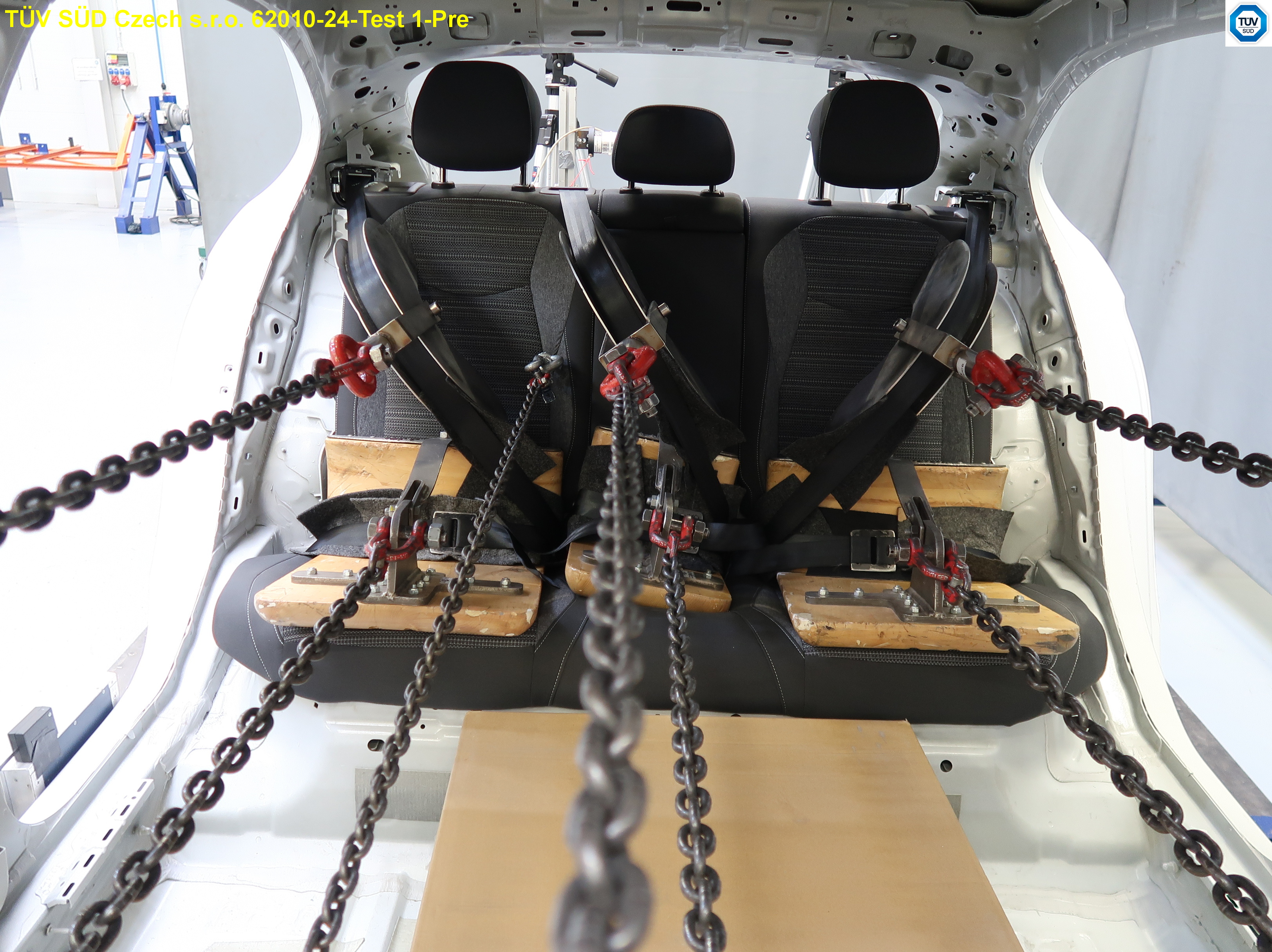
Strength test of seat belt anchorage points
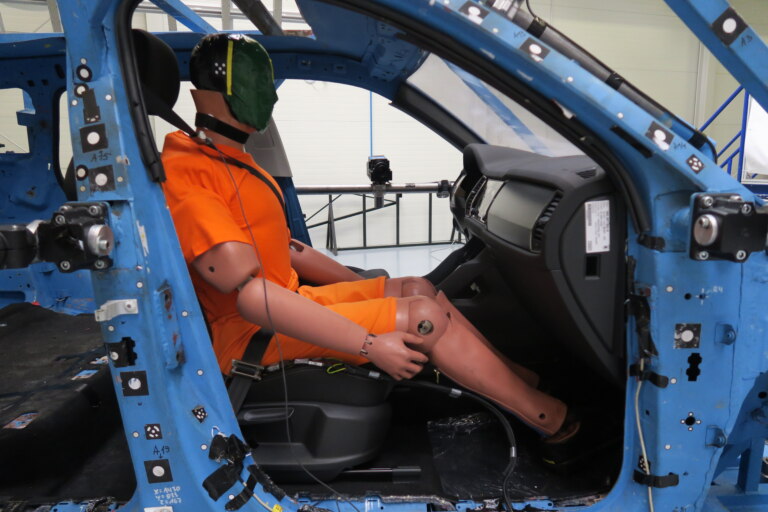
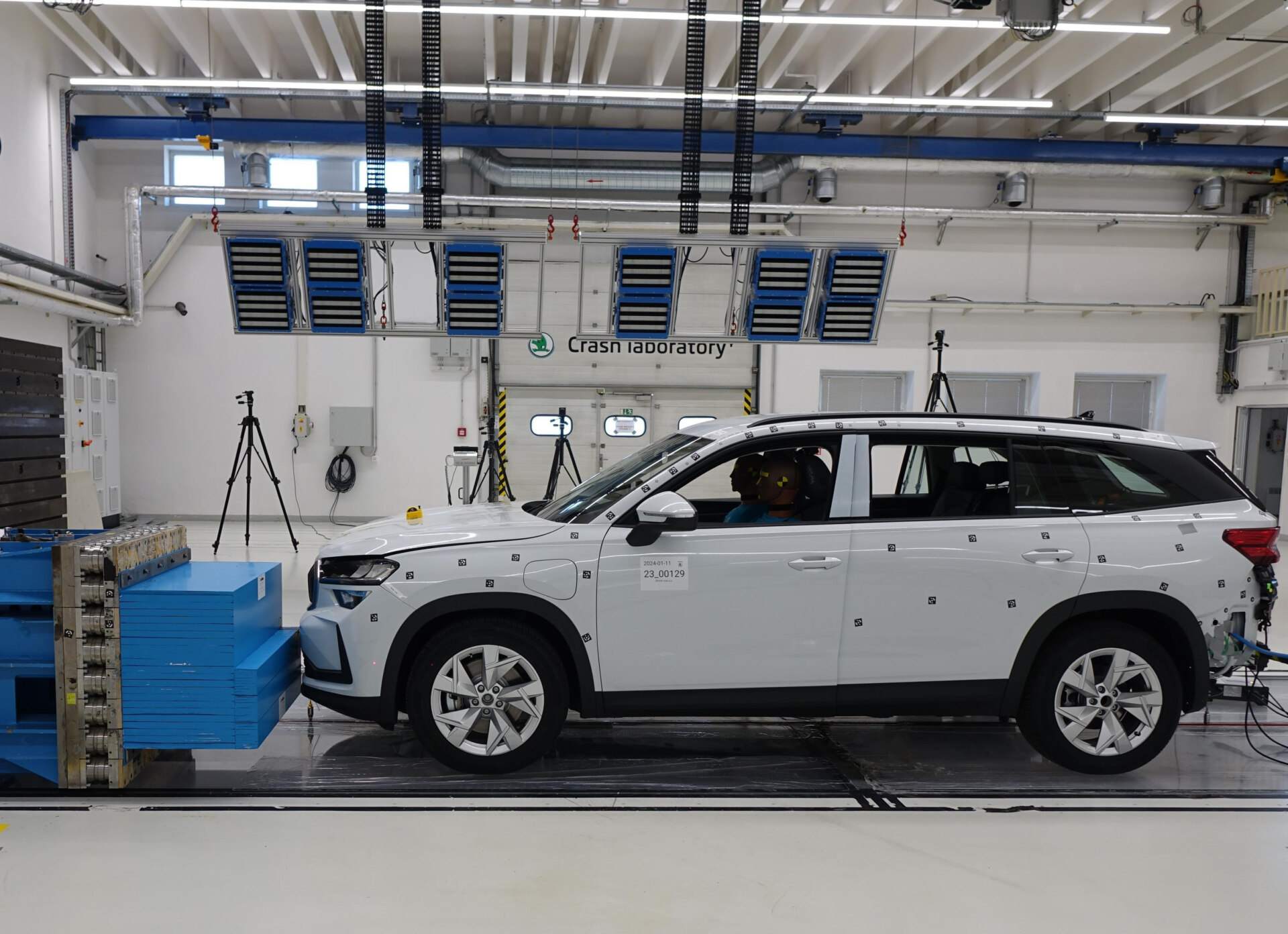
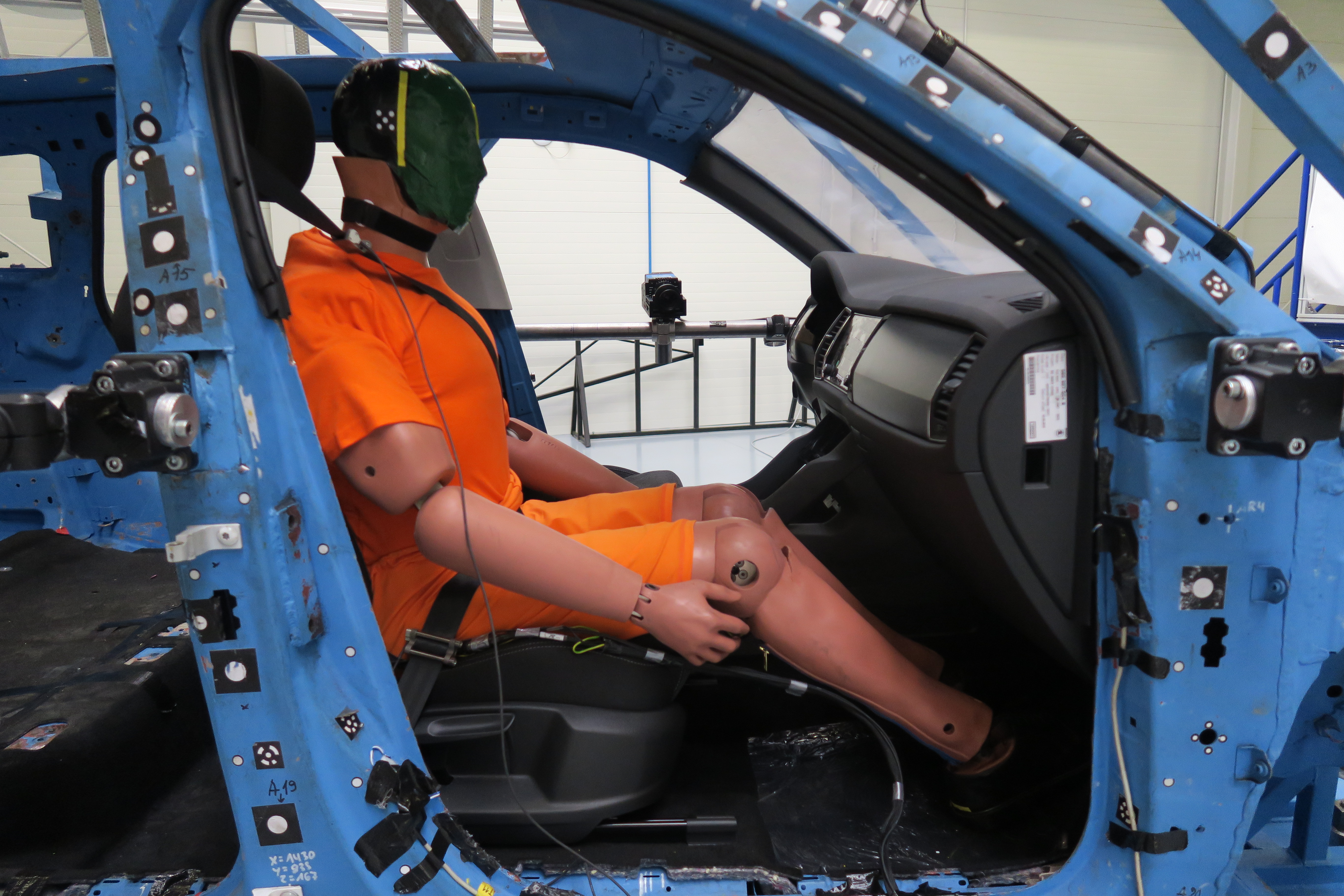
The dynamic test checks whether a person wearing a seat belt will touch the dashboard in the event of a collision.
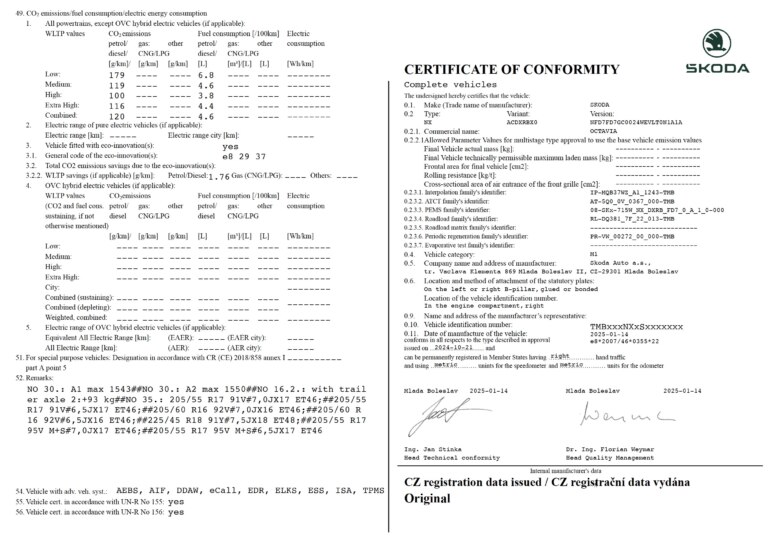
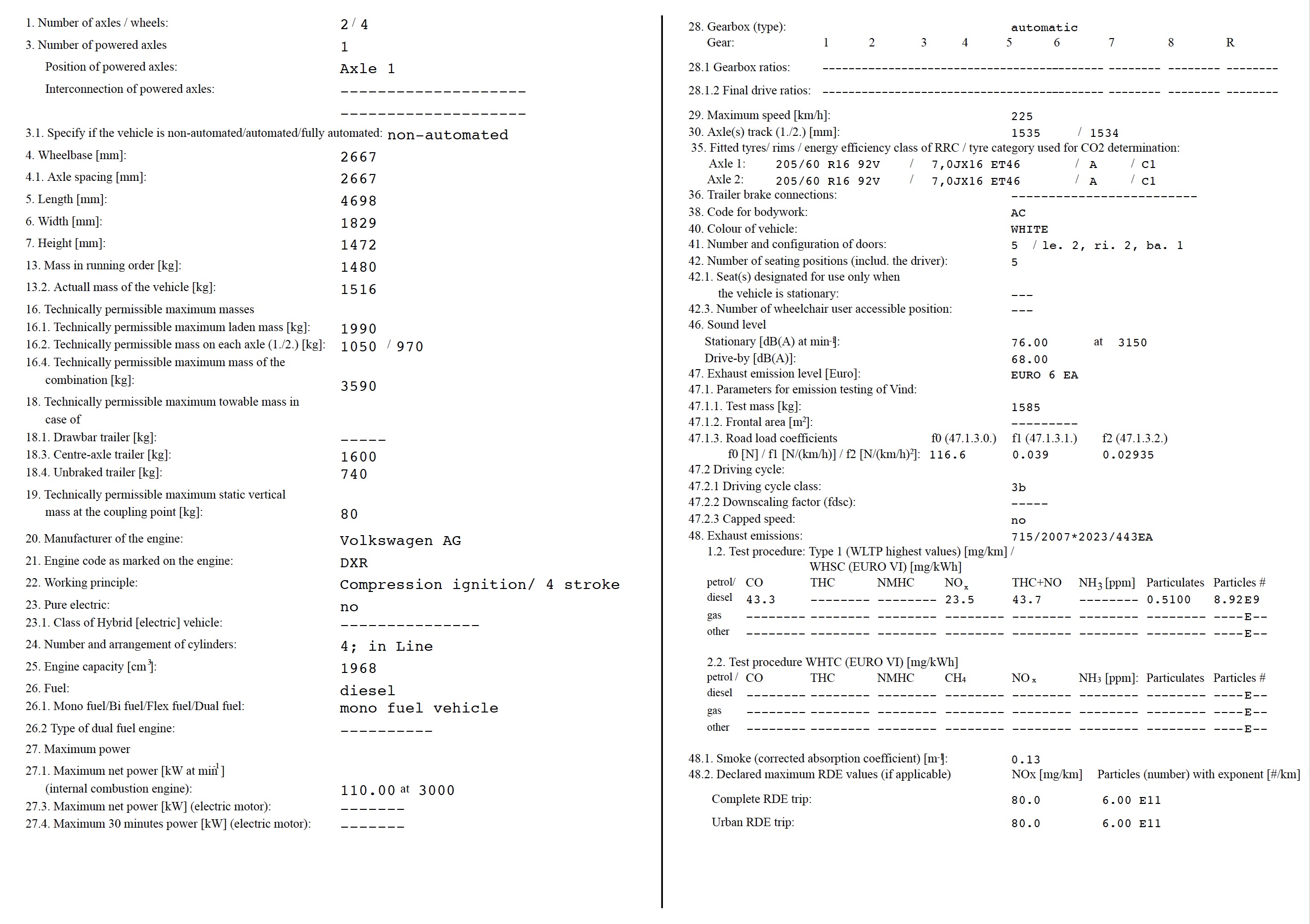
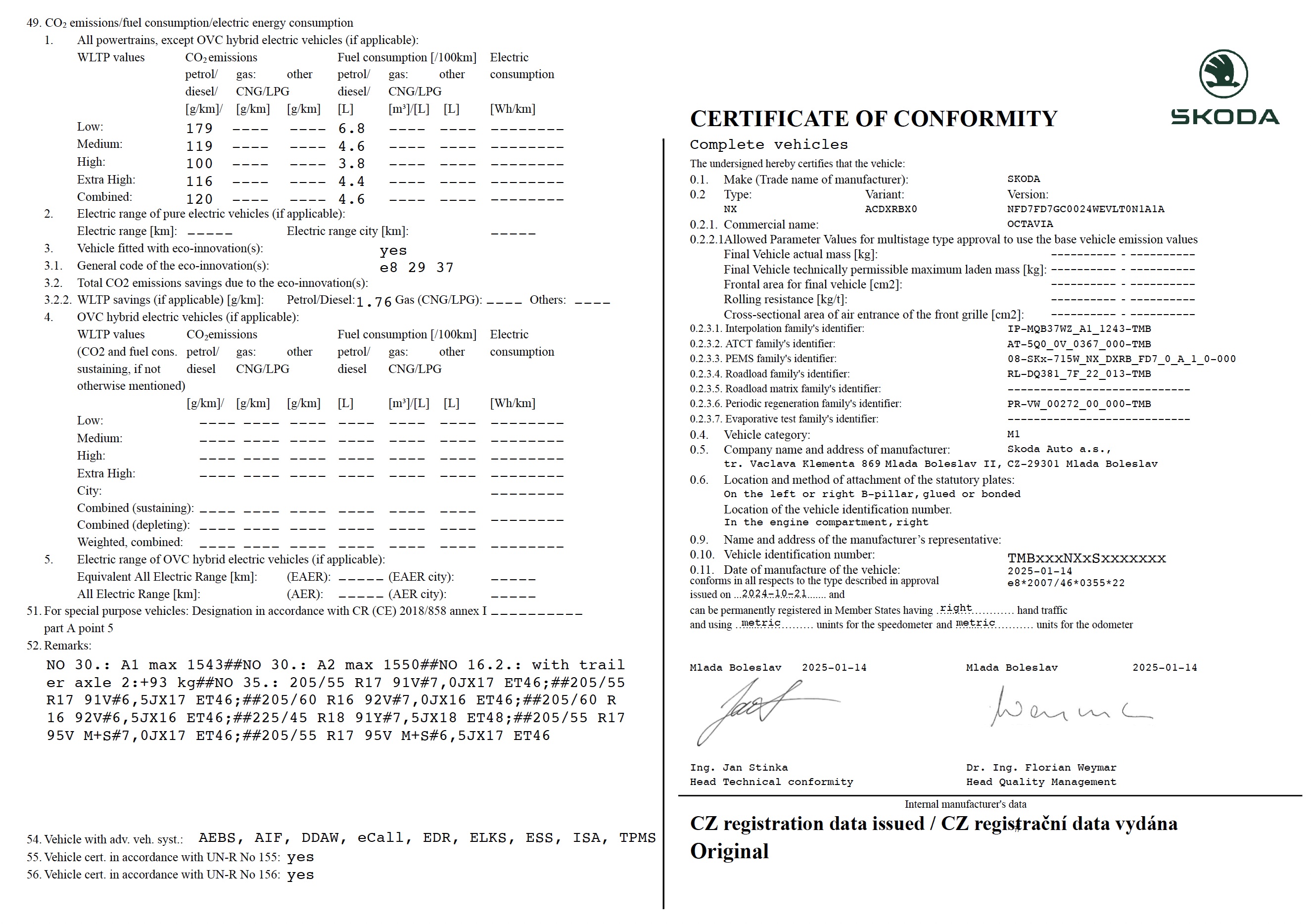
COC (Certificate of Conformity) for Škoda Octavia
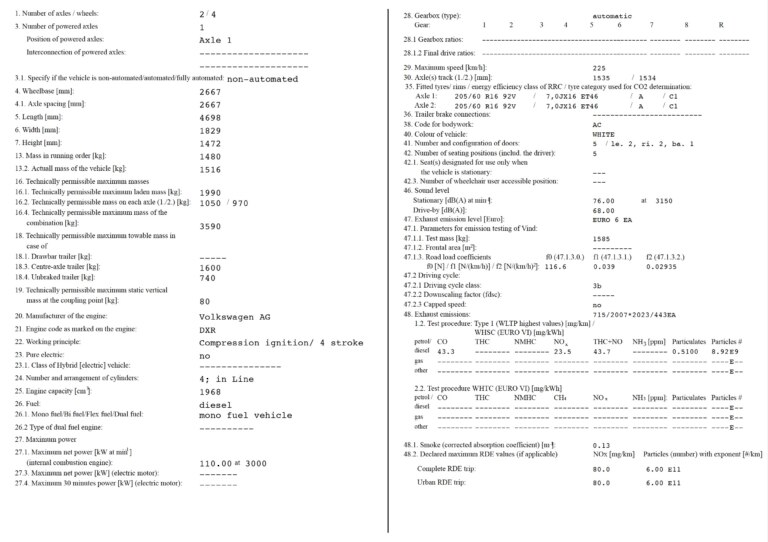
COC (Certificate of Conformity) for Škoda Octavia
The work does not end there
Even after all approvals have been obtained and series production has begun, the work of developers and homologation specialists does not stop. Vehicles continue to evolve and be modernised aftermarket launch, with up to two rounds of technical changes each year as part of ongoing model updates. If such a change is homologation-relevant (which is not always the case), all approvals must be updated accordingly.
When a vehicle receives a new version, such as a Sportline variant, it does not need to be homologated from scratch; instead, an extension of the existing approval is requested. New engines, however, must undergo emissions and noise measurements, and if the engine represents the heaviest variant offered in the model range, additional crash tests and braking system tests are also required.

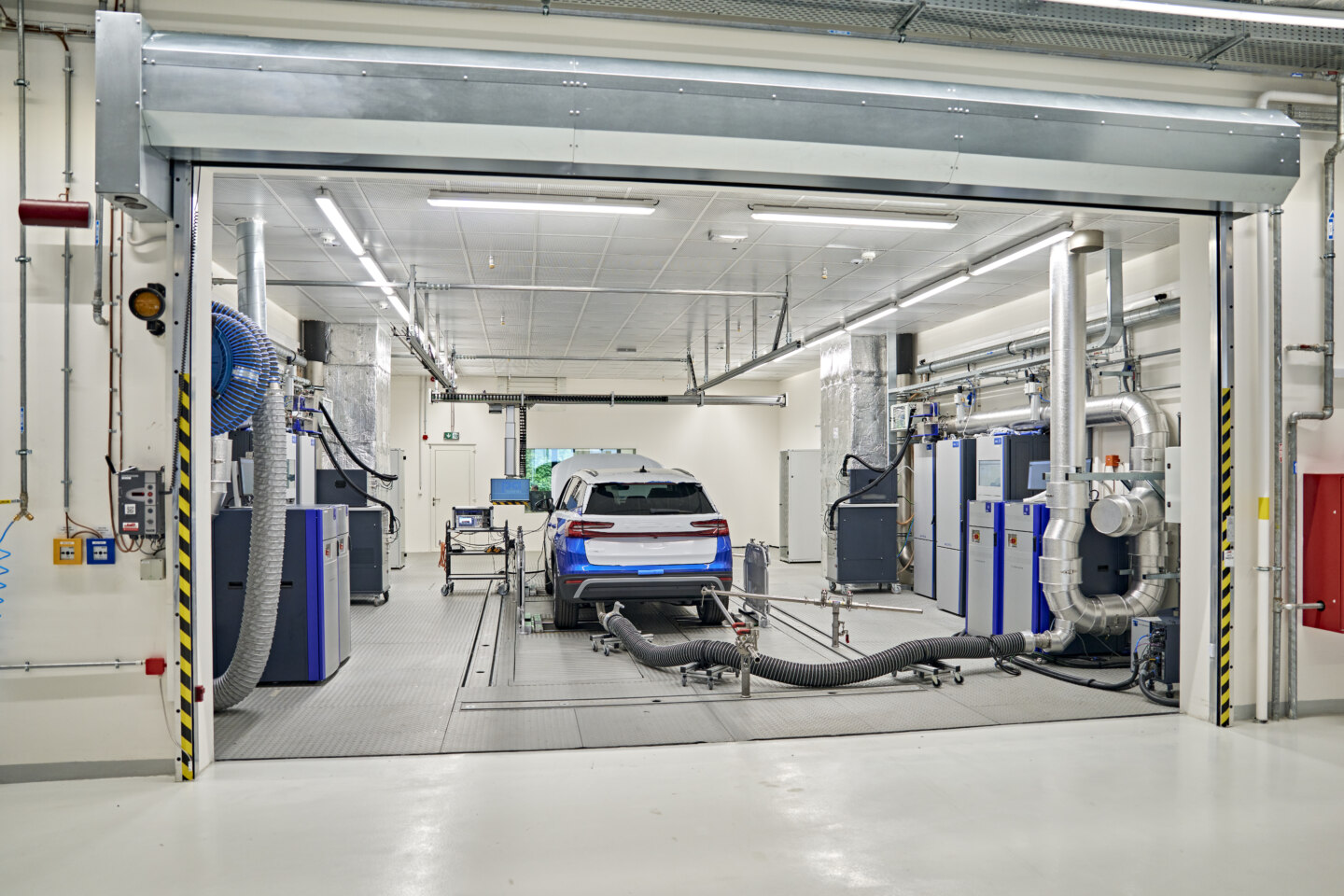 Škoda Auto Emission Center

Be the first
to get the latest stories
Explore more


Media Box
8 images
Show more
Show less