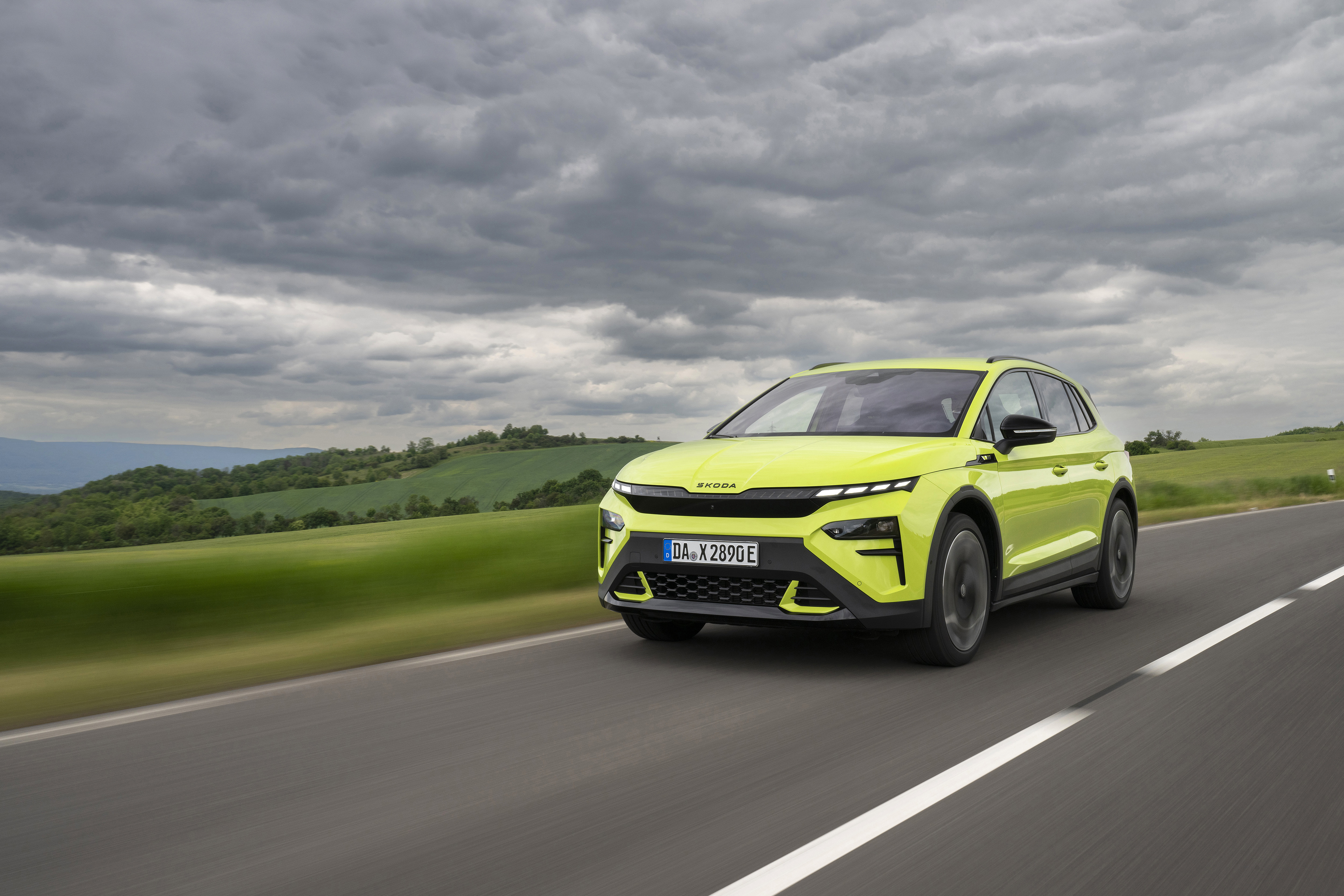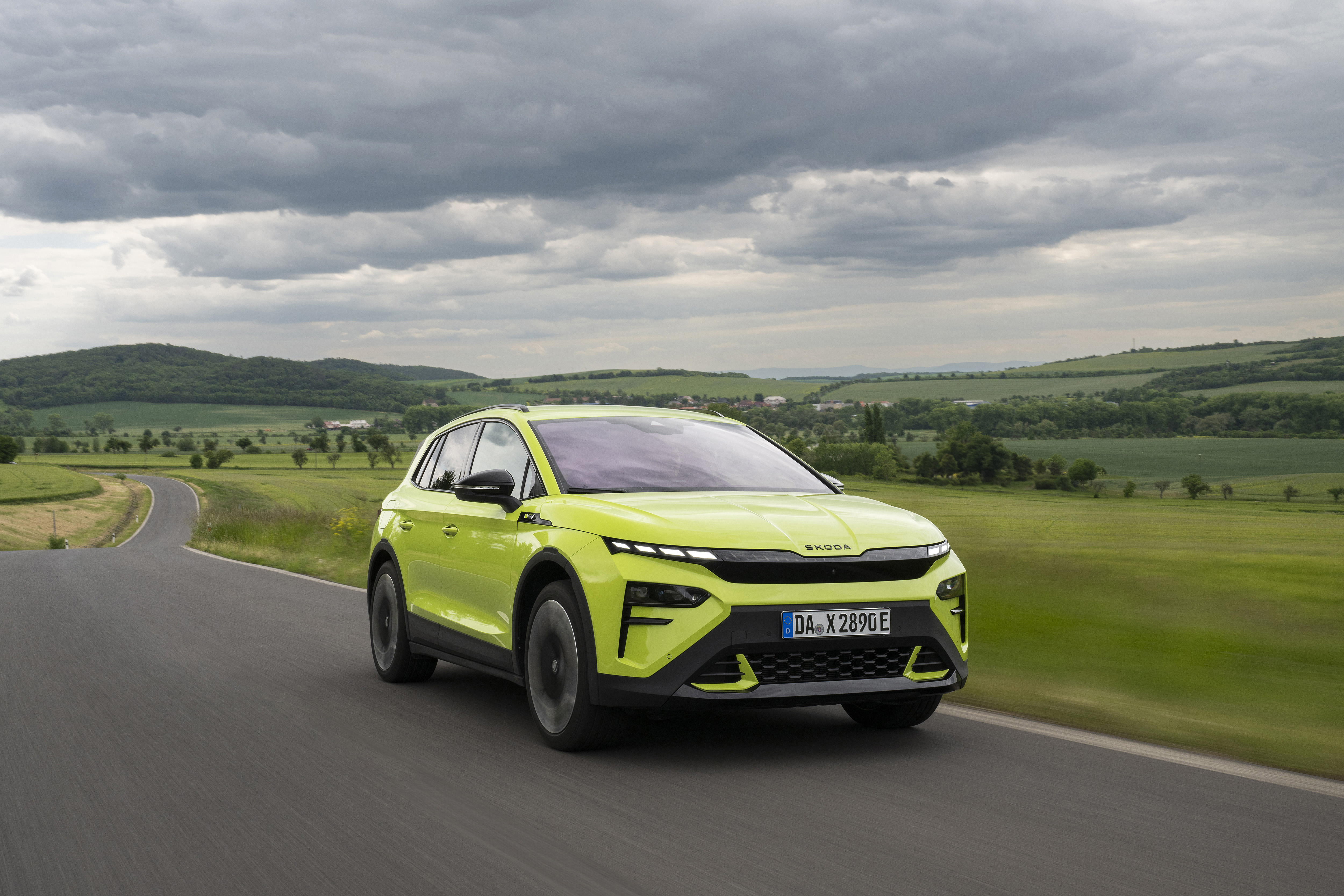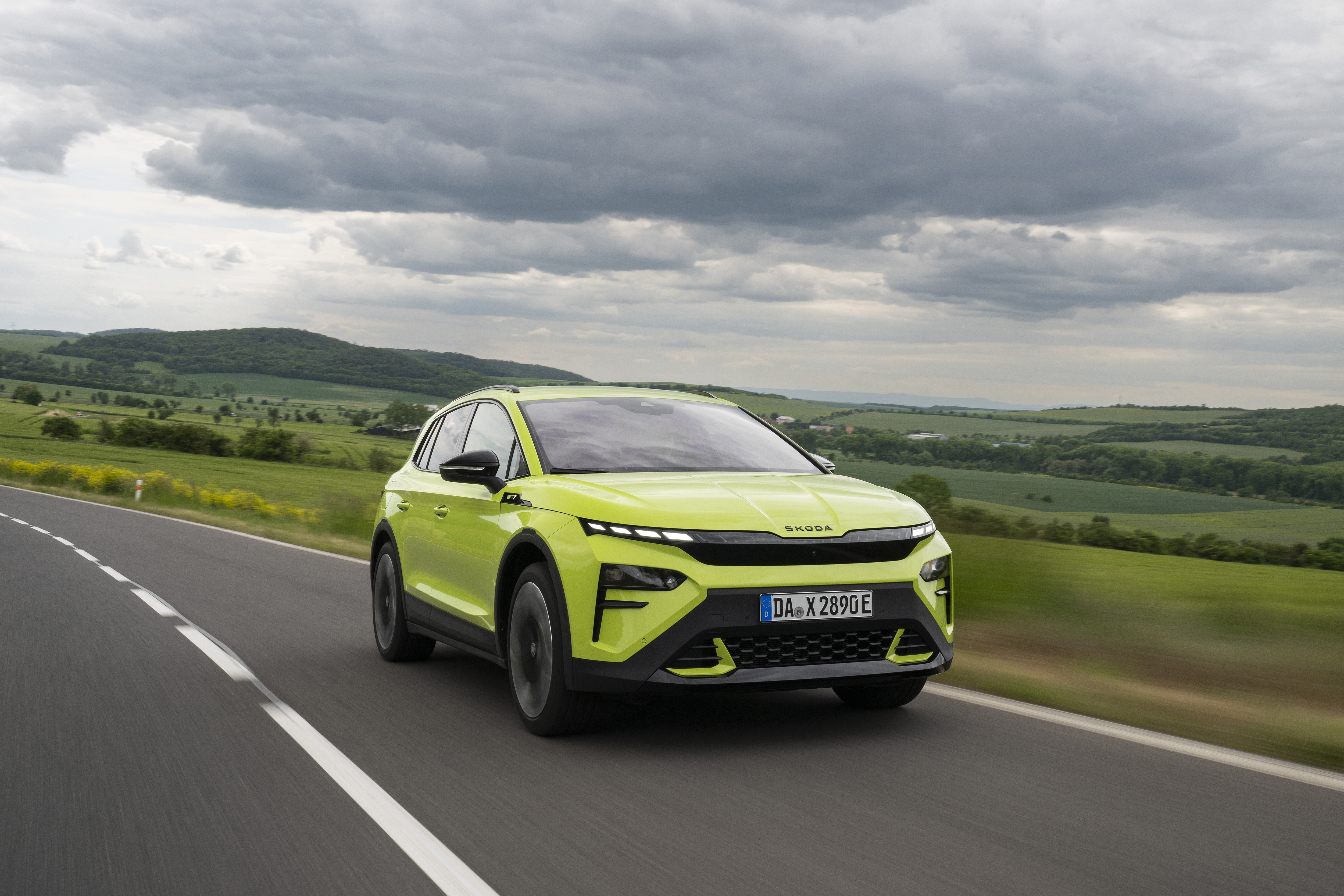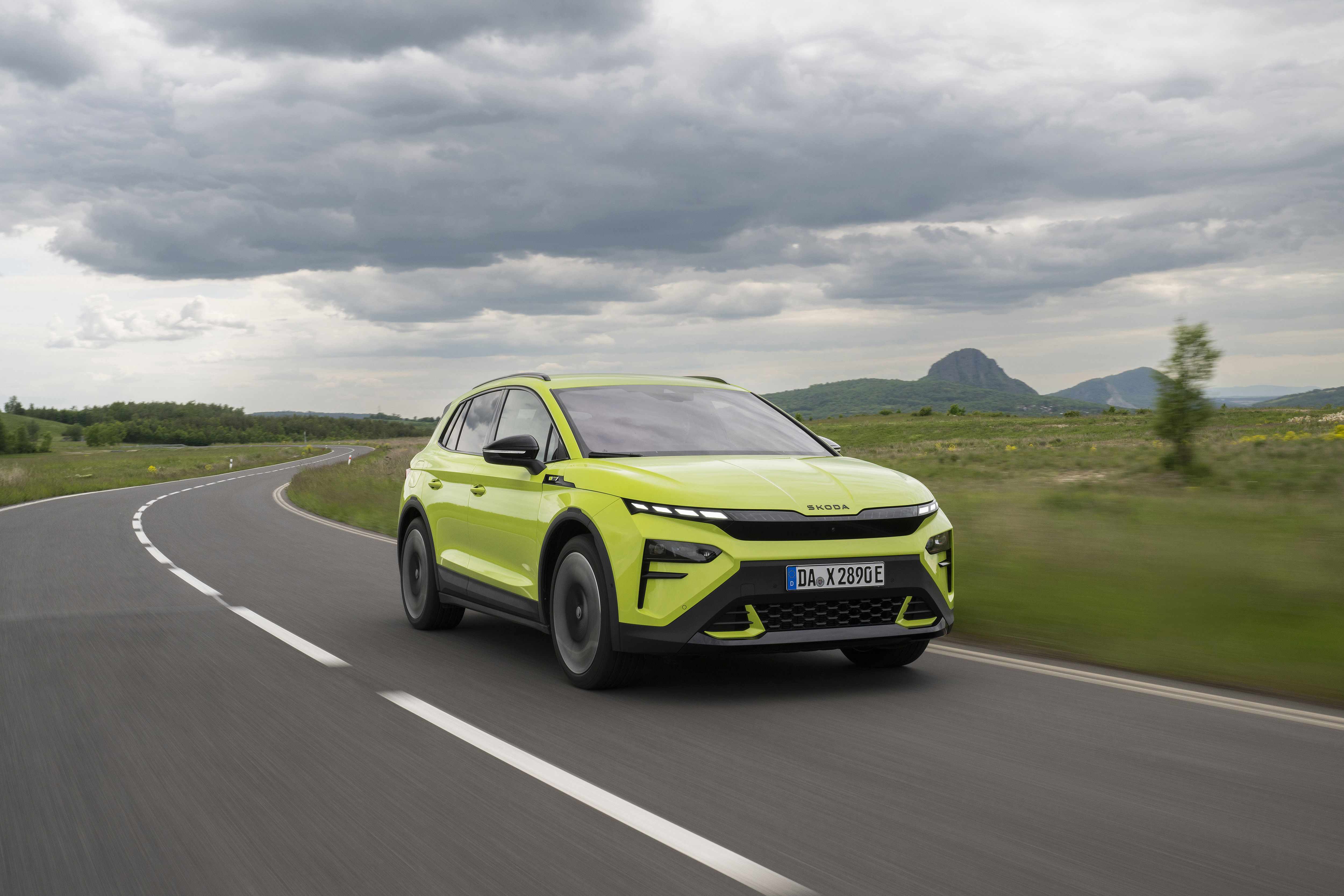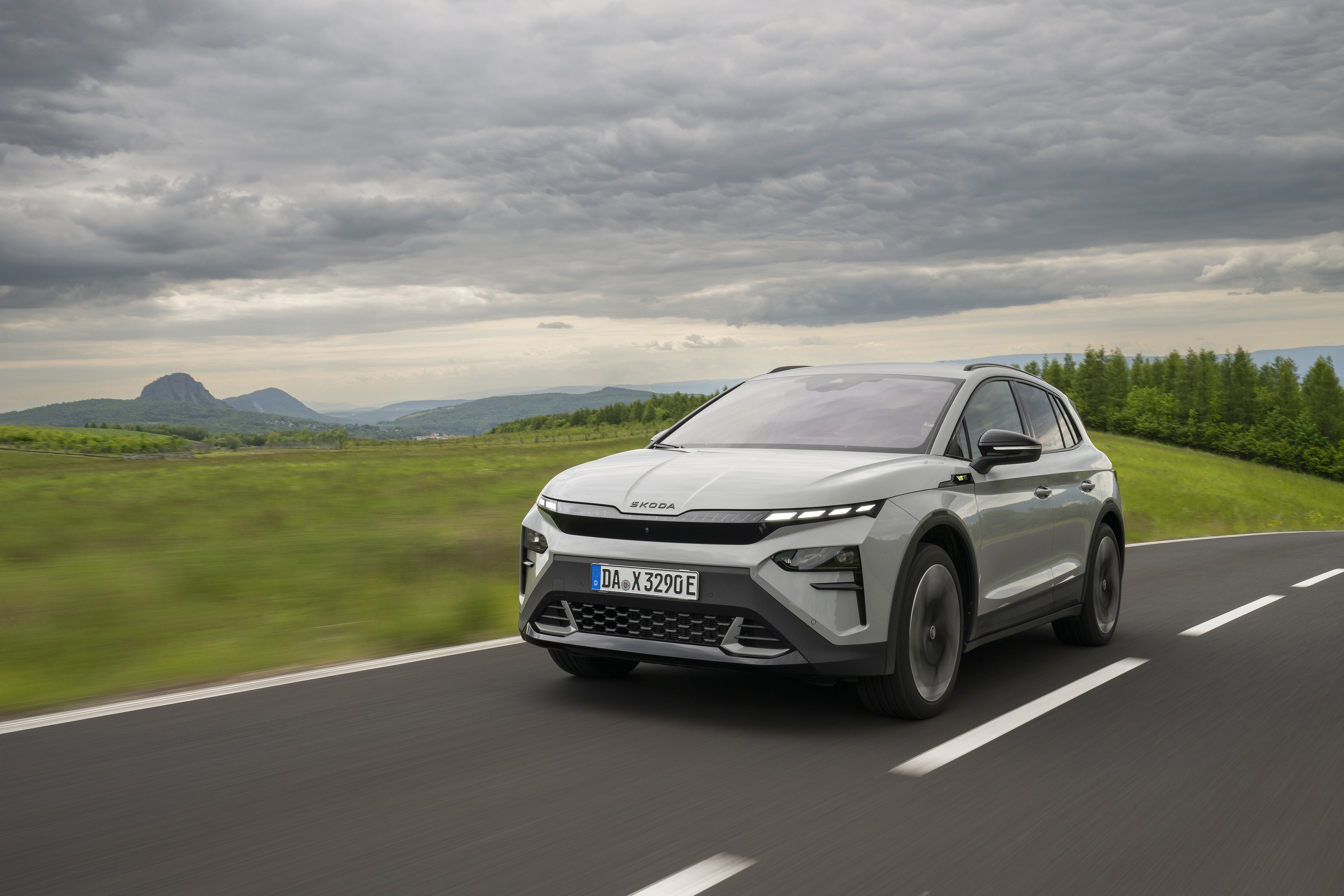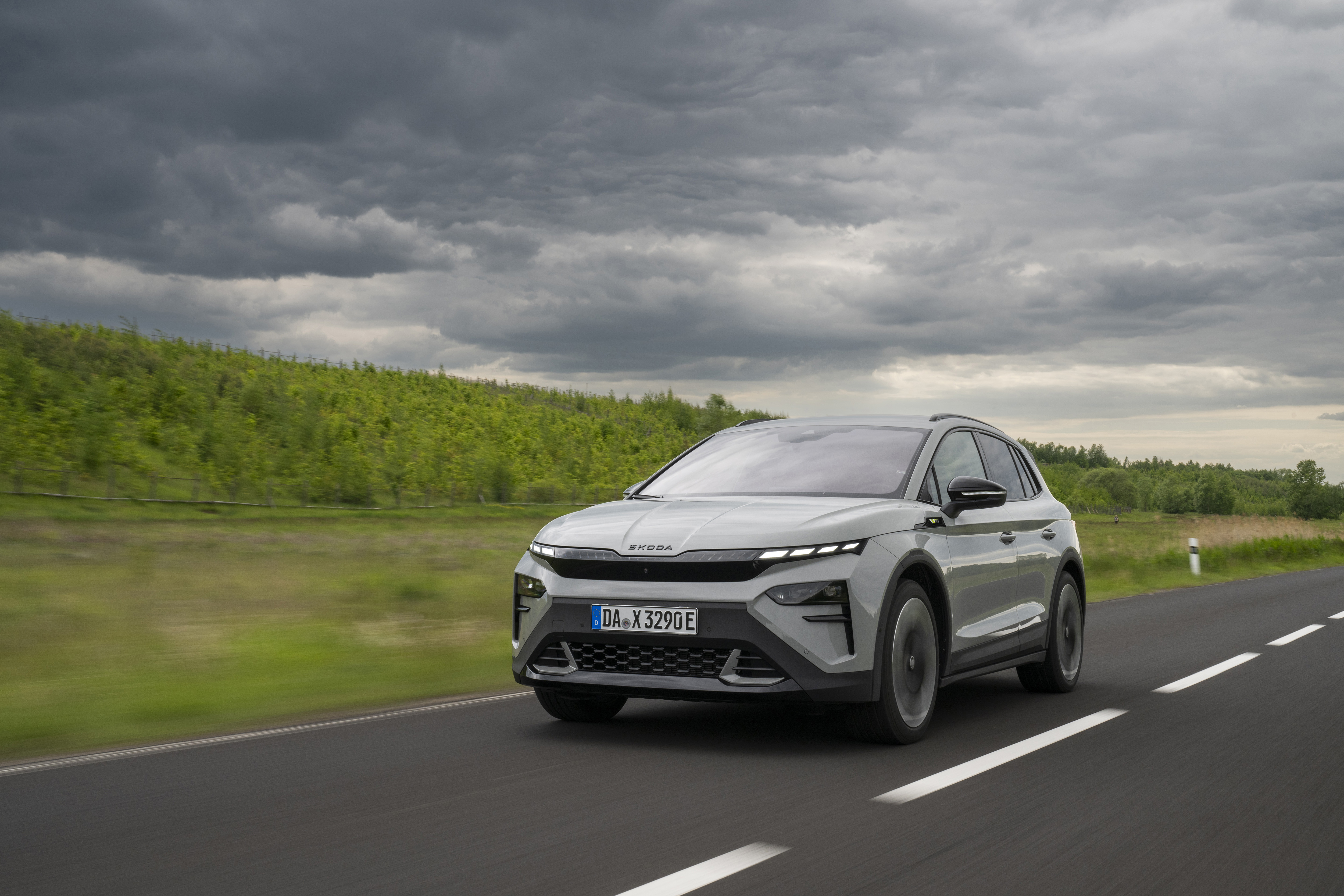
The all-new Elroq RS: The sportiest version of Škoda’s electric compact SUV

› All-electric range-topper with 250 kW system output
› Škoda’s fastest charging and accelerating production model to date, with up to 185 kW and acceleration from 0 to 100 km/h in 5.4 seconds
› Extensive standard equipment includes adaptive chassis, LED Matrix beam headlights and RS-specific accessories, in addition to the already generous standard equipment of the Elroq
› Compared to other variants, the Elroq RS Matt has been equipped with adaptive DCC suspension with 21" wheels. Modified driving modes emphasize the car's sporty performance, but also enable highly comfortable travel and the highest Maxx equipment package

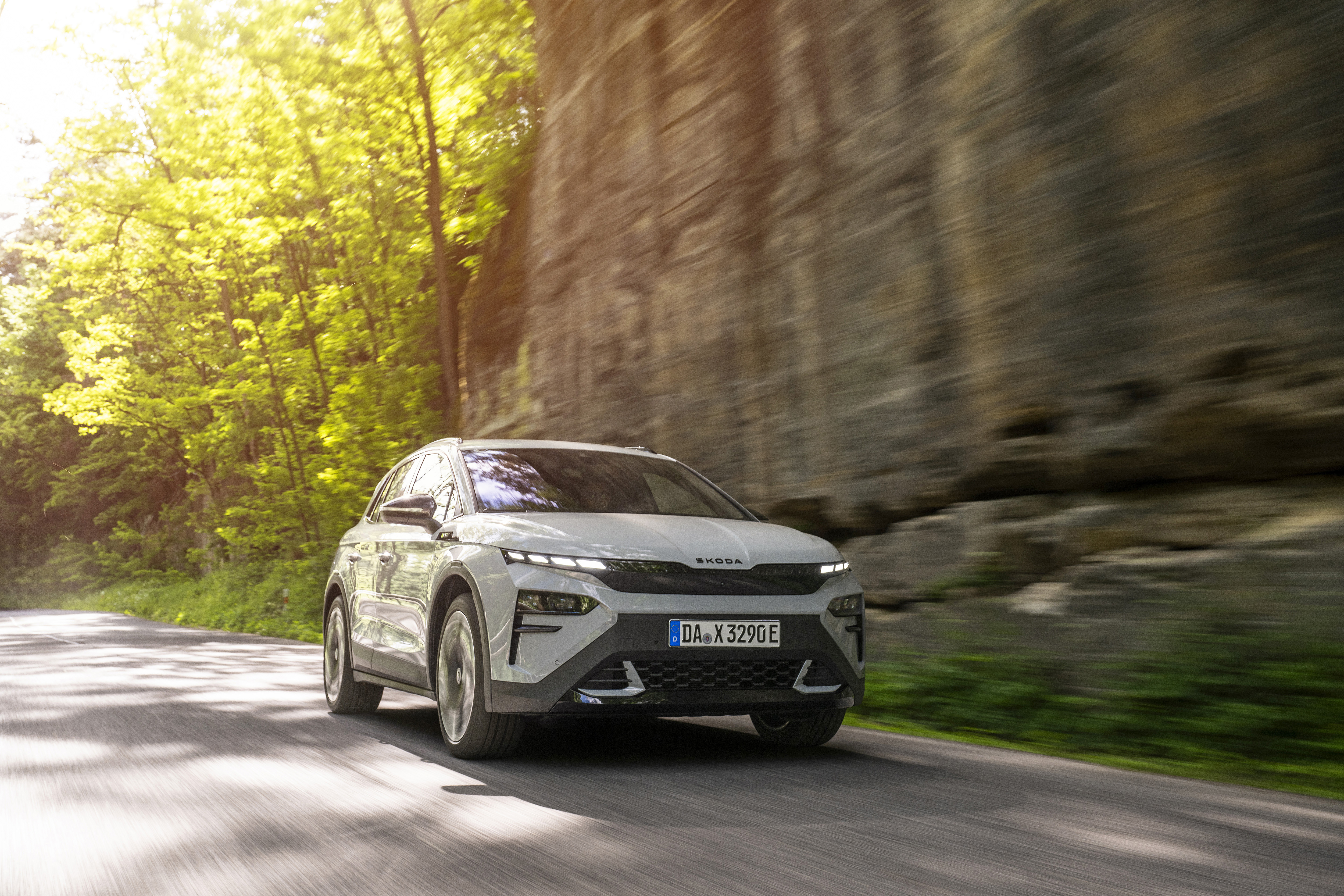
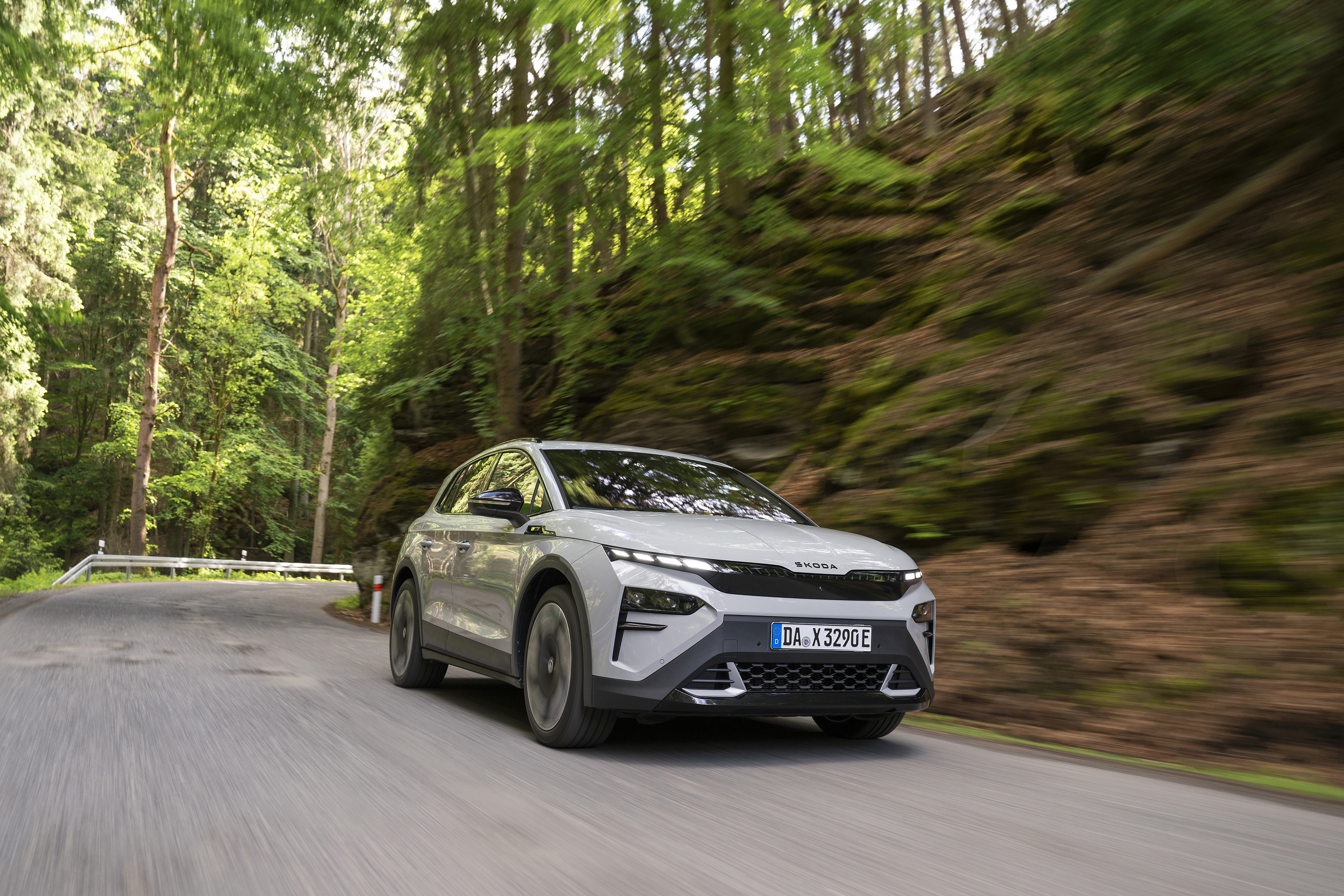
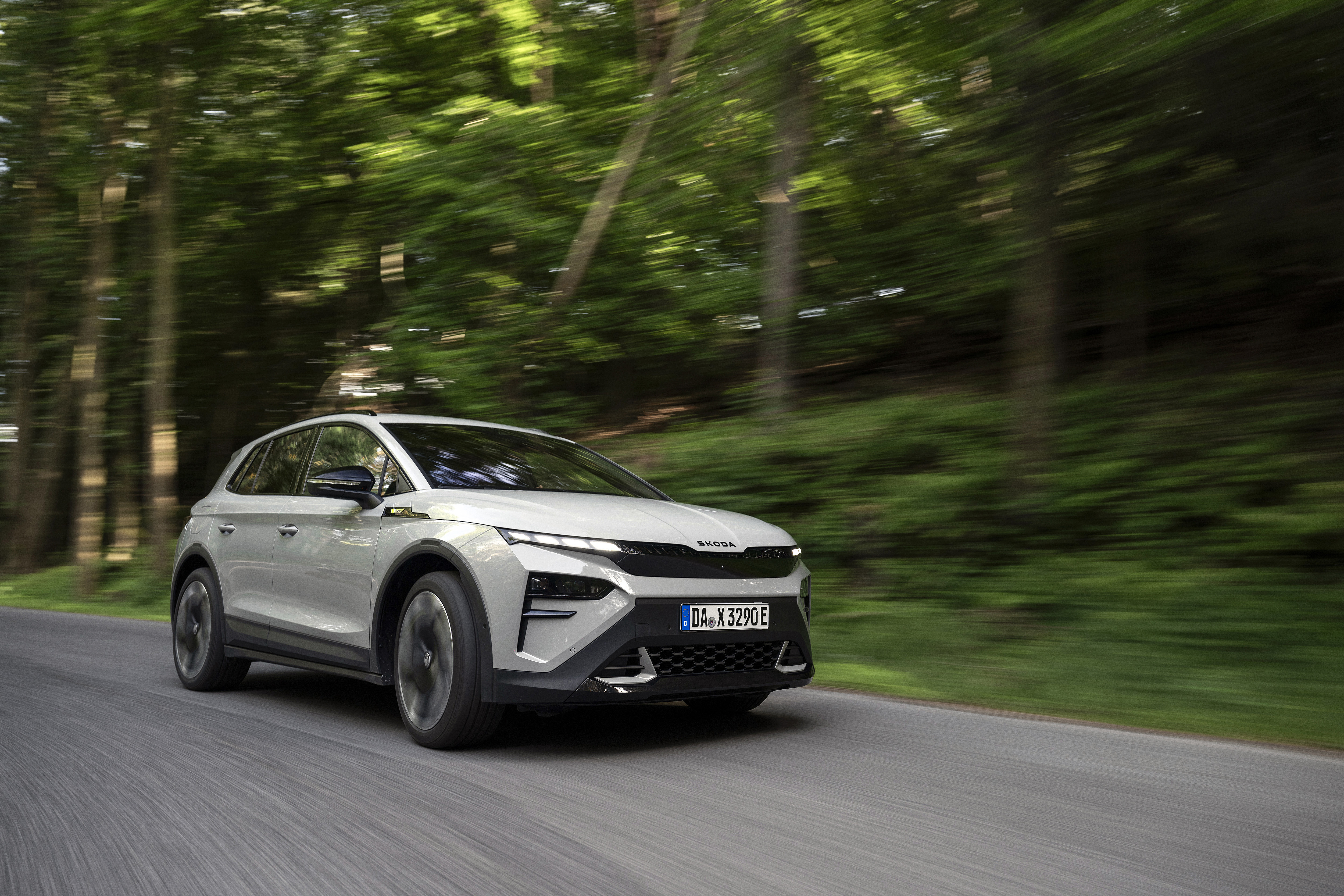
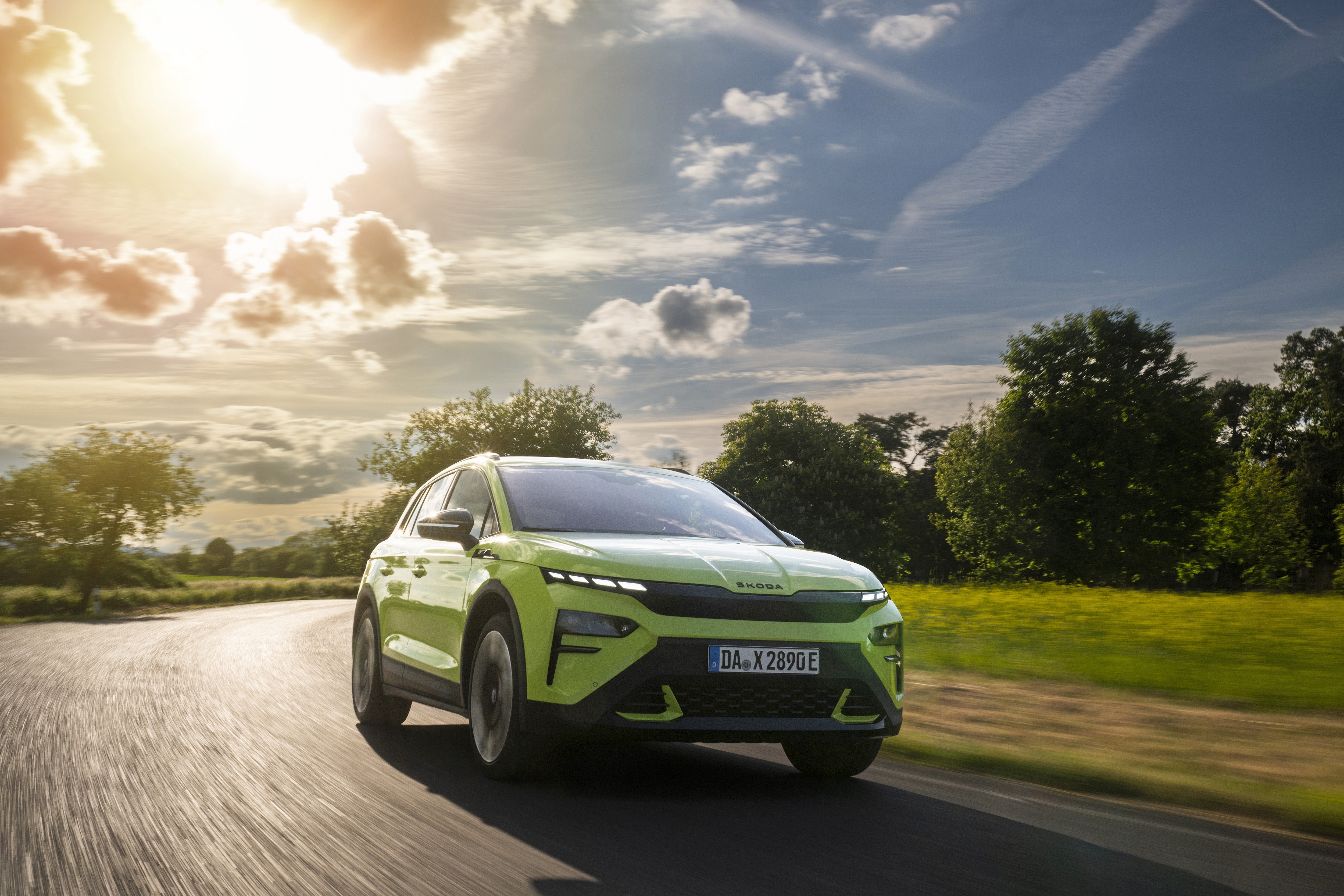
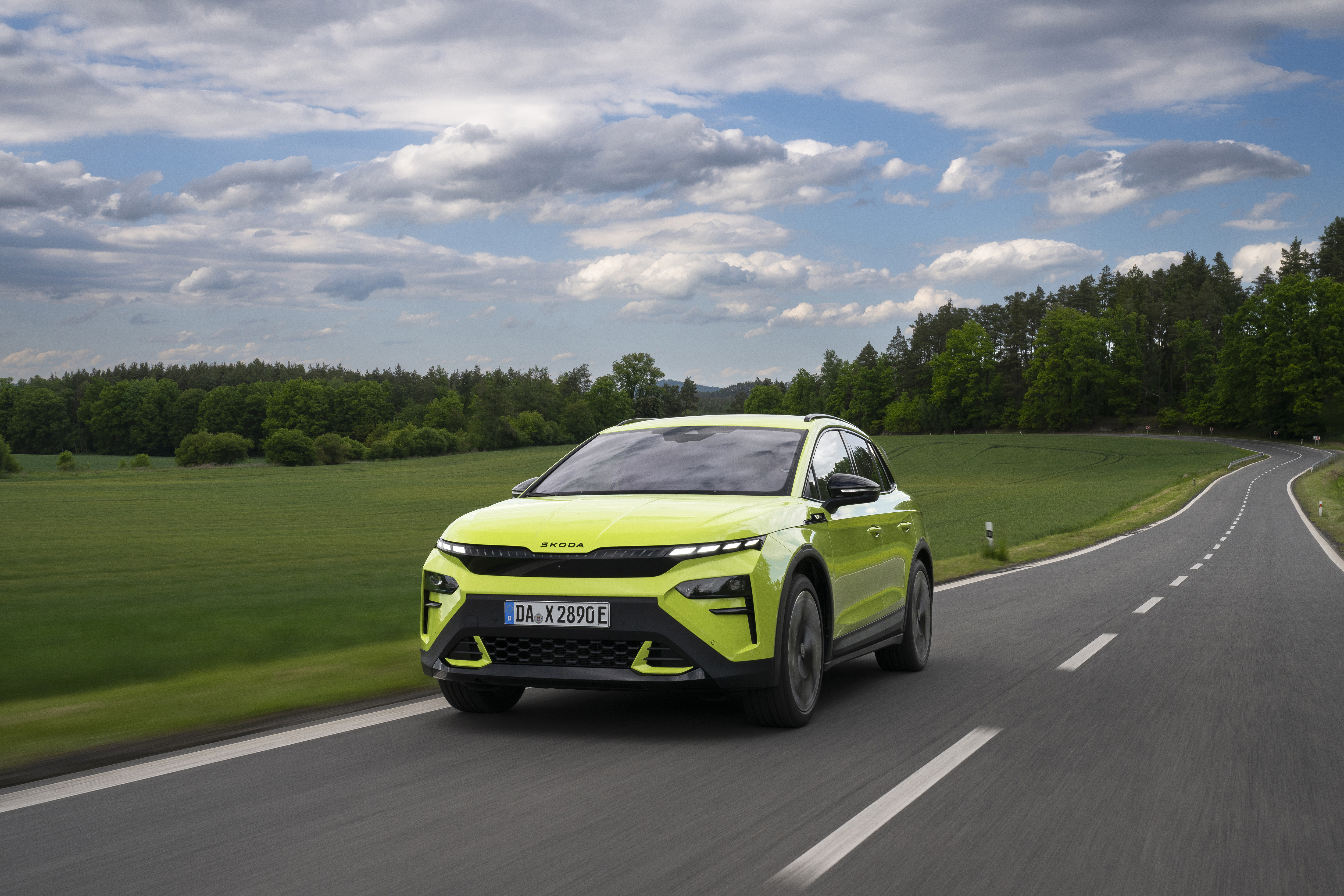
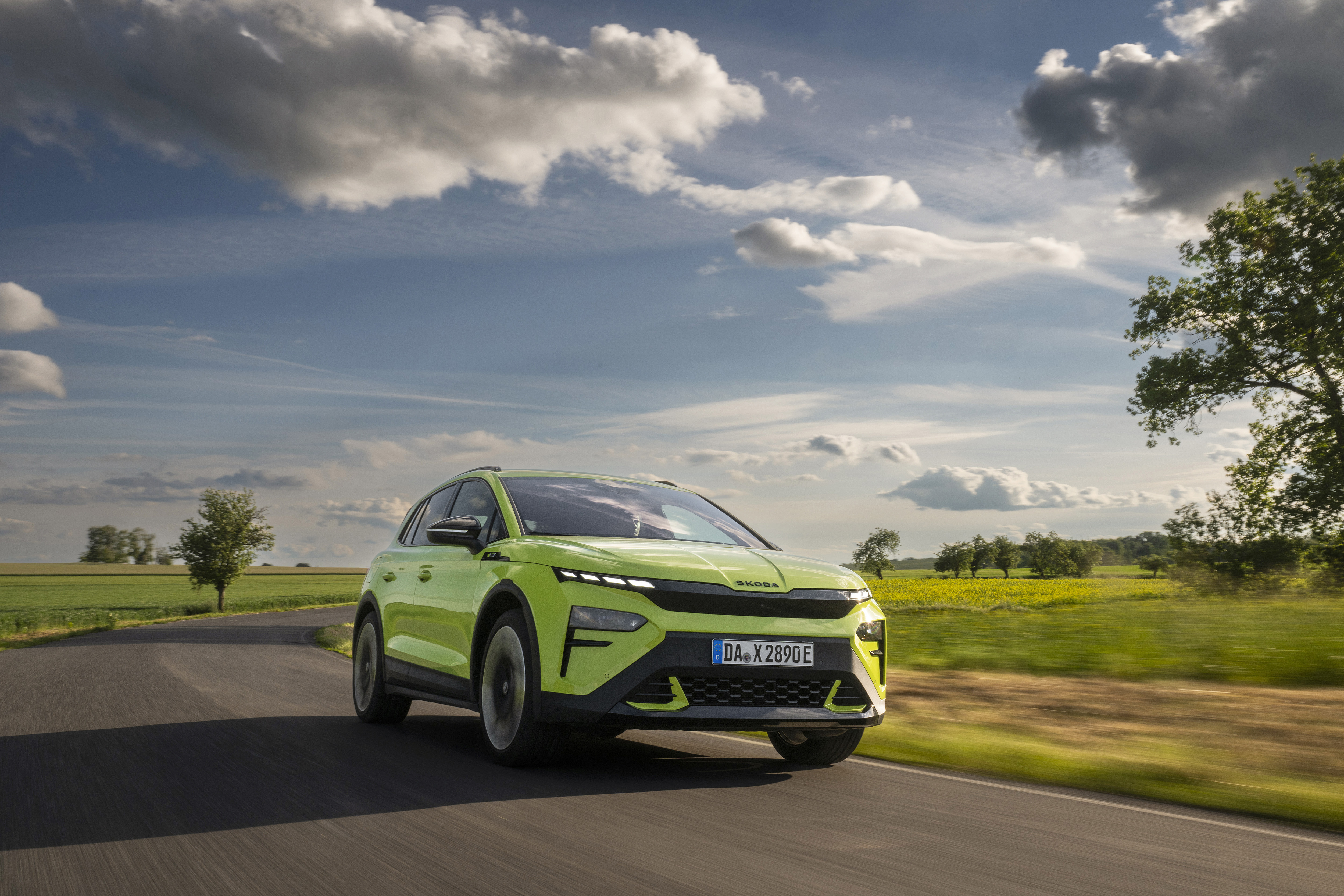
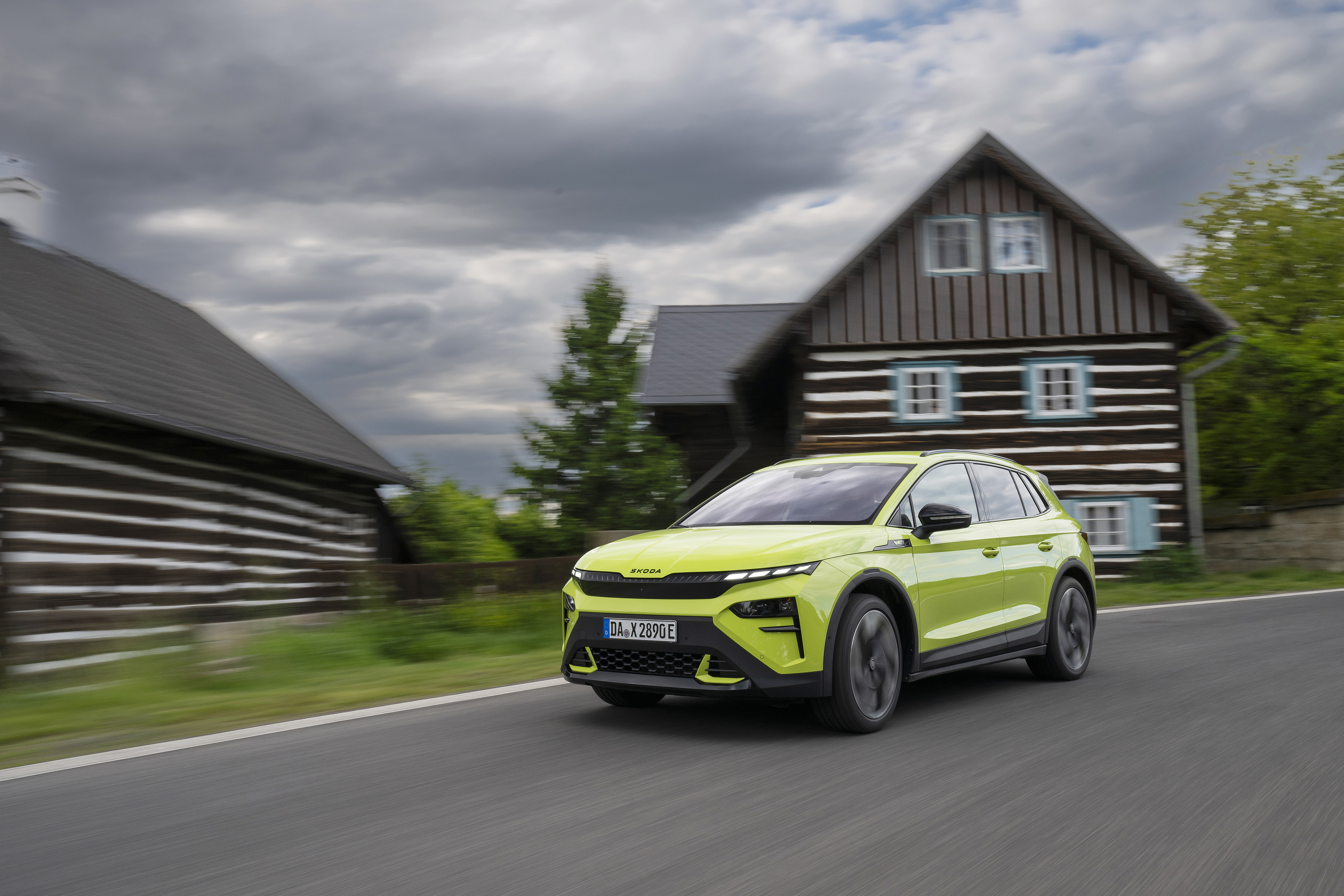
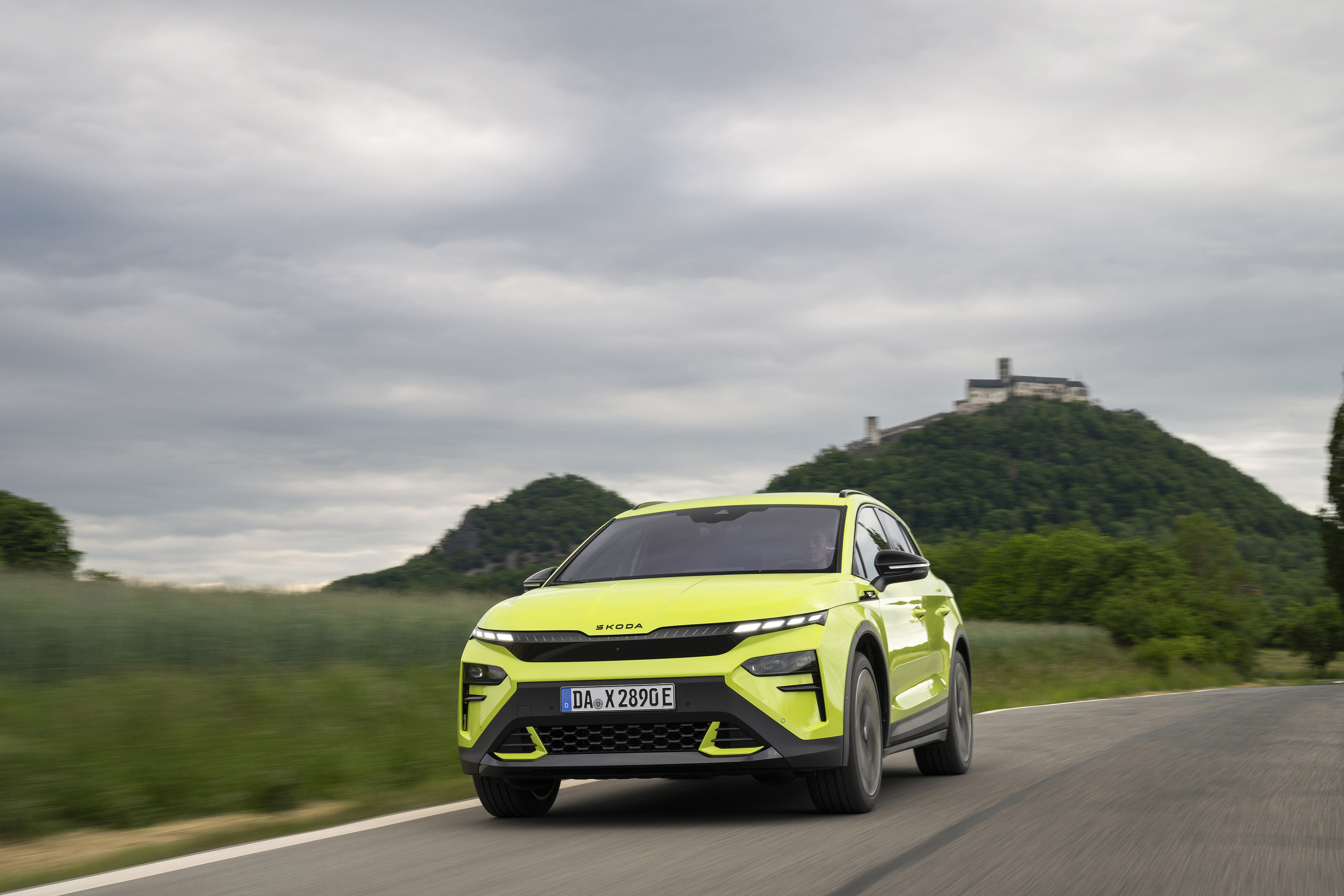
Mladá Boleslav, 16 June 2025 – Škoda Auto is launching the RS range-topper six months after the world premiere of the all-new Škoda Elroq, which competes in the popular electric compact SUV segment. The latest member of the RS family has two motors generating a total system output of 250 kW and is equipped with all‑wheel drive. The Škoda Elroq RS comes with an electric range of more than 550 kilometres on the WLTP cycle, specific RS accessories and comprehensive standard equipment. It is also the fastest accelerating car in Škoda’s current model portfolio, sprinting from 0 to 100 km/h in 5.4 seconds.

“The Elroq RS is the next important step in Škoda's expanding electric future. Merging our esteemed RS legacy with innovative technology makes this a new top-of-the-line model that achieves 0 to 100 km/h in just 5.4 seconds. The Elroq RS delivers this thrilling performance alongside a range exceeding 550 kilometres. Our first all-electric compact SUV is taking the market by storm in its first few months. In April, it was Europe’s no. 1 bestselling pure BEV and has so far totalled about 70,000 orders through the end of May. These figures confirm the Elroq’s status as a compelling choice. We are confident that the Elroq RS will contribute to this success story and set new standards by offering a great blend of driving enjoyment and everyday usability.”


Klaus Zellmer, CEO of Škoda Auto

“Škoda RS models traditionally combine dynamic performance and sporty looks with well‑balanced driving characteristics and practicality. The Elroq RS is no exception: the newest member of our RS family comes with an output of 250 kW and a range of more than 550 kilometres while the standard DCC blends sportiness and comfort to perfection. In terms of design, the Škoda Elroq RS introduces the new Modern Solid design language to our RS portfolio. Its high-gloss Tech-Deck Face fits in perfectly with the black accents that are a hallmark of our most dynamic models. This appealing package makes the Elroq RS the ideal everyday companion.”


Johannes Neft, Škoda Auto Board Member for Technical Development

Media launch in the north of the Czech Republic

The media launch takes place at the Aurel Polygon test centre in the north of the Czech Republic – a 30-minute drive from Mladá Boleslav, where the Elroq is manufactured. The Polygon is a development and innovation centre for the extensive testing of technologies, vehicles and their components. A wide range of functional, durability and other tests are carried out here. The 52,000 m2 proving ground includes test tracks for advanced assistance, brake and stability systems. A gravel road is available to test the durability of the bodywork and other vehicle parts, and a special zone is used to test vehicles beyond their operational limits. Cars can also be tested on surfaces such as cobblestones and washboard surfaces.

Škoda Elroq RS: Power consumption combined: 16.4 – 17.2 kWh/100 km, CO₂ emissions combined: 0 g/km. Information on consumption and CO₂ emissions, shown in ranges, depends on the selected vehicle equipment.

Škoda Elroq RS: Power consumption combined: 16.4 – 17.2 kWh/100 km, CO₂ emissions combined: 0 g/km. Information on consumption and CO₂ emissions, shown in ranges, depends on the selected vehicle equipment.

84 kWh battery, electric range of over 550 kilometres, fast charging at up to 185 kW

In the Škoda Elroq RS, the electric motors – on the front axle and on the rear axle – develop a total output of 250 kW and support all-wheel drive. Just like the Enyaq RS, the Elroq RS accelerates from 0 to 100 km/h in 5.4 seconds, making these two vehicles Škoda’s fastest accelerating production models to date, with a top speed of 180 km/h. The high-voltage battery comprises twelve modules, giving it a total gross capacity of 84 kWh (79 kWh net), enabling a maximum electric range of more than 550 kilometres on the WLTP cycle. Charging rates of up to 185 kW at DC fast-charging stations enable the battery to recharge from 10 to 80 per cent in around 26 minutes. AC charging at 11 kW takes the battery from 0 to 100 per cent in eight hours. The Elroq RS achieves a drag coefficient as low as 0.267.

Škoda Elroq RS: Power consumption combined: 16.4 – 17.2 kWh/100 km, CO₂ emissions combined: 0 g/km. Information on consumption and CO₂ emissions, shown in ranges, depends on the selected vehicle equipment.

Škoda Elroq RS: Power consumption combined: 16.4 – 17.2 kWh/100 km, CO₂ emissions combined: 0 g/km. Information on consumption and CO₂ emissions, shown in ranges, depends on the selected vehicle equipment.

Adaptive chassis and LED Matrix beam headlights as standard, exclusive alloy wheels

Black exterior details and exclusive alloy wheels up to 21 inches in size underline the car’s dynamic appearance. The adaptive chassis and progressive steering make for excellent driving dynamics in any situation. The extensive standard equipment includes cutting-edge LED Matrix beam headlights and LED rear lights with dynamic indicators. An electrically adjustable driver’s seat with massage function also comes as standard. It is available for the front passenger as part of the optional Maxx Package.

Modern Solid design language with Tech-Deck Face and Light Band

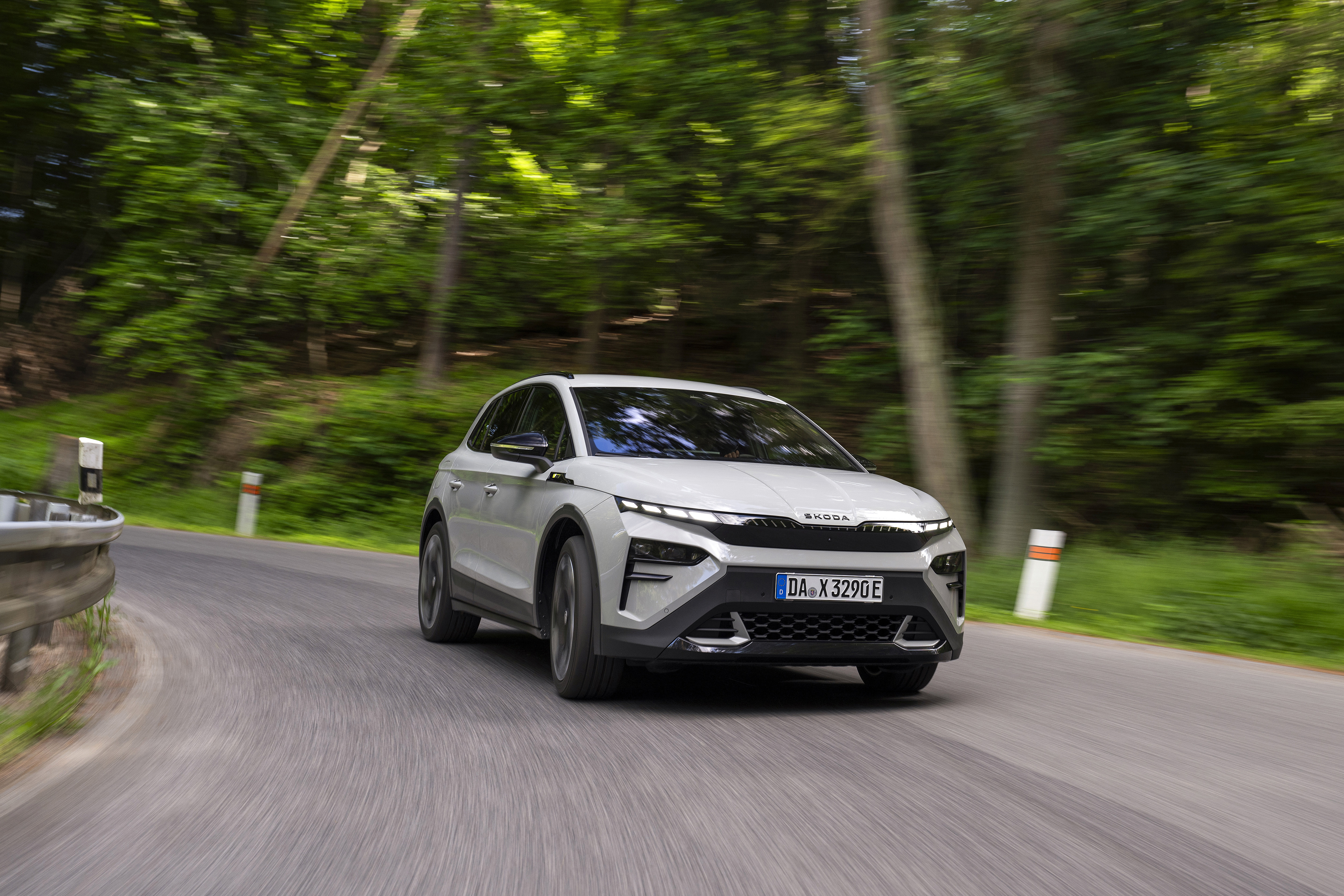
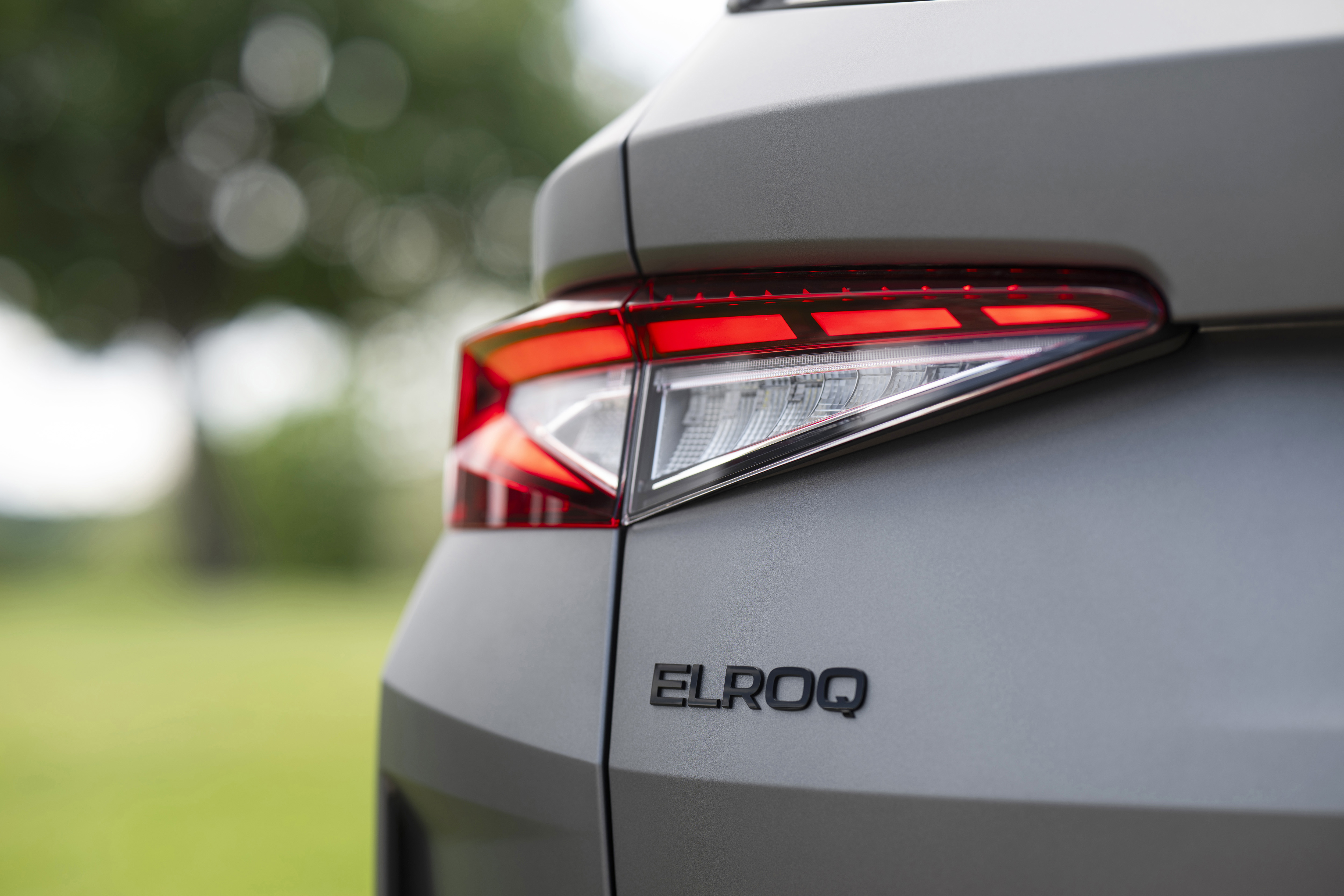
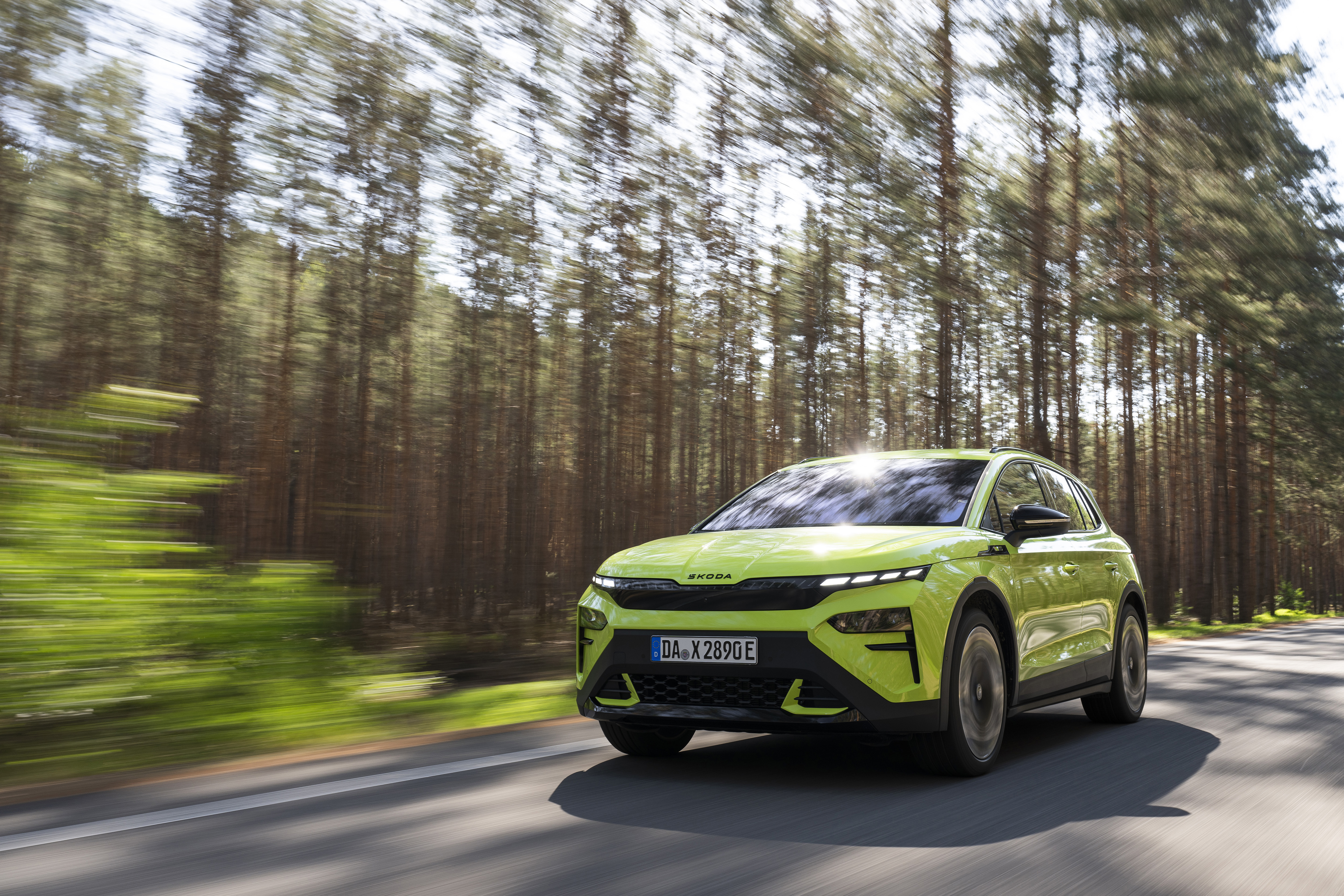
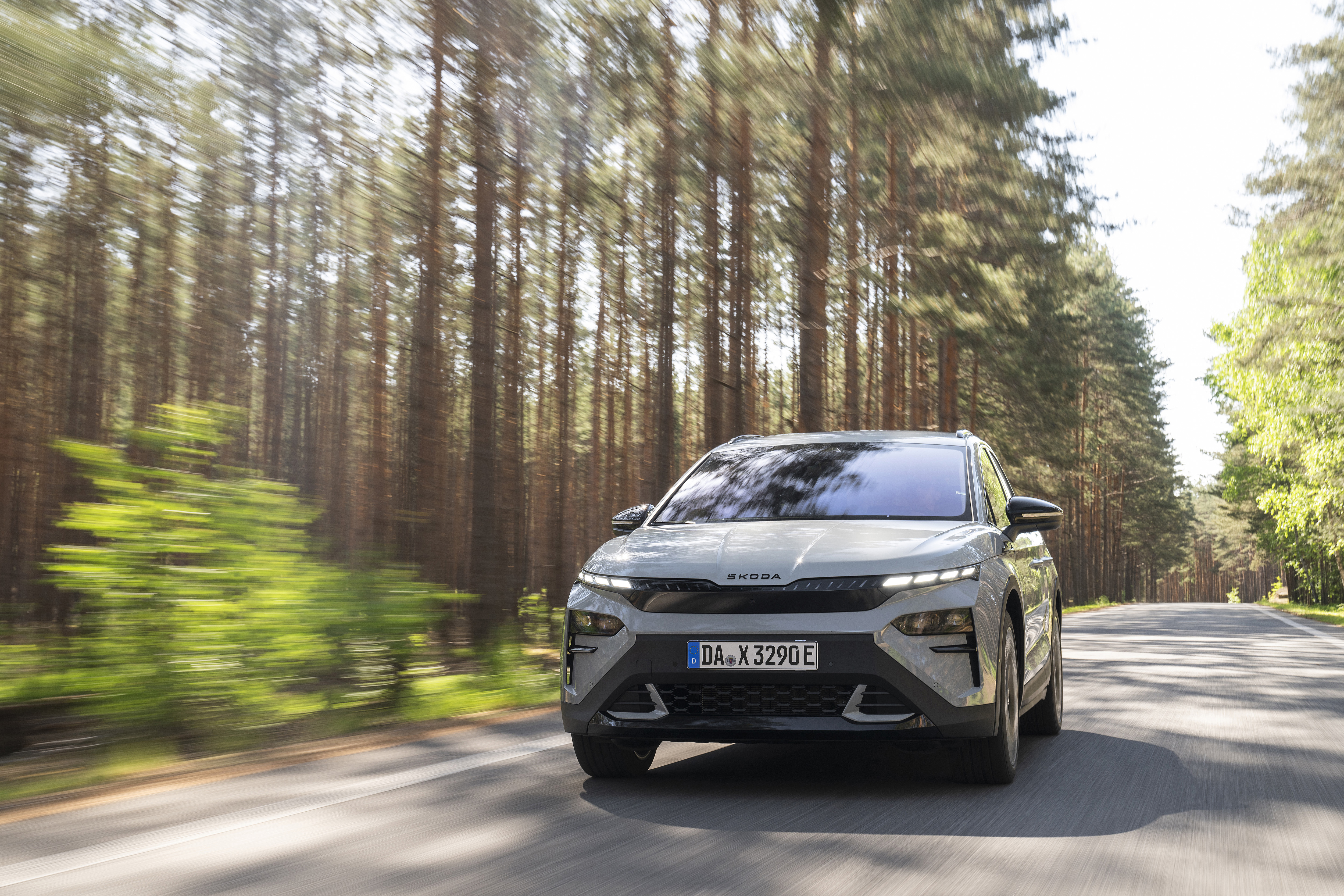
Like all Elroq models, the RS variant is characterised by the new high-gloss black Tech‑Deck Face accommodating multiple sensors, including radar. The Light Band composed of vertical “eyelashes” comes as standard, as do the LED Matrix beam headlights. Their four‑eye look is a hallmark of the Škoda SUV range. LED rear lights with dynamic indicators are also included as standard. As part of the Coming/Leaving Home animation, also standard, the Light Band creates a light show when the driver locks or unlocks the car or just approaches it with the key in their pocket. The illuminated segments gradually light up when the vehicle is unlocked and slowly fade when it is locked.

Škoda Elroq RS: Power consumption combined: 16.4 – 17.2 kWh/100 km, CO₂ emissions combined: 0 g/km. Information on consumption and CO₂ emissions, shown in ranges, depends on the selected vehicle equipment.

Hallmark RS style: black accents and new unique matt colour

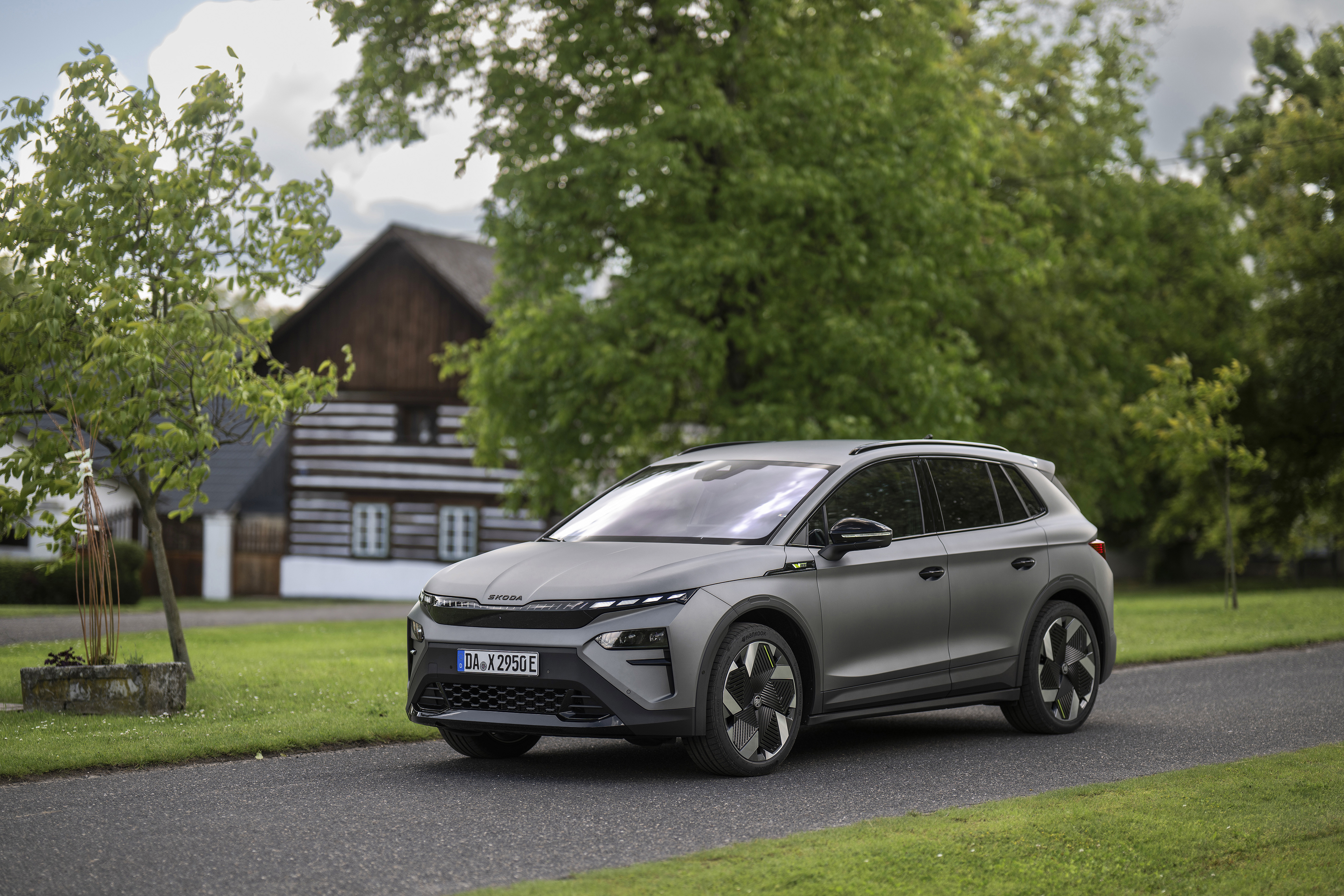
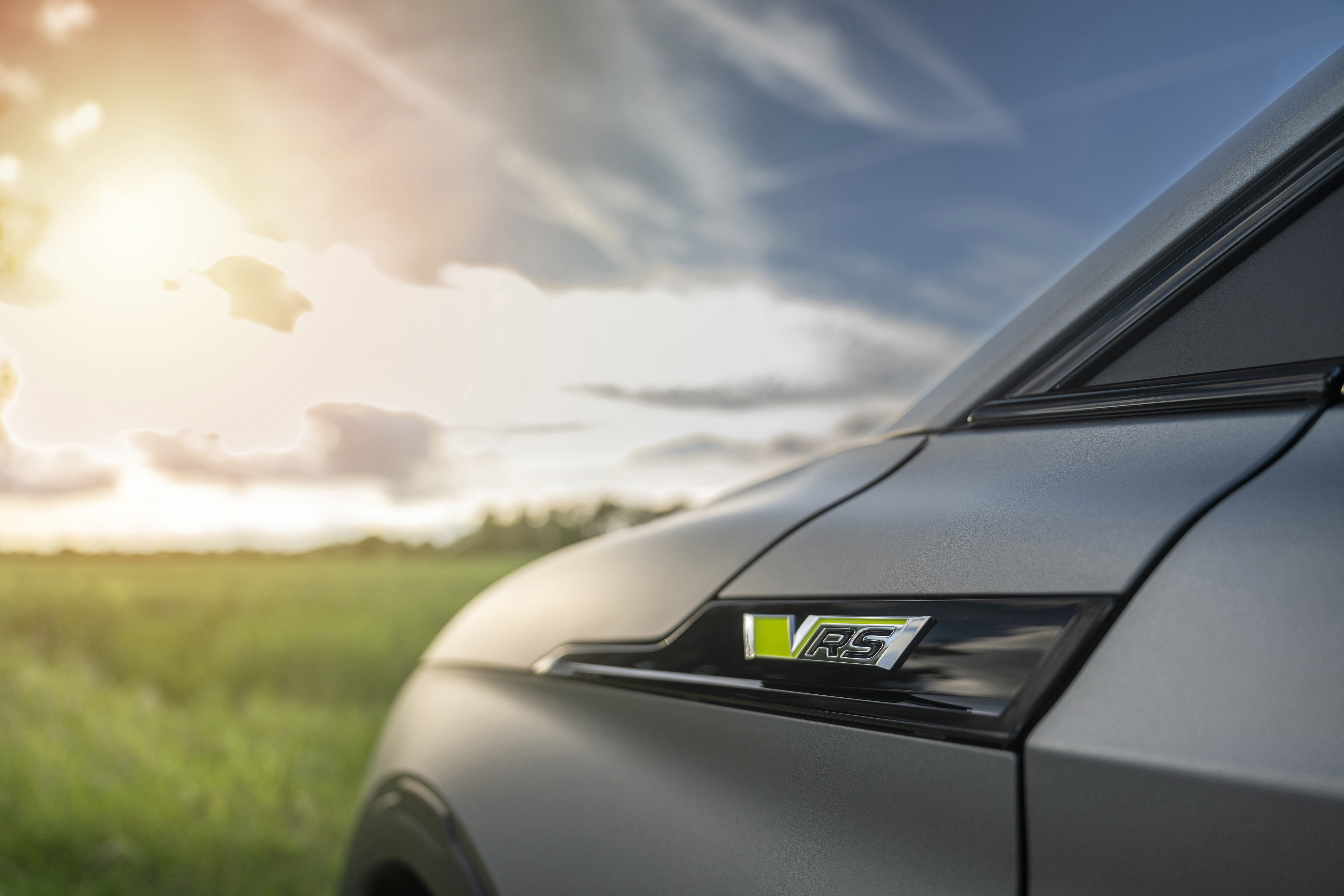
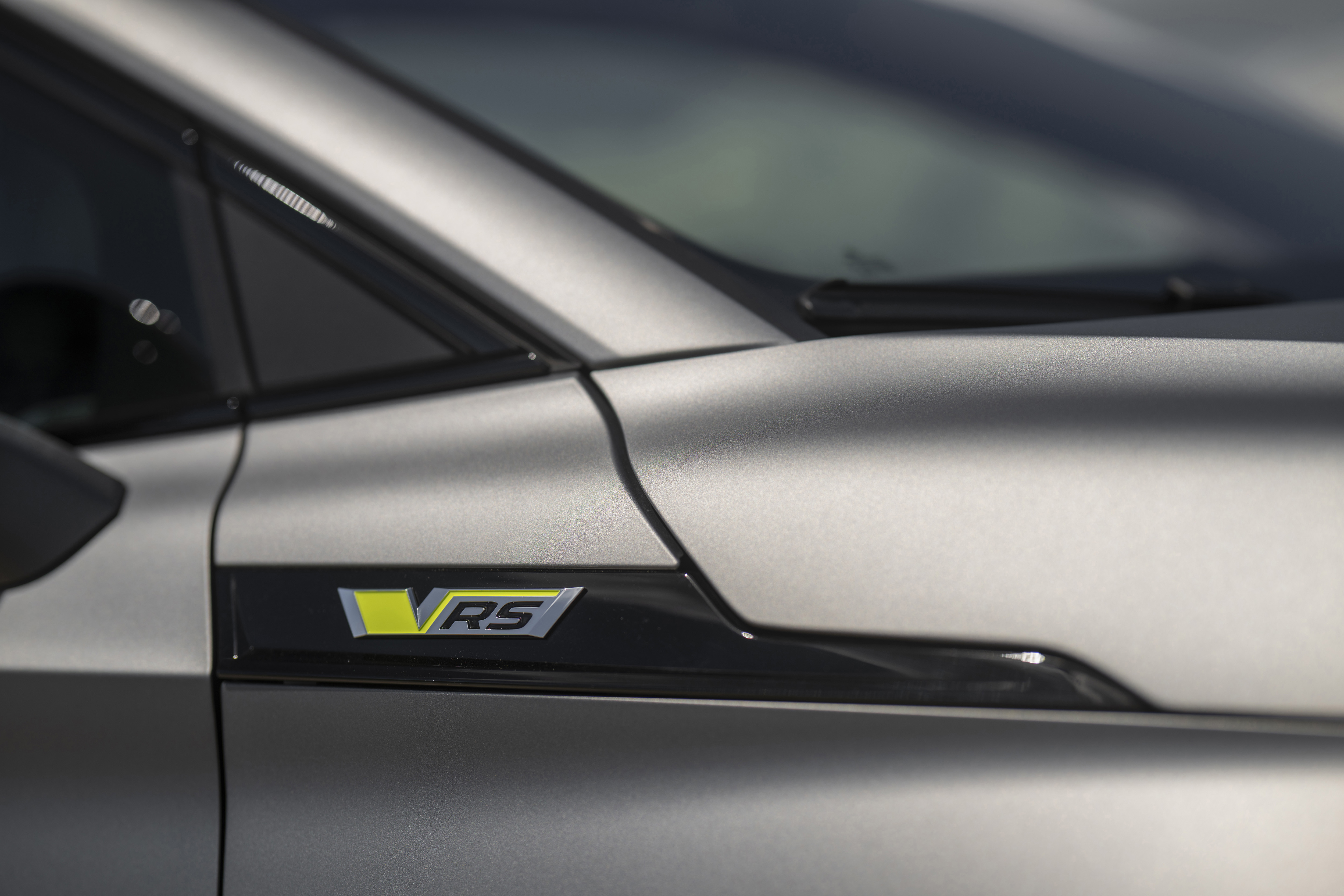
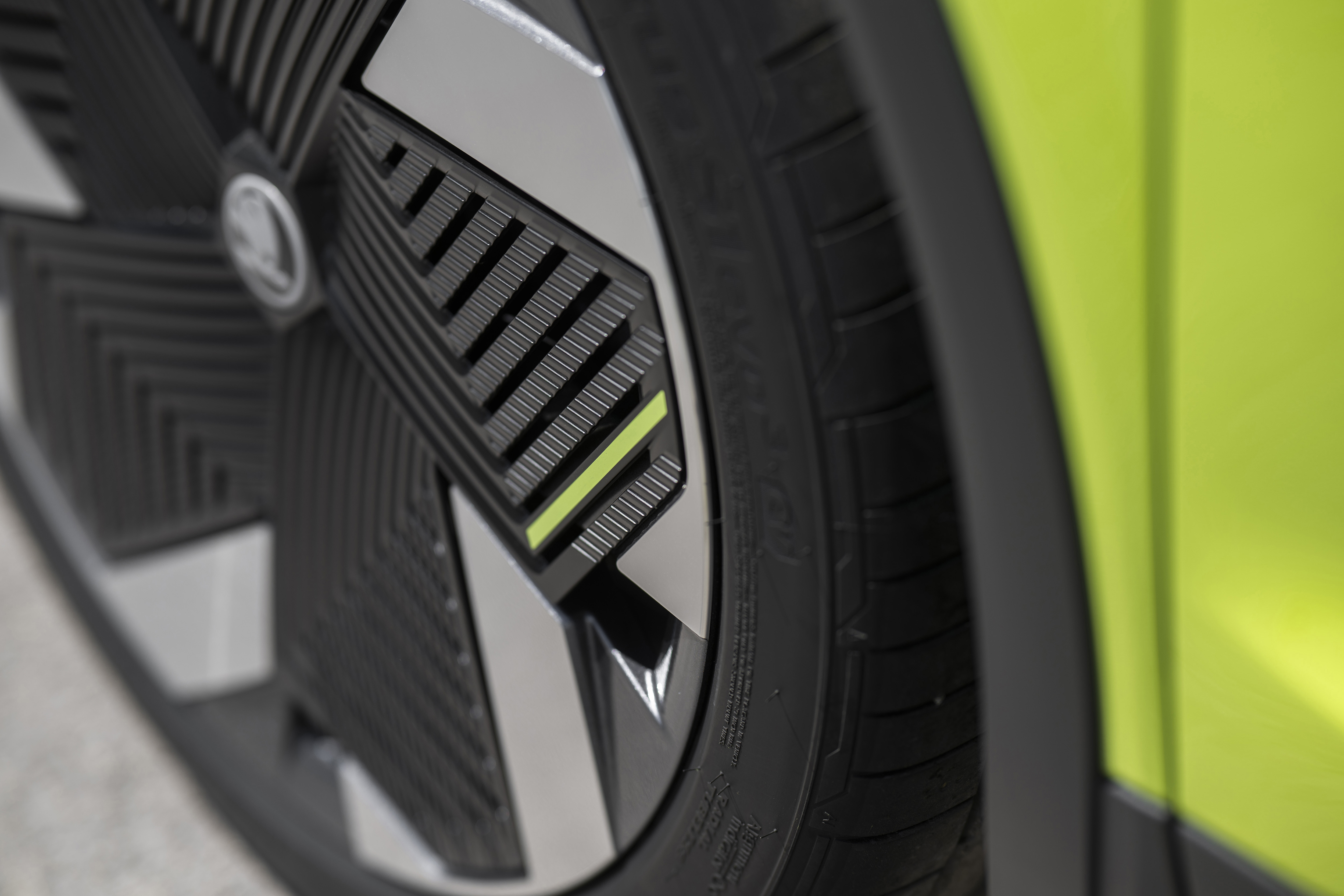
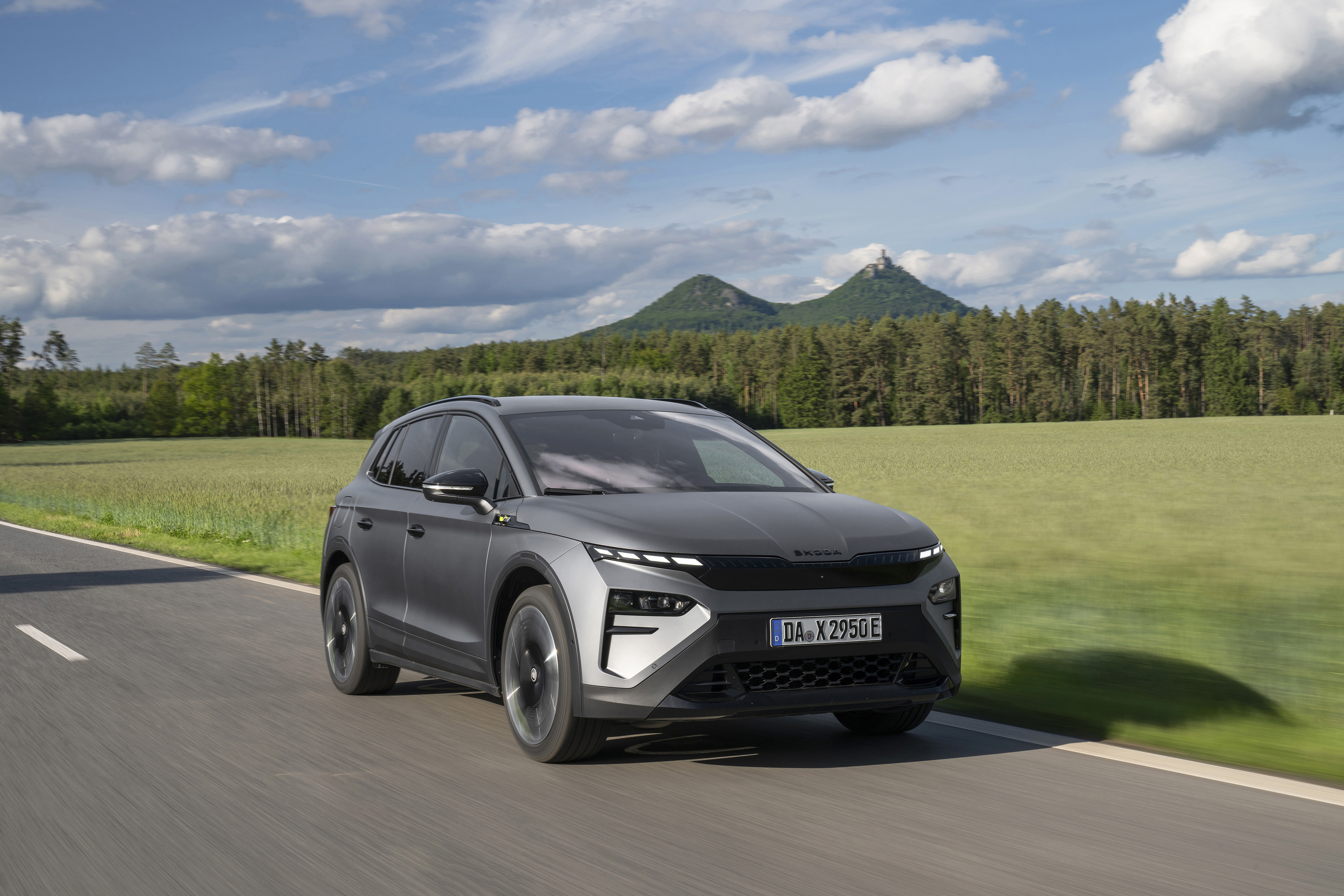
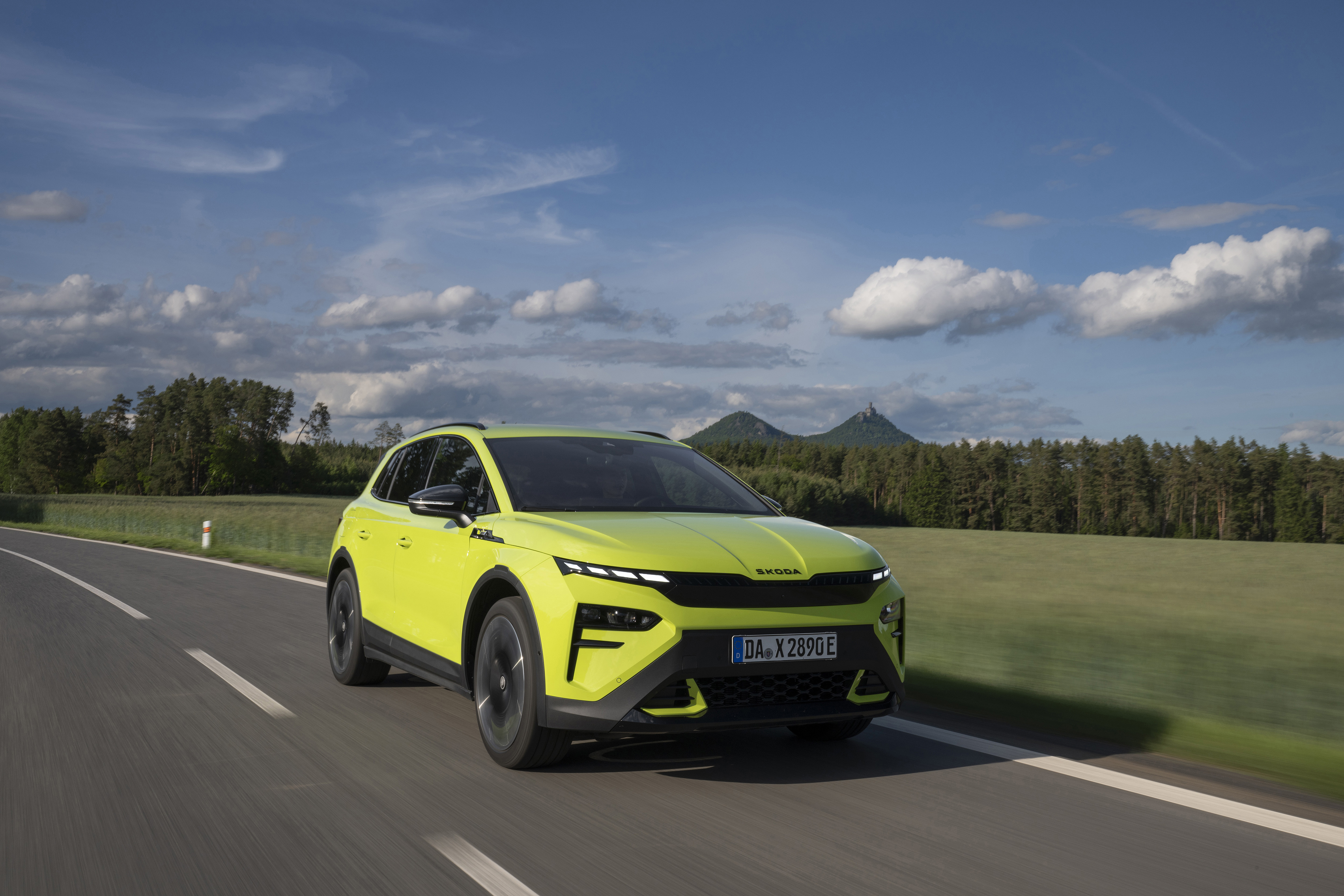
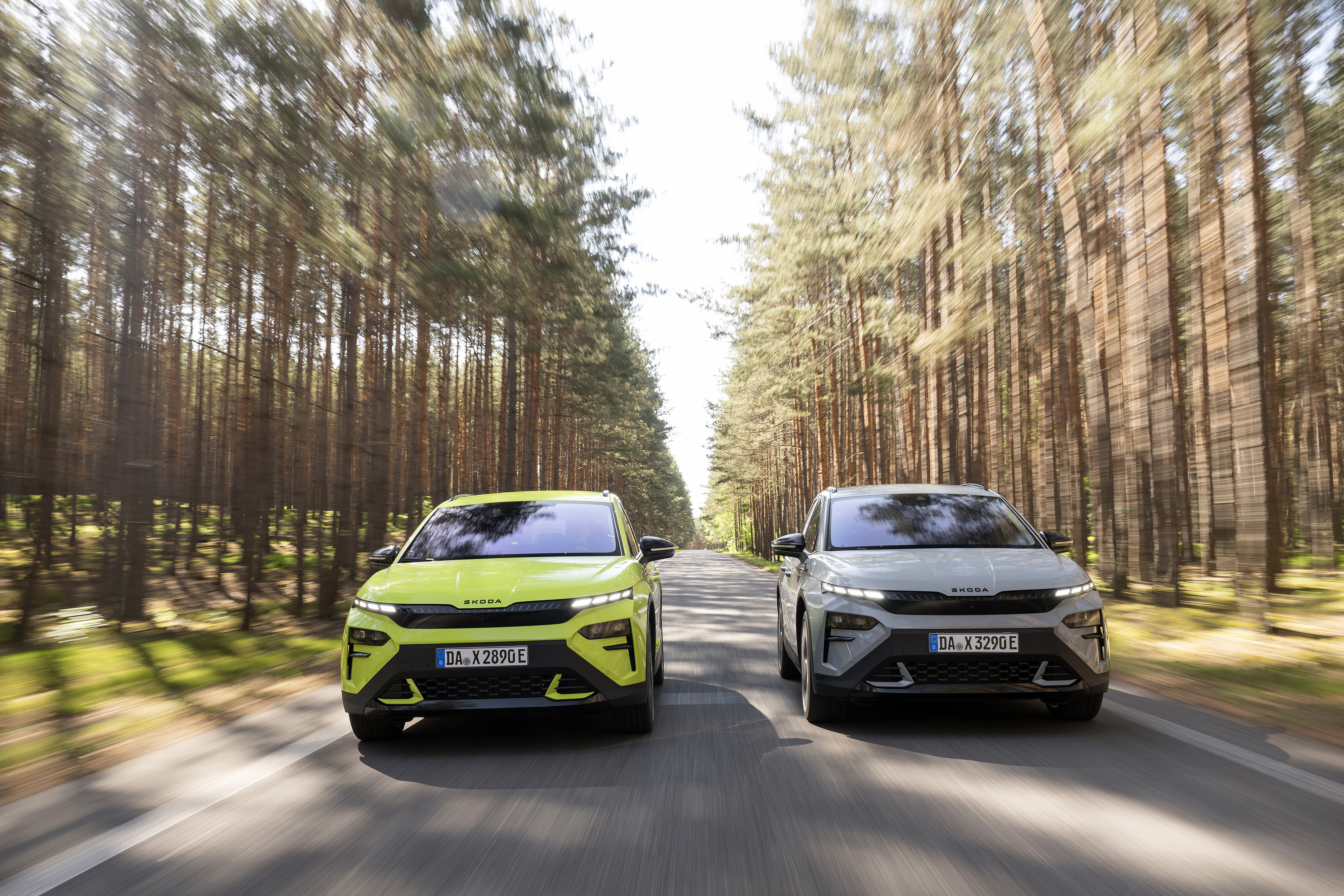
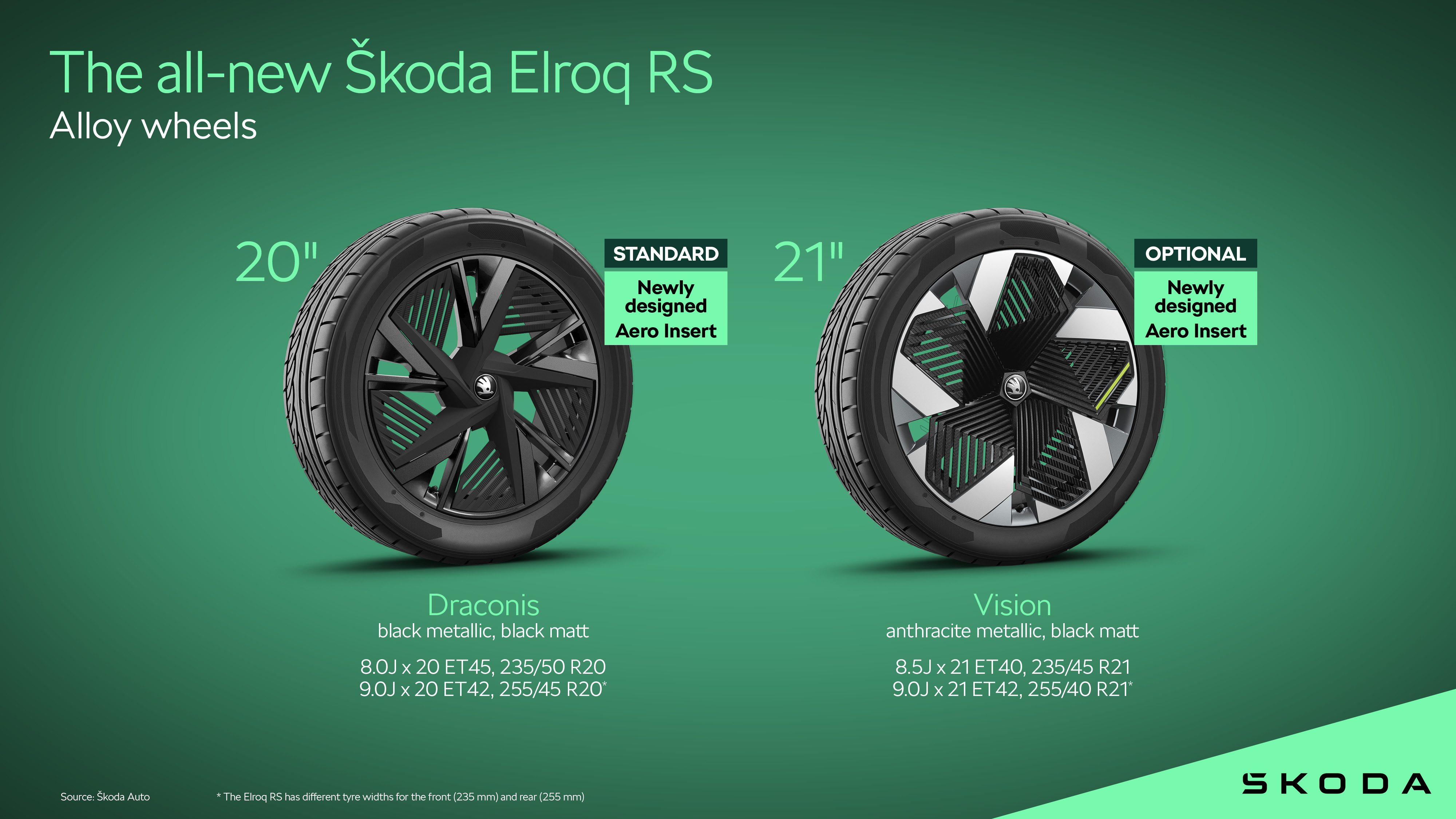
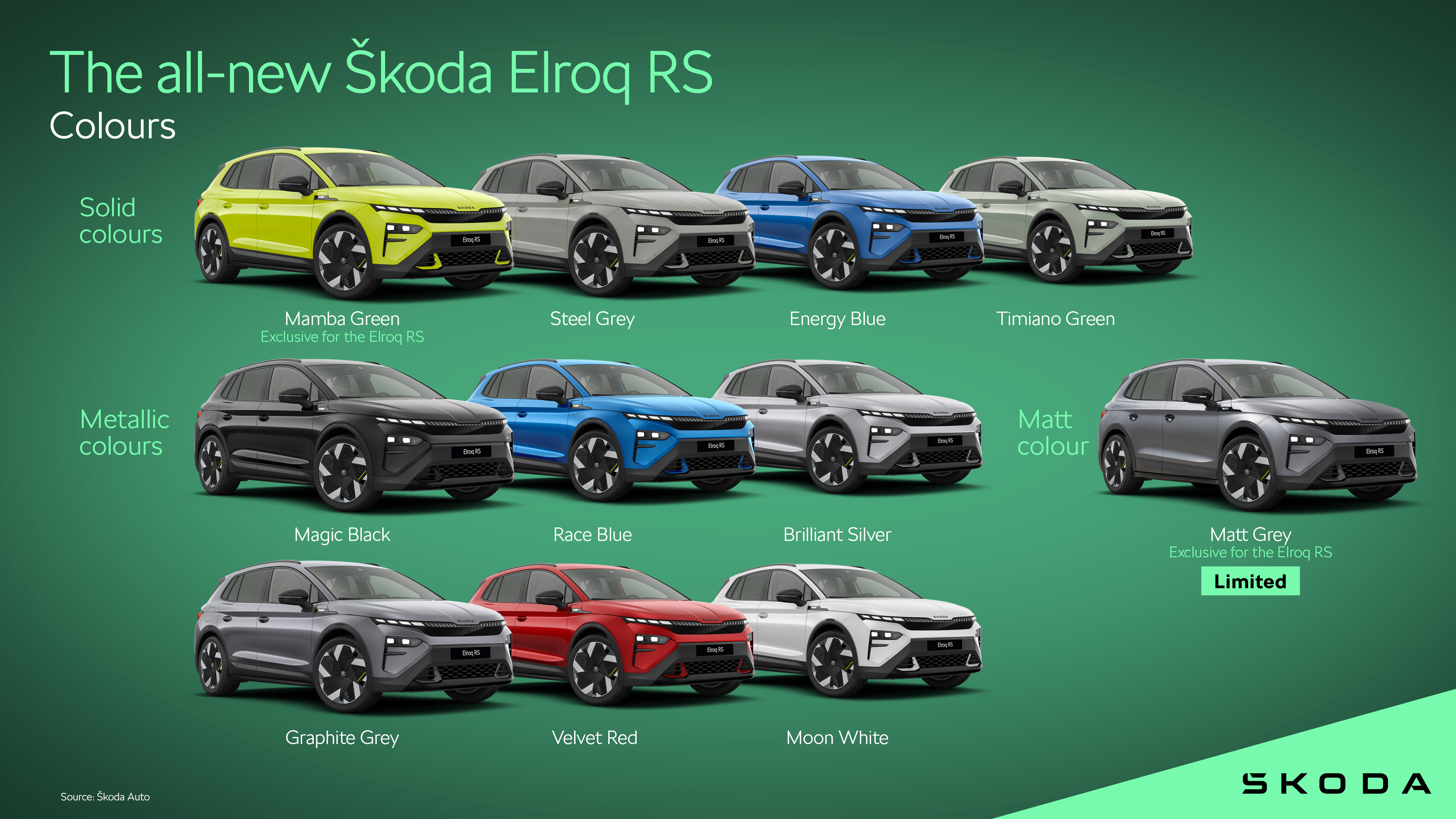
The characteristic visual RS features underline the dynamic appearance of the exterior design. The side window trim, roof rails, bonnet and tailgate lettering and the wing mirror caps are all finished in gloss black. The front bumper is trim-specific and the rear bumper features the typical RS full-width reflector strip. The front wings are adorned with RS badges. The vehicle can be ordered in eleven exterior colours, four of them solid, six metallic and one new exclusive matt grey finish, available only for the Elroq RS. The limited-edition matt grey exterior is combined with gloss black details such as the door handles, side mirrors and rear roof spoiler. The black metallic 20-inch Draconis alloy wheels with new matt black inserts are standard, while the new 21-inch Vision alloy wheels in anthracite metallic are available as an option. The SunSet tinted rear and rear side windows and acoustic side windows ensure comfort in any driving situation as well as a sleek look.
Škoda Elroq RS: Power consumption combined: 16.4 – 17.2 kWh/100 km, CO₂ emissions combined: 0 g/km. Information on consumption and CO₂ emissions, shown in ranges, depends on the selected vehicle equipment.

PDF download      JPG download

Specific Design Selection for the interior

In the interior, the exclusive Design Selection RS Lounge features black surfaces. It combines perforated and non-perforated Suedia microfibre upholstery with artificial leather, a carbon-look décor and lime green contrast stitching. The design part of the dashboard is covered with black Suedia, which can also be found on the door panels. The three-spoke heated sports steering wheel bears an RS badge and is covered in perforated leather. Stainless-steel pedal covers and heated front sports seats with integrated head restraints complement the dynamic appeal in the interior. The driver’s seat is electrically adjustable and offers massage and memory functions as well as lumbar support as standard. The optional Maxx package adds this electric seat adjustment together with the massage and memory functions to the front passenger seat. The 3-zone Climatronic air conditioning is part of this equipment package as well. The ambient lighting illuminates the front and rear door panels, front and rear footwells, the door handles, the centre console, and the dashboard. Mechanical sunshades for the rear side windows are included in the optional Advanced package. Rear side airbags are standard on the Elroq RS.

Škoda Elroq RS: Power consumption combined: 16.4 – 17.2 kWh/100 km, CO₂ emissions combined: 0 g/km. Information on consumption and CO₂ emissions, shown in ranges, depends on the selected vehicle equipment.

Škoda Elroq RS: Power consumption combined: 16.4 – 17.2 kWh/100 km, CO₂ emissions combined: 0 g/km. Information on consumption and CO₂ emissions, shown in ranges, depends on the selected vehicle equipment.

13-inch infotainment display and Augmented Reality head-up display

The 5-inch Digital Cockpit and the 13-inch infotainment display come as standard. The head up display with Augmented Reality is part of the optional Advanced package. All include RS-specific graphics. The heaters button on the infotainment screen activates or deactivates up to four heating functions at once. The Škoda Elroq RS comes with four fast-charging USB-C ports with an output of up to 45 W as standard. In addition, the Phone Box with wireless charging and ventilation offers up to 15 W of charging power. The 12-speaker sound system, developed with CANTON and optionally available as part of the Advanced package, delivers a total output of 675 W. The standard electrically operated tailgate with Virtual Pedal provides easy and convenient access to the 470- to 1,580-litre luggage compartment. One of the brand-specific Simply Clever features of the Škoda Elroq RS is the QR code in the boot. It can be used to easily access operating instructions and videos about various boot functions on a smartphone or tablet. Two external sounds for pedestrian protection, Sport and Futuristic, can be selected via the infotainment menu. Tow bar preparation is included as standard, and an electric release is available as an option. The Škoda Elroq RS can tow braked trailers weighing up to 1,400 kg on an 8% gradient or 1,200 kg on a 12% gradient.

Škoda Elroq RS: Power consumption combined: 16.4 – 17.2 kWh/100 km, CO₂ emissions combined: 0 g/km. Information on consumption and CO₂ emissions, shown in ranges, depends on the selected vehicle equipment.

Škoda Elroq RS: Power consumption combined: 16.4 – 17.2 kWh/100 km, CO₂ emissions combined: 0 g/km. Information on consumption and CO₂ emissions, shown in ranges, depends on the selected vehicle equipment.

DCC suspension with specific tuning and stiffer antiroll bars as standard

The new progressive steering set-up has been adjusted to match the specific tuning of the RS chassis, resulting in a sportier driving feel. Driving Mode Select also offers a special traction mode in conjunction with all-wheel drive. The DCC adaptive chassis is available as an option; its settings are tailored to the more compact body dimensions of the Elroq RS. The RS version allows a wide range of shock absorber settings, with up to 15 parameters that can be adjusted to configure an Individual mode. Each DCC shock absorber has a sophisticated electromagnetic valve that opens and closes in milliseconds, reducing or increasing the oil flow in the shock absorber depending on the current driving situation and selected driving mode. The shock absorber parameters are therefore driven by input signals such as vehicle speed, car body acceleration, body roll and pitch, overall vehicle load, throttle position, steering wheel angle and many more. The system comprises three accelerometers, three-wheel uplift sensors and a control unit, which also receives data and signals from other vehicle units such as the engine unit, ESC and steering gear. The best possible handling in any driving situation is ensured by a MacPherson front axle with lower triangular arms and a transverse torsion stabiliser, paired with a multi-link suspension with five transverse arms and a torsion stabiliser at the rear. The specific adjustments of the DCC dampers allow for a wide range of damper settings in up to 15 individual parameters. The combination of sports tyres and steering characteristics adapted to the special adjustments of the RS chassis gives the car a more dynamic steering feel with better feedback for optimal vehicle control.

Škoda Elroq RS: Power consumption combined: 16.4 – 17.2 kWh/100 km, CO₂ emissions combined: 0 g/km. Information on consumption and CO₂ emissions, shown in ranges, depends on the selected vehicle equipment.

Škoda Elroq RS: Power consumption combined: 16.4 – 17.2 kWh/100 km, CO₂ emissions combined: 0 g/km. Information on consumption and CO₂ emissions, shown in ranges, depends on the selected vehicle equipment.

The latest version of Travel Assist and KESSY Advanced as standard

Comprehensive connectivity features in the Škoda Elroq RS enable numerous intelligent safety and assistance systems. The latest version of Travel Assist, which comes as standard, combines Adaptive Lane Assist, Predictive Adaptive Cruise Control, Traffic Jam Assist, Emergency Assist and Side Assist. It features the use of online swarm data as standard. KESSY Advanced is also included as standard. With its Open‑On-Approach function the system unlocks the doors and tailgate when the key holder comes within 1.5 metres of the car. Walk-Away Locking automatically locks the Elroq RS when the key is moved more than 2.5 metres away from the car. The navigation system provides real-time online alerts on accidents, breakdowns and slippery road conditions in the immediate vicinity.

Škoda Elroq RS: Power consumption combined: 16.4 – 17.2 kWh/100 km, CO₂ emissions combined: 0 g/km. Information on consumption and CO₂ emissions, shown in ranges, depends on the selected vehicle equipment.

Škoda Elroq RS: Power consumption combined: 16.4 – 17.2 kWh/100 km, CO₂ emissions combined: 0 g/km. Information on consumption and CO₂ emissions, shown in ranges, depends on the selected vehicle equipment.

Clever parking via smartphone, plus Powerpass support

The upgraded MyŠkoda app supports new functions for the optional Intelligent Park Assist. Remote Park Assist allows the vehicle to automatically enter parallel and perpendicular parking spaces while the owner controls the manoeuvre via the MyŠkoda app on their smartphone. The Bluetooth-based system requires the owner to stand next to the vehicle while holding the key. After selecting the desired type of manoeuvre, the Elroq RS autonomously handles steering, braking and movement. The Remote Trained Parking feature is also controlled via the MyŠkoda app. When the vehicle reaches one of up to five previously stored approaches to parking locations, it can drive itself to the desired position automatically. Meanwhile the owner, rather than sitting in the vehicle, will start and monitor the process on their smartphone.

With Powerpass public charging tariffs, customers will easily be able to charge their battery at one of nearly 900,000 charging points across the EU (excluding Portugal and Romania). Powerpass will soon benefit from a new tariff structure. This will bring greater convenience for drivers mainly using the IONITY network, and in most cases will reduce charging costs. Powerpass is a universal service enabling customers to use charging points without the need to have a specific charging point operator card or mobile app, or having to deal with authorisation issues etc.

The new tariff plan mix combines the best of both worlds: flexible rates for occasional users who seek value for money and fixed rates for regular users who prefer the convenience of more predictable pricing. Instead of three public charging plans, four will soon be available. The basic charging plan will continue to be free, but will already come with flexible prices everywhere, rather than a fixed price. This may result in lower costs for customers, depending on the location, the charging station operator, the time of day or the current status of the electricity network. Two middle plans are specific to IONITY users looking to minimise their costs, providing access to the IONITY network at the best fixed rate per kWh (as offered by IONITY itself), while other stations remain under a flexible rate scheme. With Charge Premium customers will still find the familiar fixed rates, now with generally cheaper kWh prices; here too the cost is the same as the best tariff available from IONITY directly.

Prices and more information will soon be available for specific markets on the Škoda Auto website. The Plug & Charge option, enabling seamless authorisation at compatible charging stations, makes DC charging at rates of up to 185 kW convenient at all times.

Škoda Elroq RS: Power consumption combined: 16.4 – 17.2 kWh/100 km, CO₂ emissions combined: 0 g/km. Information on consumption and CO₂ emissions, shown in ranges, depends on the selected vehicle equipment.

Škoda Elroq RS: Power consumption combined: 16.4 – 17.2 kWh/100 km, CO₂ emissions combined: 0 g/km. Information on consumption and CO₂ emissions, shown in ranges, depends on the selected vehicle equipment.

The RS story – successful on rally tracks and in circuit racing worldwide

The Elroq RS continues Škoda’s 25-year tradition of sporty RS models, which began in 2000 with the first‑generation Octavia RS. In 2003, the RS portfolio expanded with the Fabia RS, followed by a second-generation model including an estate variant. In 2018, the Kodiaq RS was Škoda’s first RS model in the SUV segment. In 2022, Škoda presented the fully electric Enyaq RS family. Both models feature dual-motor all-wheel drive and initially delivered 220 kW. The power output increased to 250 kW in 2023, which made them the most powerful production cars in Škoda’s history at the time. Last month, Škoda presented the new Enyaq RS family, now also featuring the Modern Solid design language, including the distinctive Tech-Deck Face.

Škoda’s “RS” designation has been in use for more than 50 years, thrilling and exciting fans of Škoda’s performance models. However, the company’s motorsport history began much earlier – 124 years ago in fact, and on two wheels.

Škoda Elroq RS: Power consumption combined: 16.4 – 17.2 kWh/100 km, CO₂ emissions combined: 0 g/km. Information on consumption and CO₂ emissions, shown in ranges, depends on the selected vehicle equipment.

Škoda Elroq RS: Power consumption combined: 16.4 – 17.2 kWh/100 km, CO₂ emissions combined: 0 g/km. Information on consumption and CO₂ emissions, shown in ranges, depends on the selected vehicle equipment.

In June 1901, the Czech manufacturer made its motorsport debut in the Paris–Berlin race, which covered a distance of 1,196 km. The first major success with a Škoda racing car was celebrated in January 1936, when the Škoda Popular came second in the legendary Monte Carlo Rally in the class up to 1,500 cc. In international rallies, Škoda took off with the Octavia Touring Sport – TS for short, which achieved three successive class victories at the “Monte” in 1961, 1962 and 1963.

The 1970s rang in the RS era at Škoda Motorsport. 1974 was marked by the development of the 180 RS and 200 RS rally prototypes. The following year saw the arrival of the legendary Škoda 130 RS, with successes including a double victory in its class at the 1977 Monte Carlo Rally. In 1981, Škoda and the 130 RS were crowned European champions in the brand classification of the European Touring Car Championship. The Škoda Favorit rang up four consecutive “Monte” triumphs in its class between 1991 and 1994. After the Škoda Octavia WRC around the turn of the millennium, various rally versions of the Škoda Fabia added to the success story. The Fabia R5, the Fabia R5 evo and the current Fabia RS Rally2 have won a total of 16 world championships for drivers and teams in the WRC2 category since 2015 and garnered five victories in Monte Carlo.
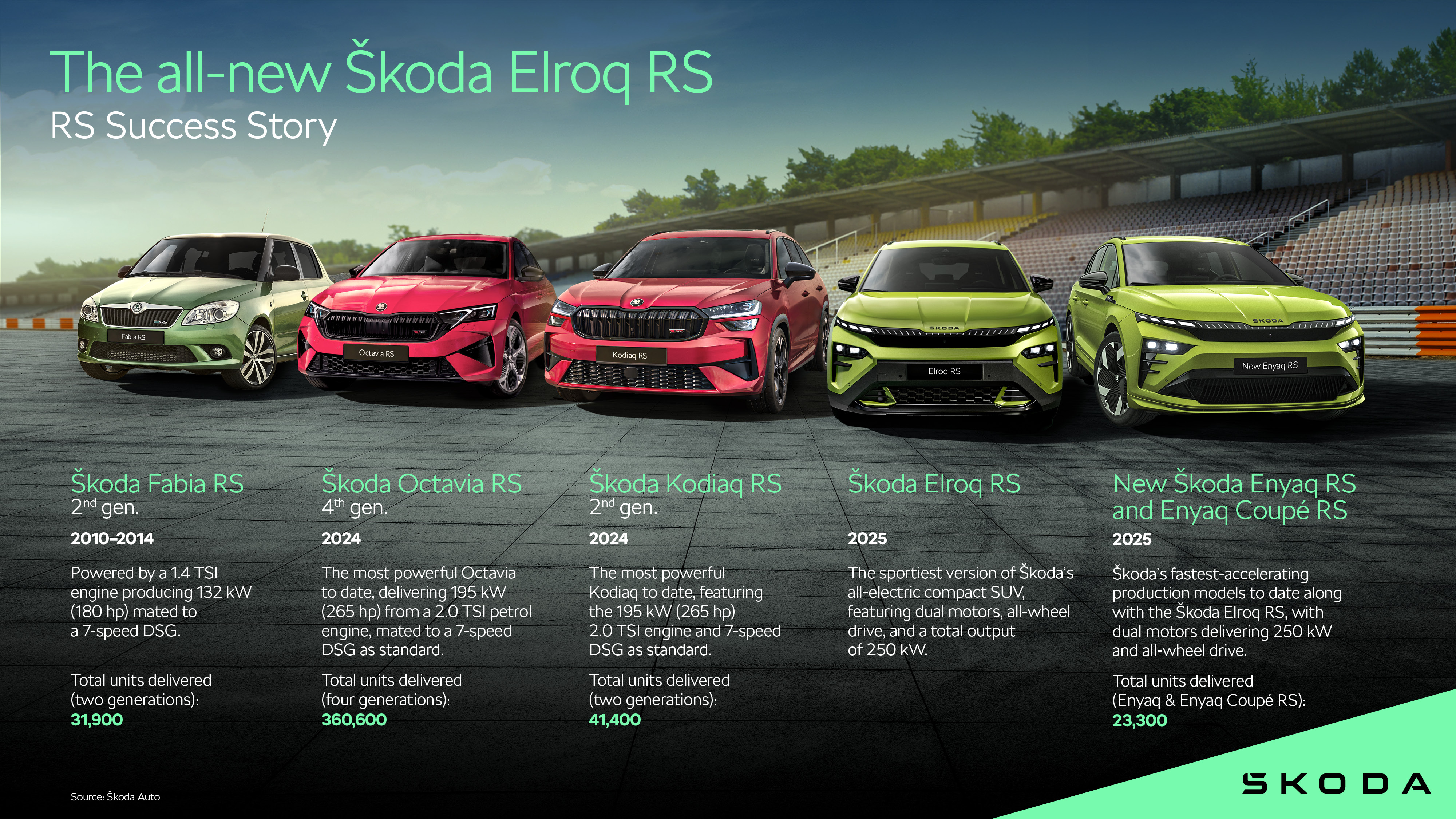
Škoda Elroq RS: Power consumption combined: 16.4 – 17.2 kWh/100 km, CO₂ emissions combined: 0 g/km. Information on consumption and CO₂ emissions, shown in ranges, depends on the selected vehicle equipment.

PDF download      JPG download

DSC01282_RET-1 Explore the ‘What’s up, Škoda?’ channel: go.skoda.eu/whatsapp


DSC01282_RET-1 130 years of automotive heritage! Explore all the content related to our anniversary: go.skoda.eu/storyboard-130-years


DSC01282_RET-1 Tune into the #ExploreŠkoda Podcast episode about the Elroq RS here: open.spotify.com/#exploreskodapodcast

download-de

share-de

Vítězslav Kodym
Head of Product Communications
+420 604 292 131
vitezslav.kodym@skoda-auto.cz

Jiří Brynda
Spokesperson Product Communications
+420 730 865 212
jiri.brynda@skoda-auto.cz

Additional info

Images

Tags

Media Box

3 videos, 76 images, 5 PDFs
Show more Show less