Life with a plug-in hybrid: A versatile companion
Life with a plug-in hybrid: A versatile companion

A plug-in hybrid powertrain represents a practical combination of electromobility and internal combustion engines. In everyday use, it proves its versatility. Škoda now offers plug-in hybrid technology in the Superb iV and Kodiaq iV models. What does life with a plug-in hybrid look like, and what are its advantages?

7. 5. 2026 Škoda World
As with electric vehicles, the key to efficient use of a plug-in hybrid is regular charging. This enables the vehicles to handle the majority of everyday driving on electricity. 

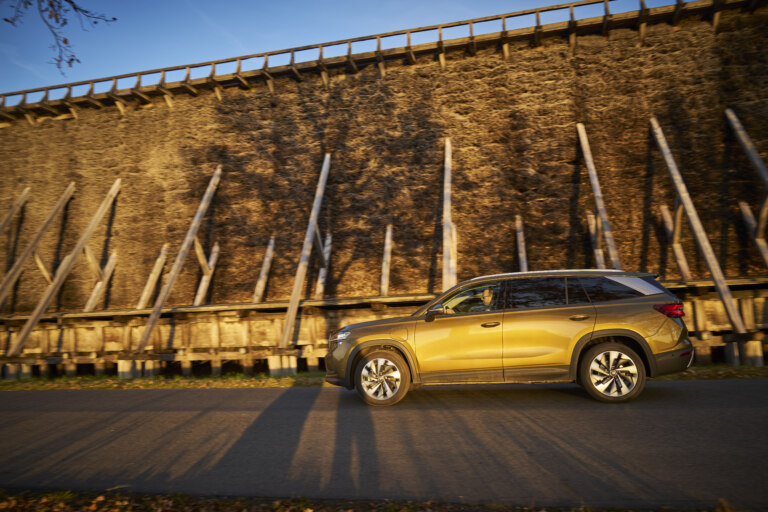
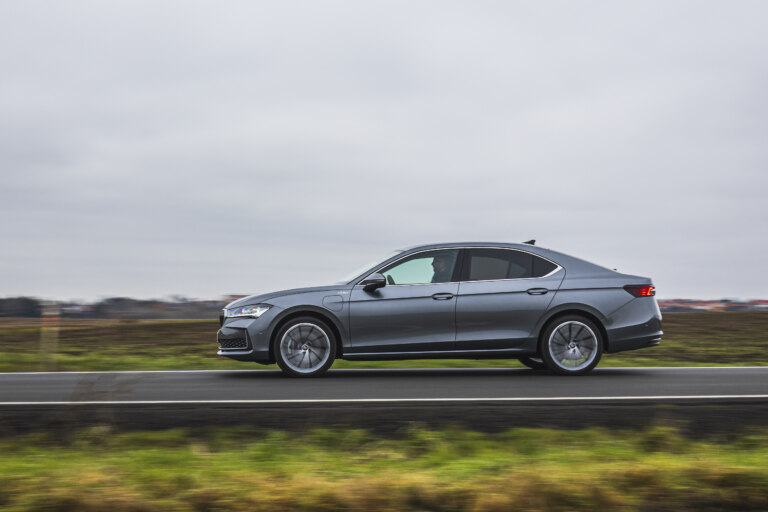
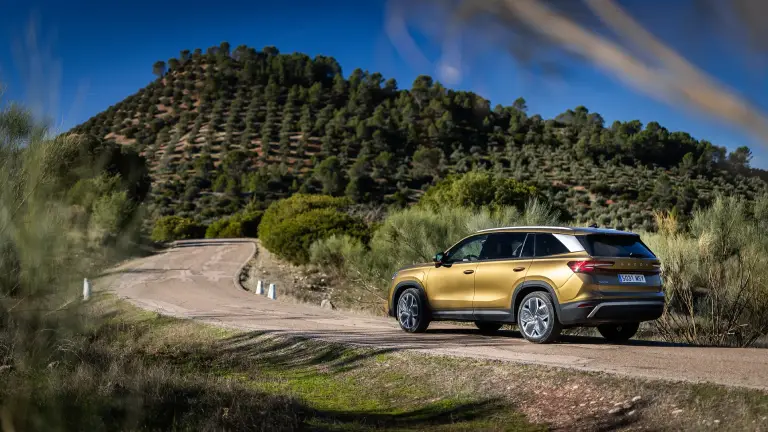
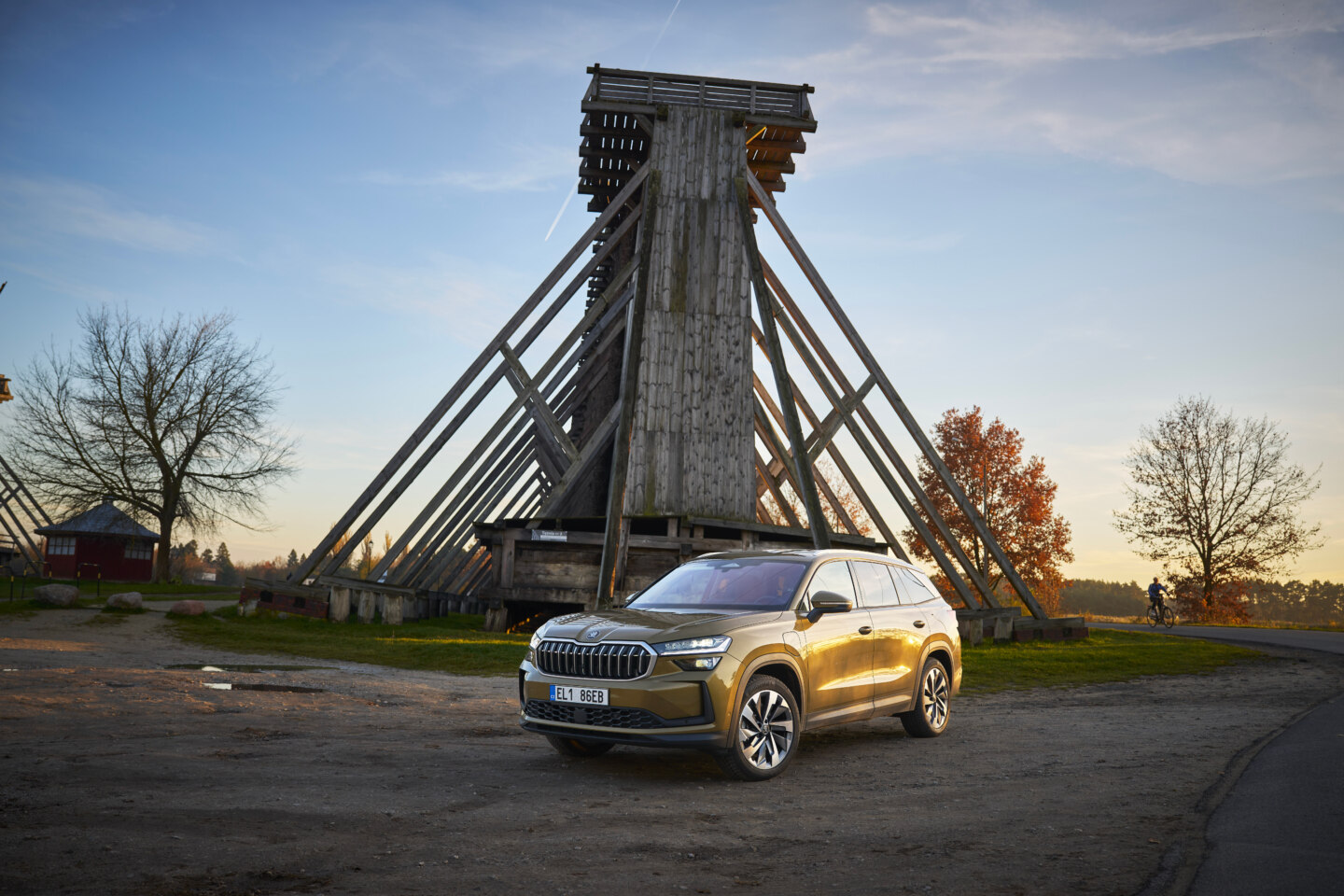
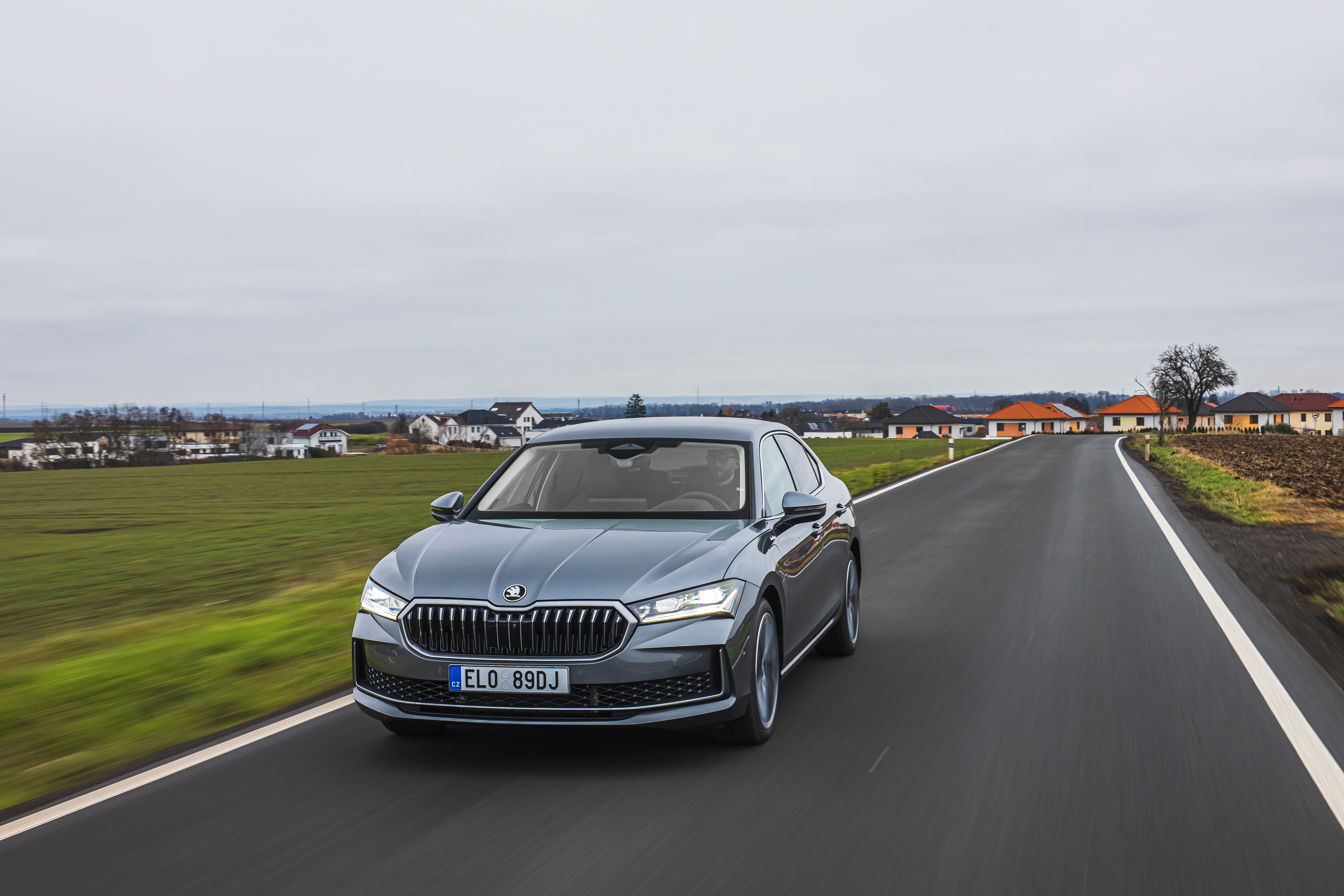
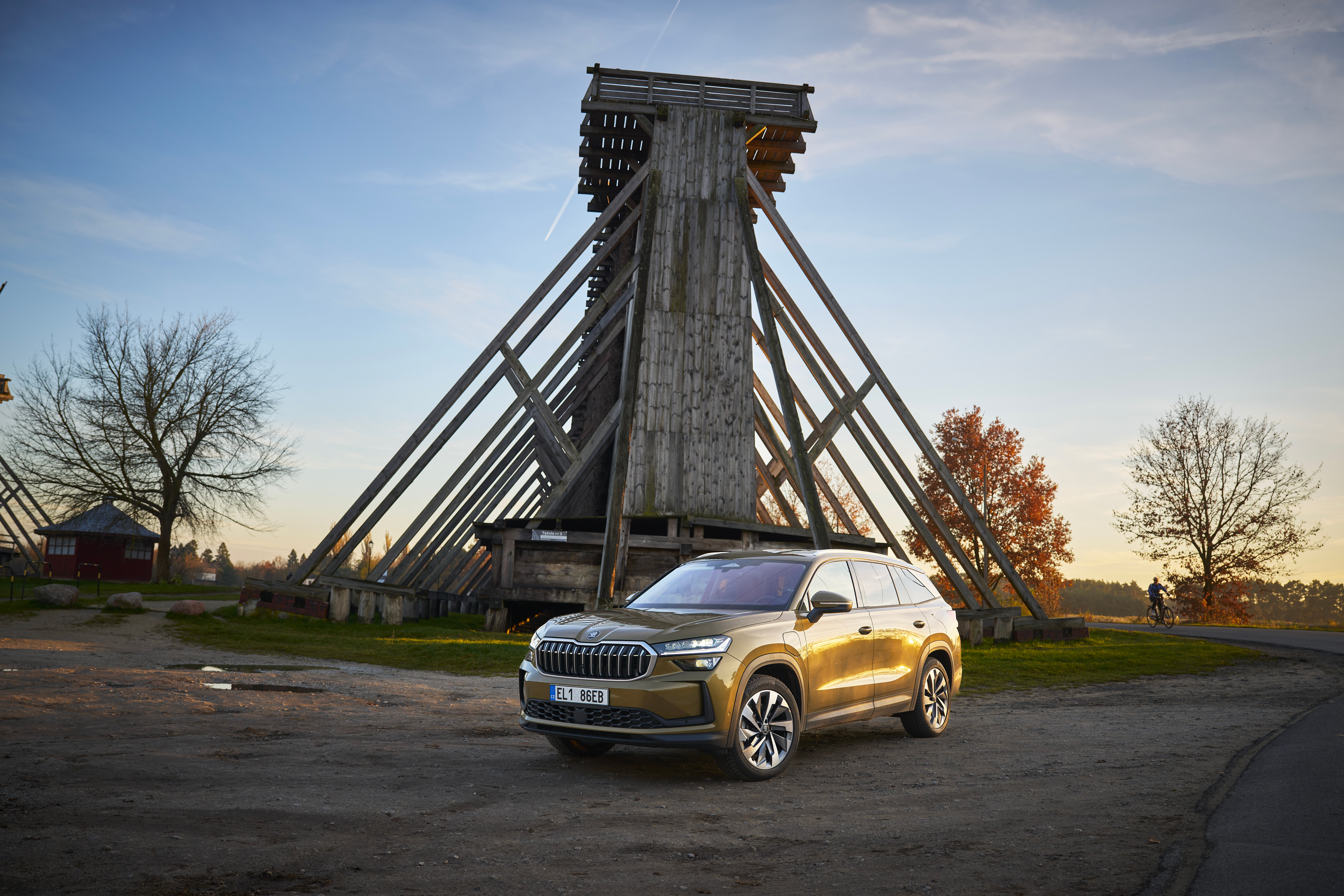
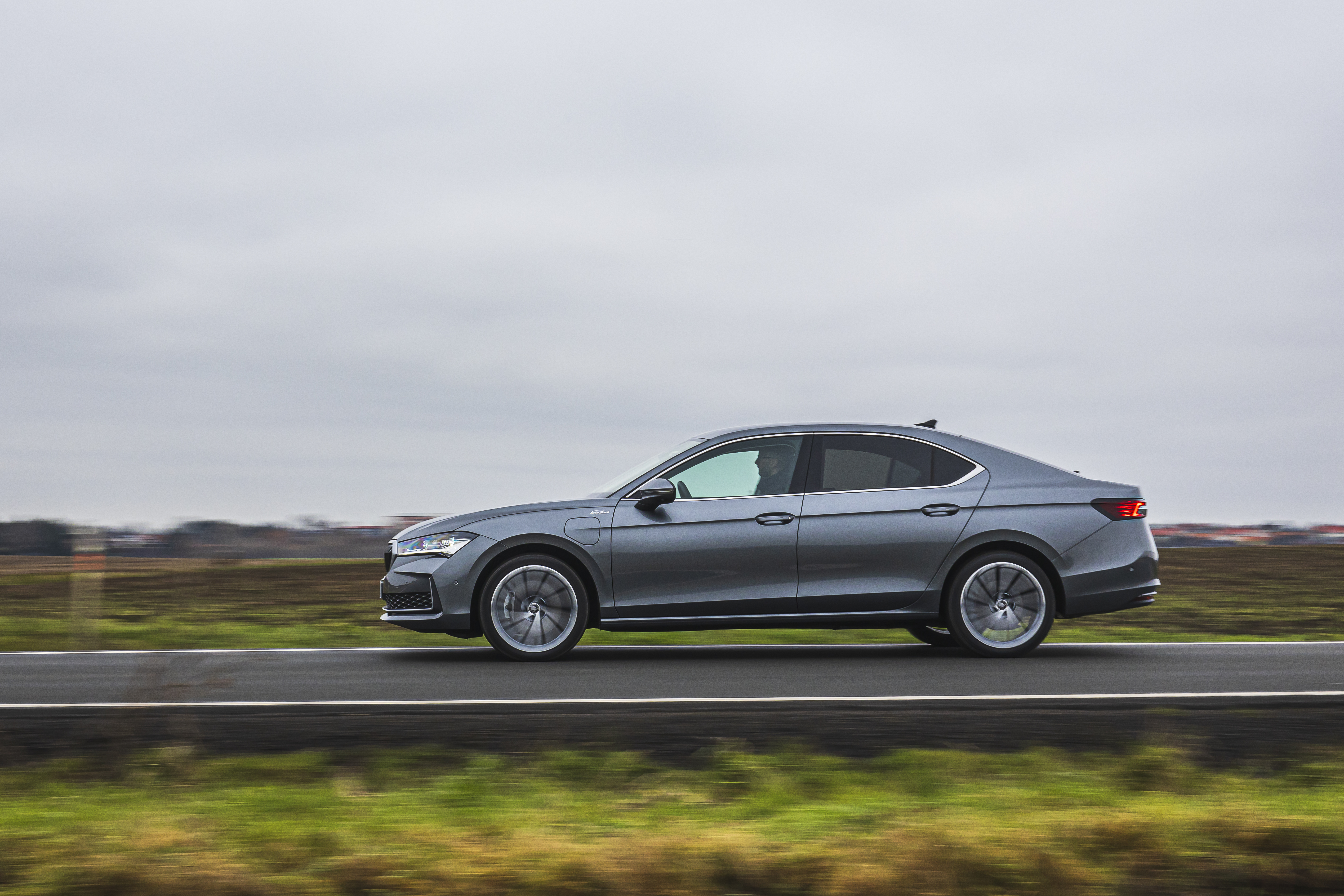
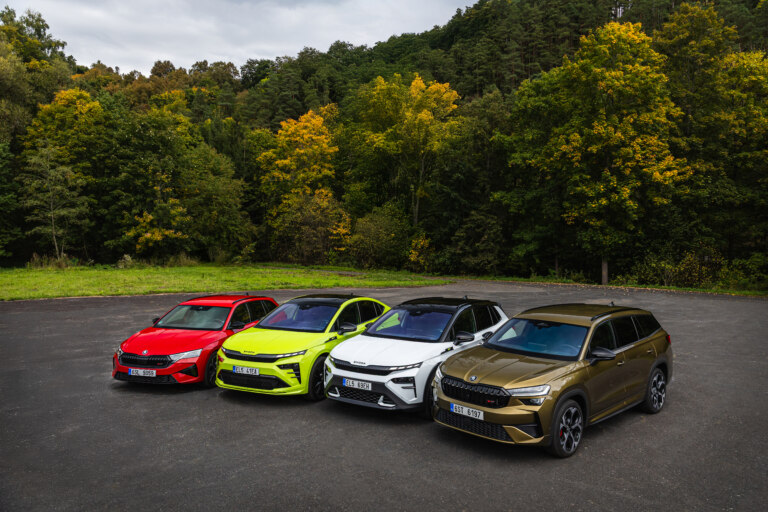
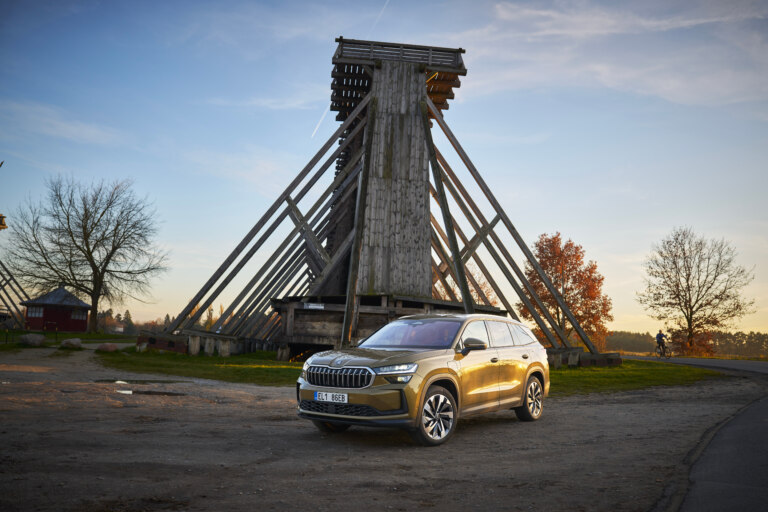
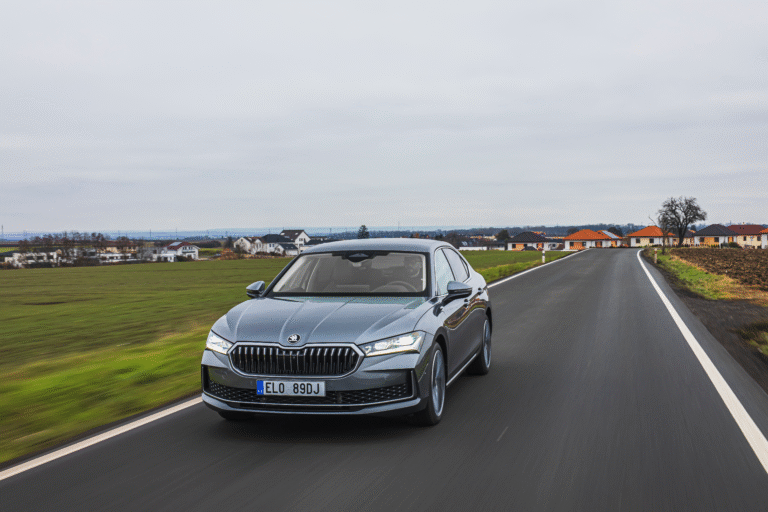
Škoda currently offers a plug-in hybrid powertrain configuration in the Superb model, in both hatch and estate versions, as well as in the Kodiaq SUV. Both are equipped with a traction battery with a very solid capacity of 25.7 kWh. In both variants, this delivers an all-electric driving range of up to 120 kilometres on a single charge. The result can be a total driving range of more than 1,000 kilometres using both energy sources. 

Plug-in hybrid models in the Škoda Auto lineup  

● Škoda Superb iV Hatch 150 kW 
● Škoda Superb iV Hatch 200 kW 
● Škoda Superb iV Estate 150 kW 
● Škoda Kodiaq iV 150 kW 

Over a week on electric power alone  

A common usage scenario consists of shorter daily journeys of several dozens of kilometres during working days, combined with occasional longer trips, for example at weekends. This is precisely where a plug-in hybrid excels. An electric driving range of 120 kilometres in both Škoda models means that most daily trips during the working week (to meetings, the office, shopping, or taking children to activities) can be completed purely on electric power. 

At the same time, driving in electric mode does not limit the driver in any way. The electric motor, delivering 85 kW, provides the vehicle with pleasant dynamics, and the car handles urban, extra-urban and motorway speeds driving with ease. 

Charging at home, at work, and on the go  

In order to achieve maximum efficiency in everyday situations, it is naturally ideal to have access to charging facilities. Whether at home or at the workplace during the day, both options are suitable. Operating efficiency can be further improved, for example, by using a home photovoltaic system with battery storage, although this is not a requirement. 

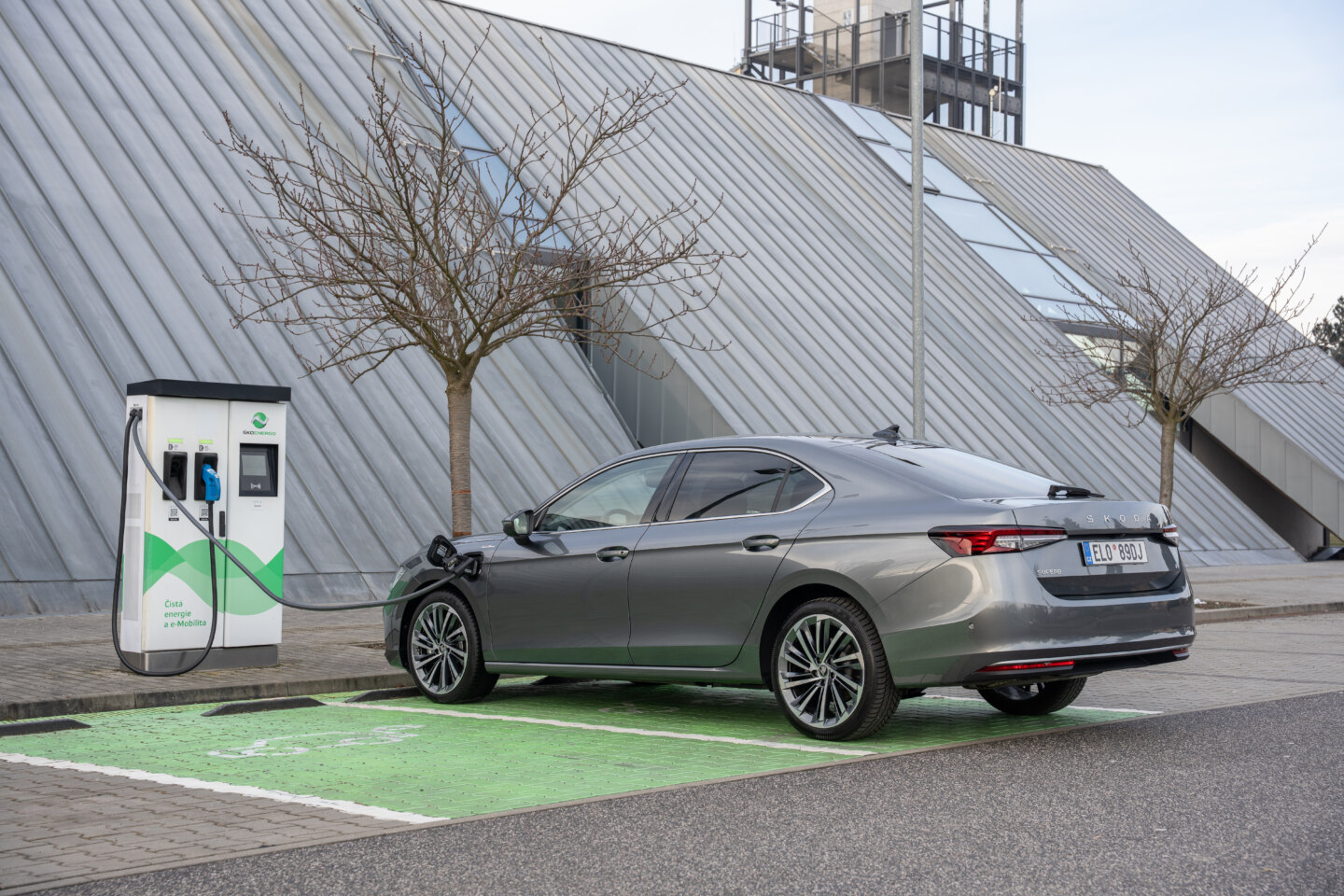
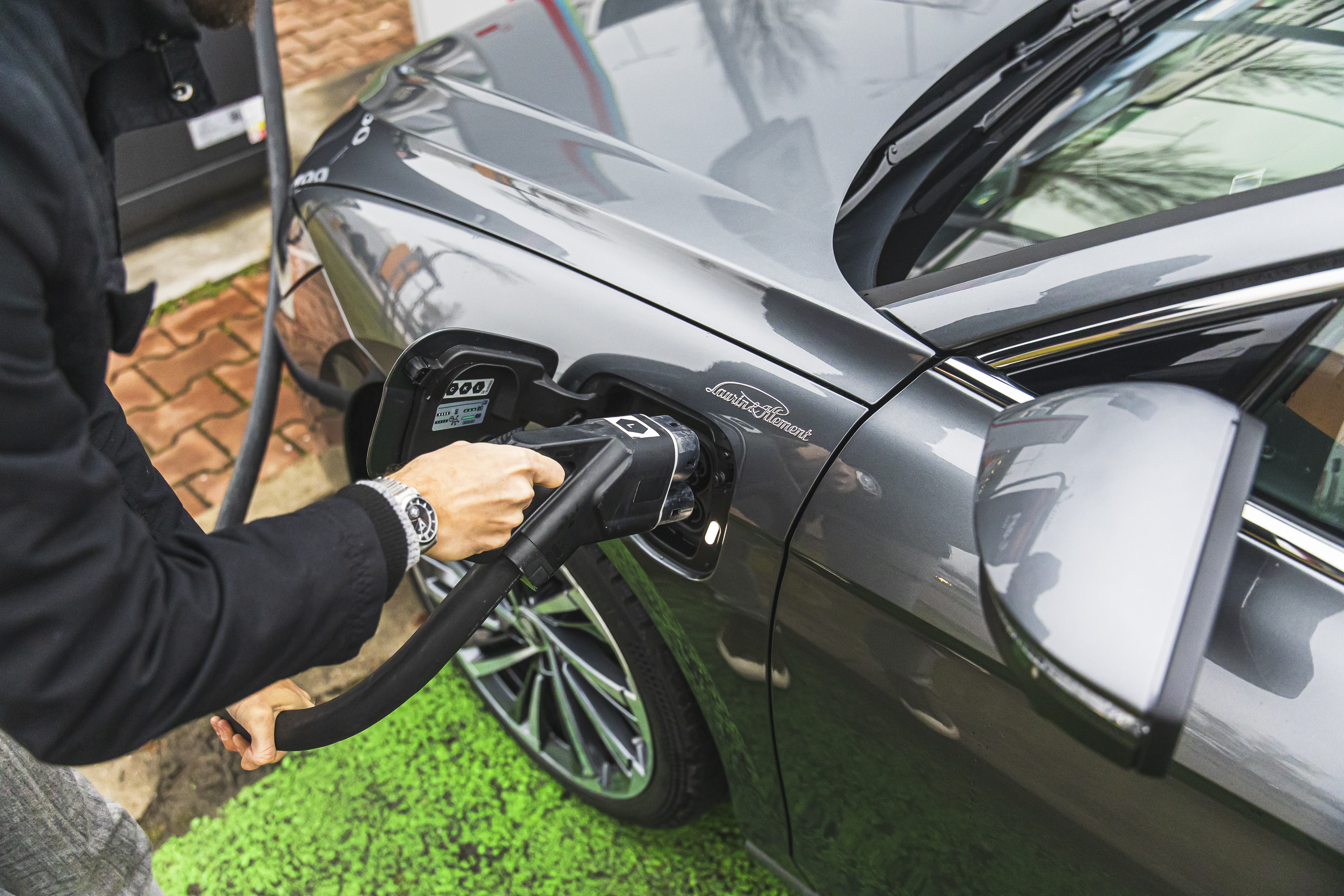
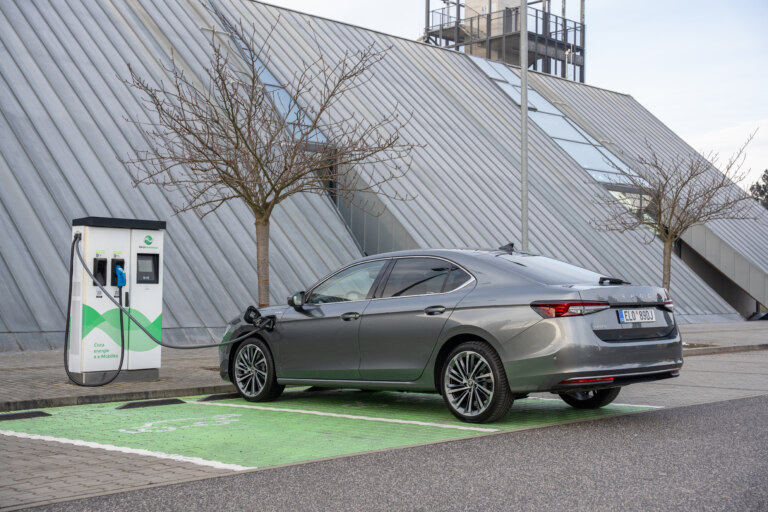
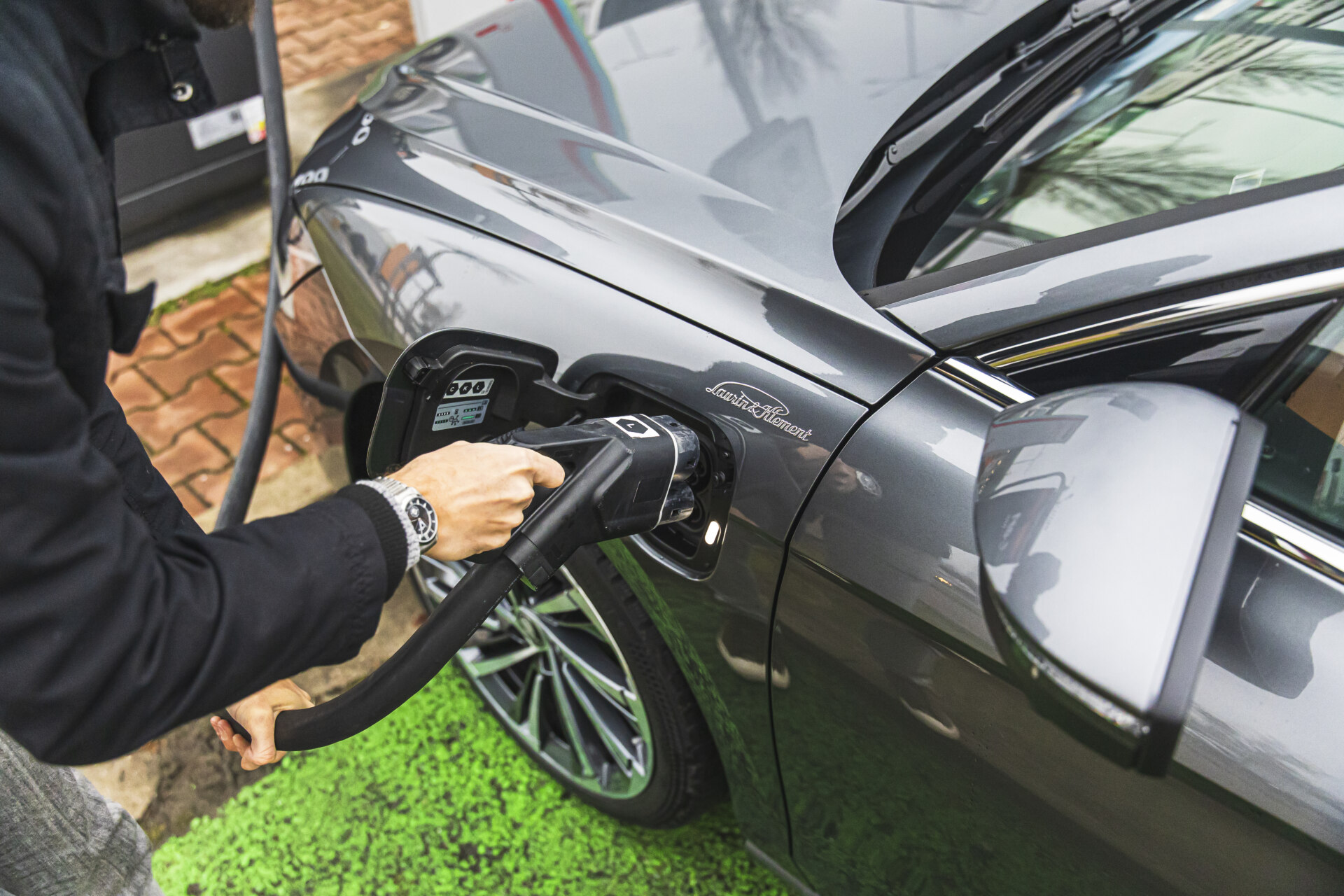
Efficiency is also enhanced when journeys start from a temperature-controlled garage, or when the vehicle is pre-conditioned via an app in winter while still connected to a charger. Charging from the public network can also be useful when travelling. An advantage is that Škoda plug-in hybrids support fast DC charging at up to 50 kW, allowing the battery to be charged from 10 to 80% in 26 minutes. 
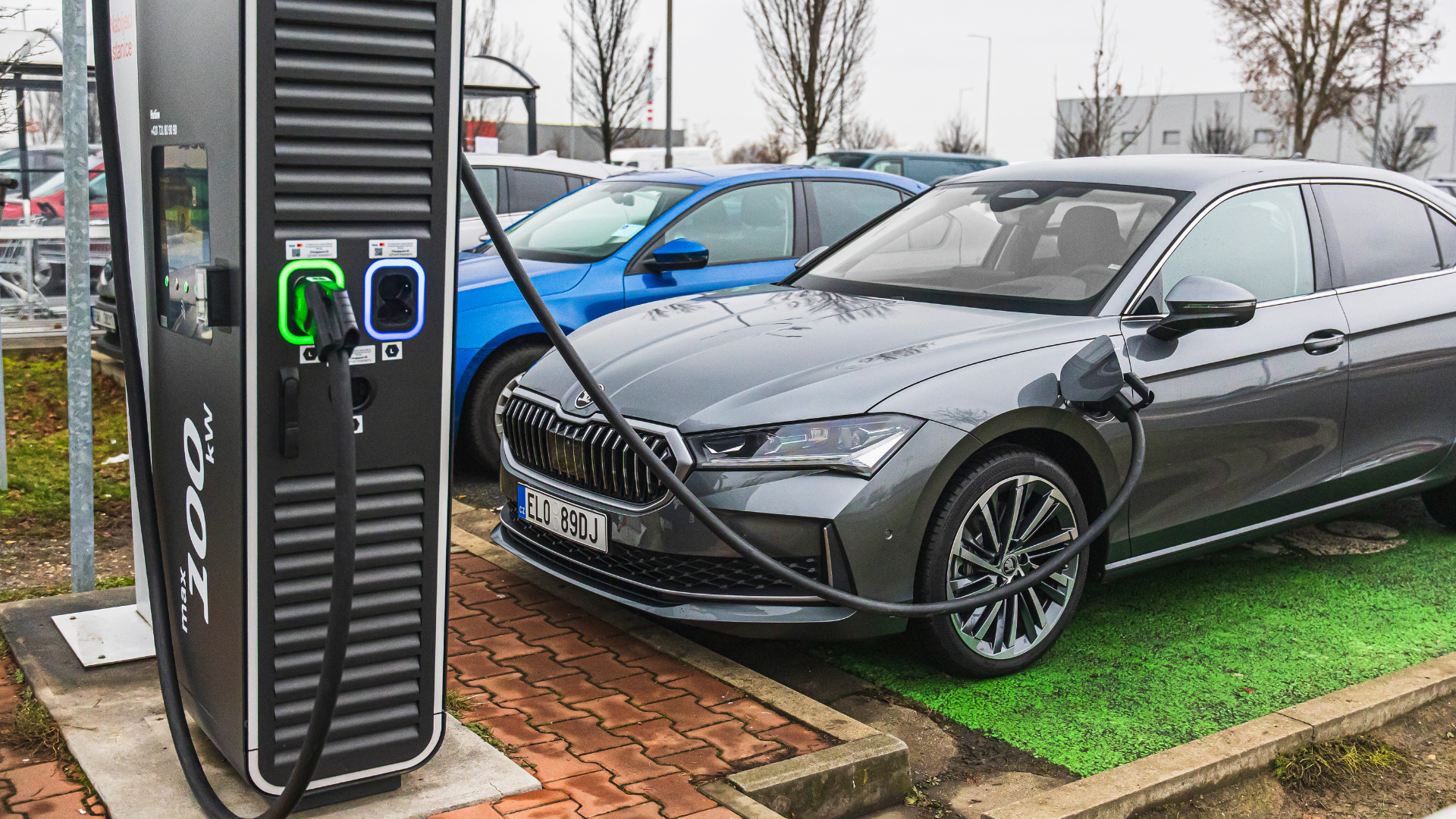
Navrh-bez-nazvu-129_e16ea78f If necessary, Škoda plug-in hybrids can also be charged at public charging stations; the vehicles are capable of 50 kW fast charging
Intuitive management of driving modes 

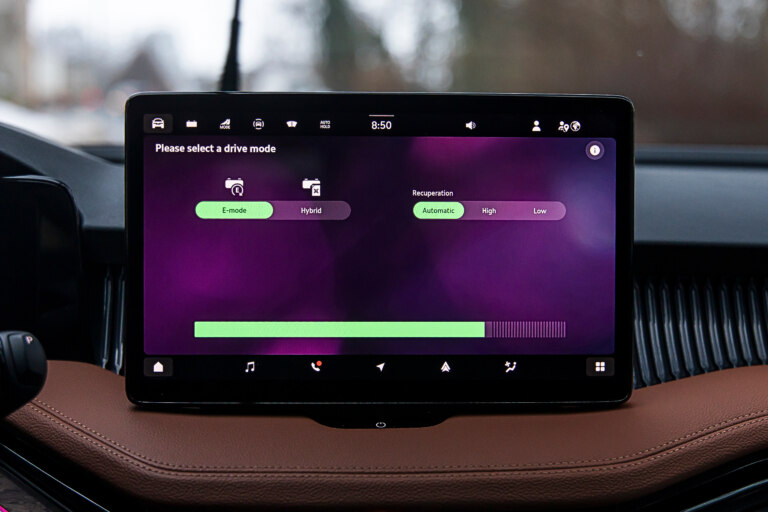
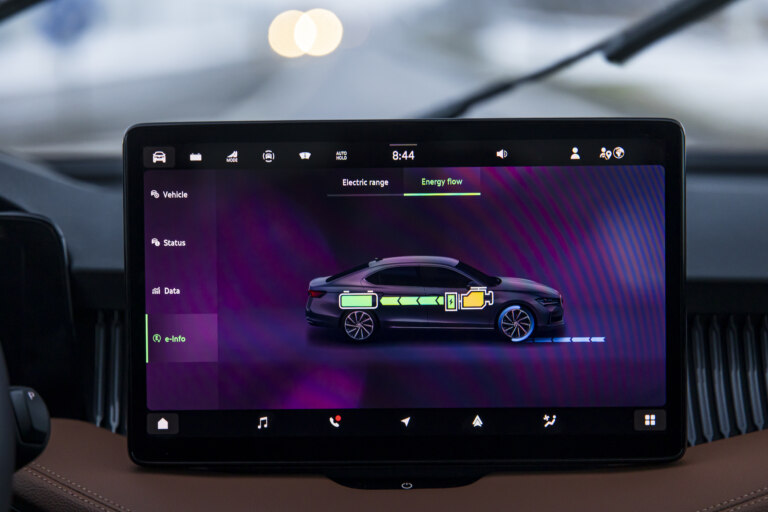
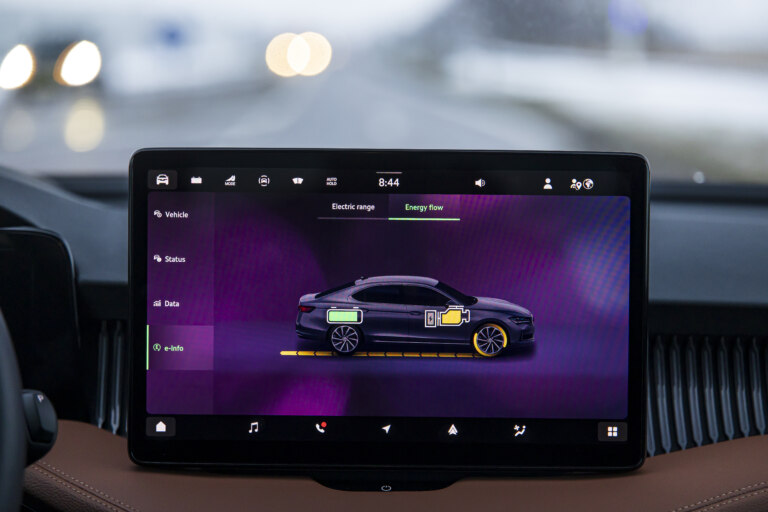
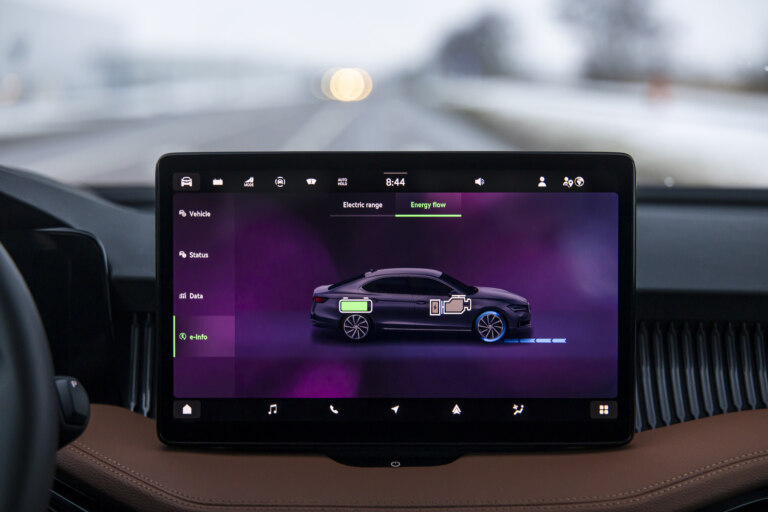
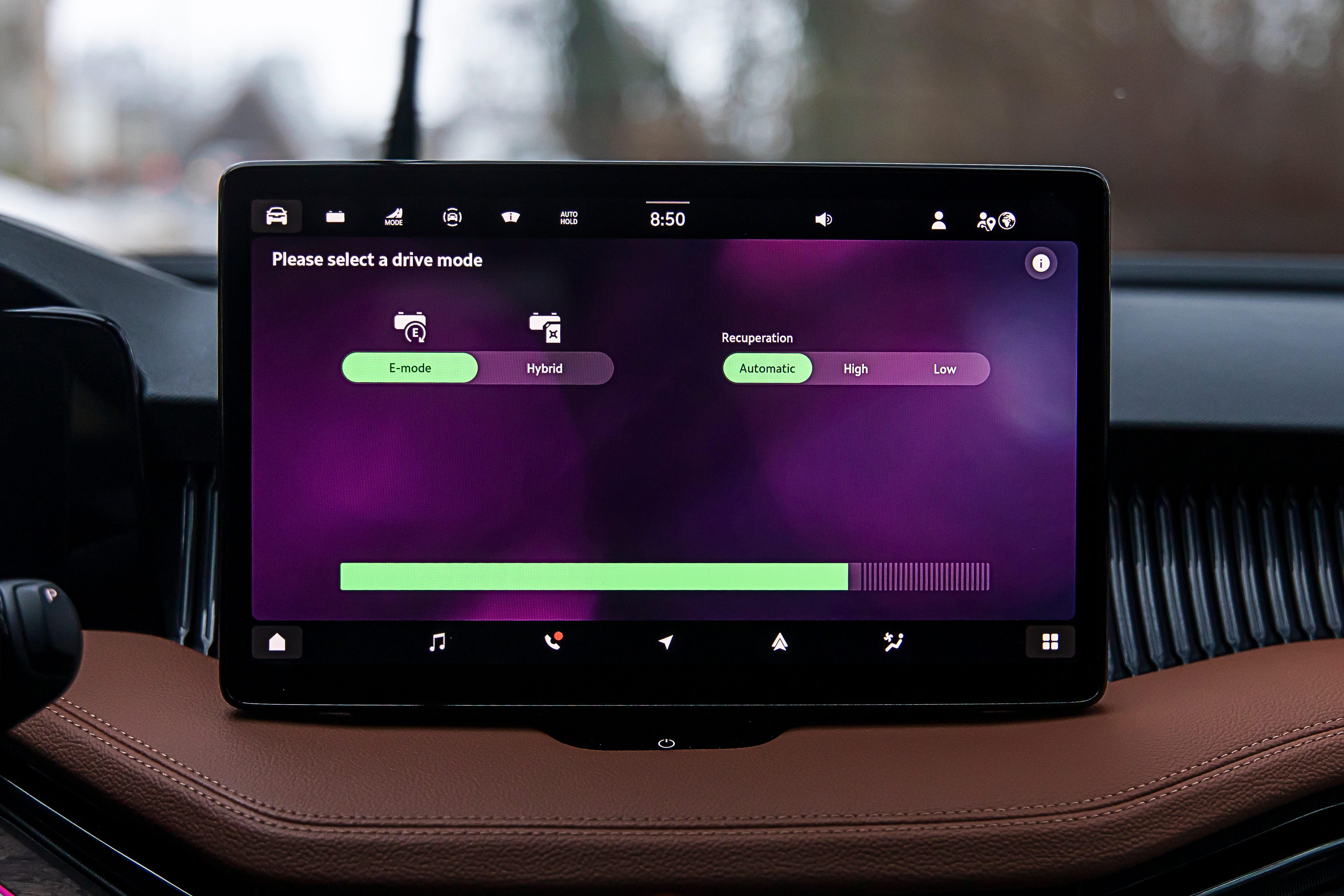
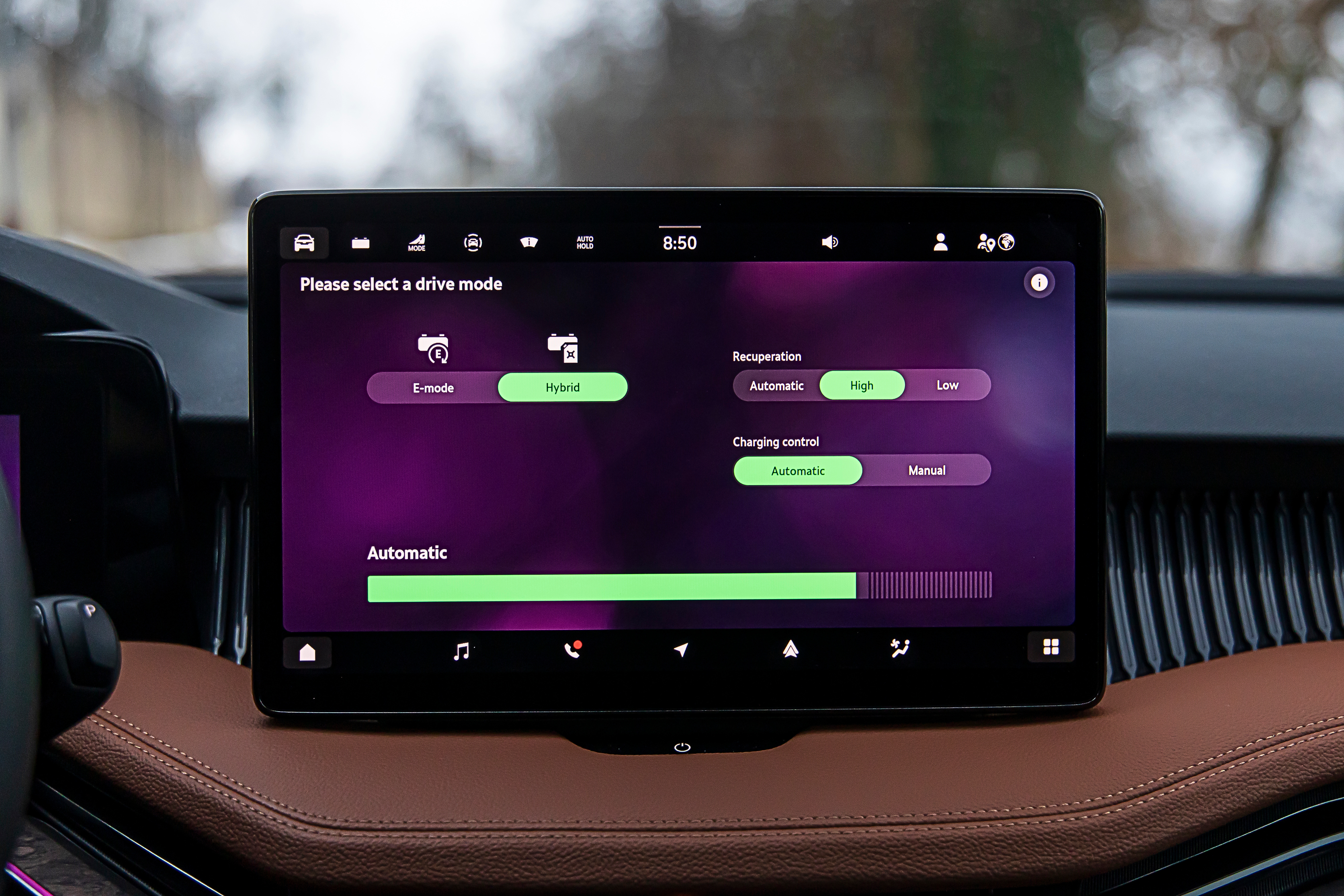
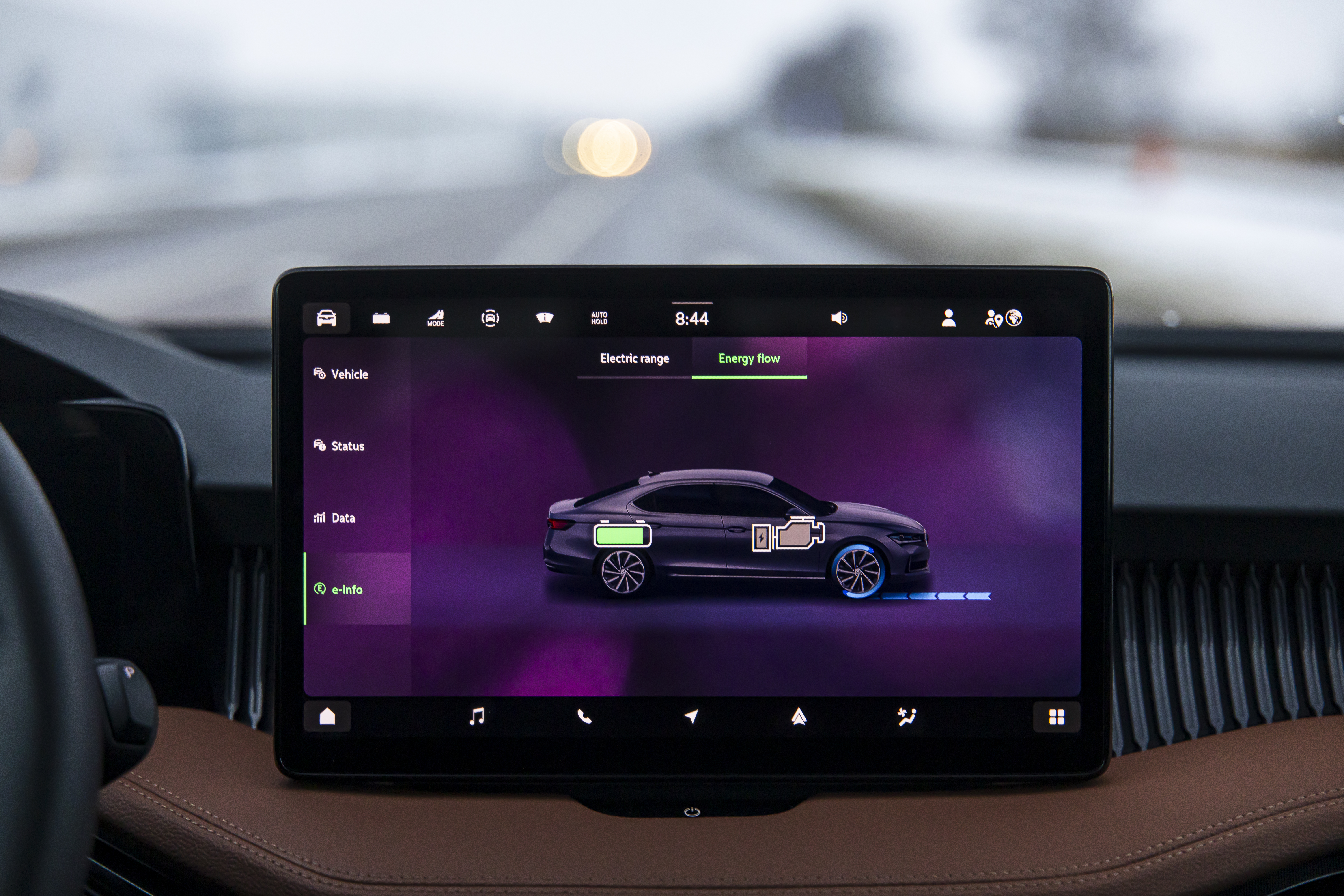
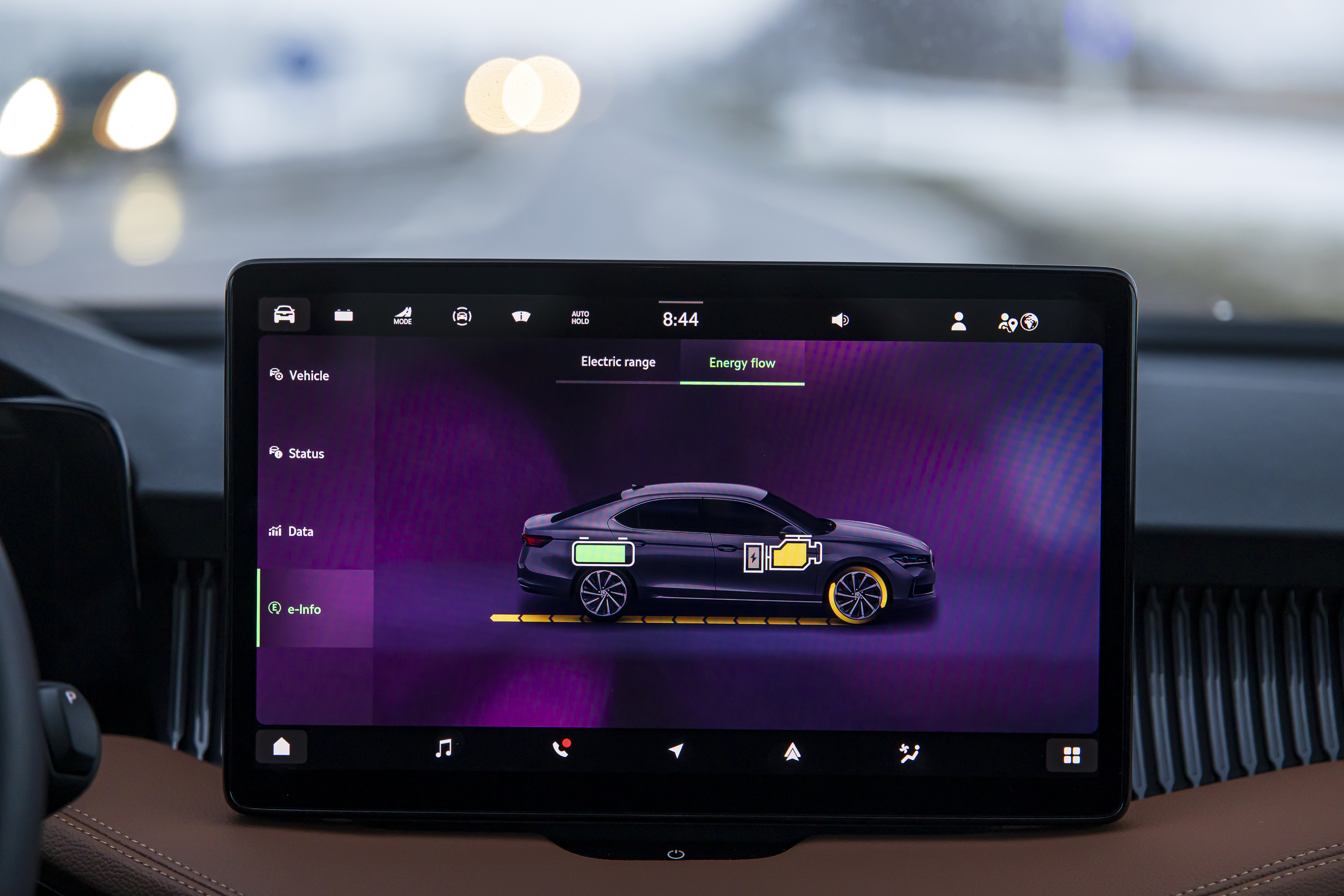
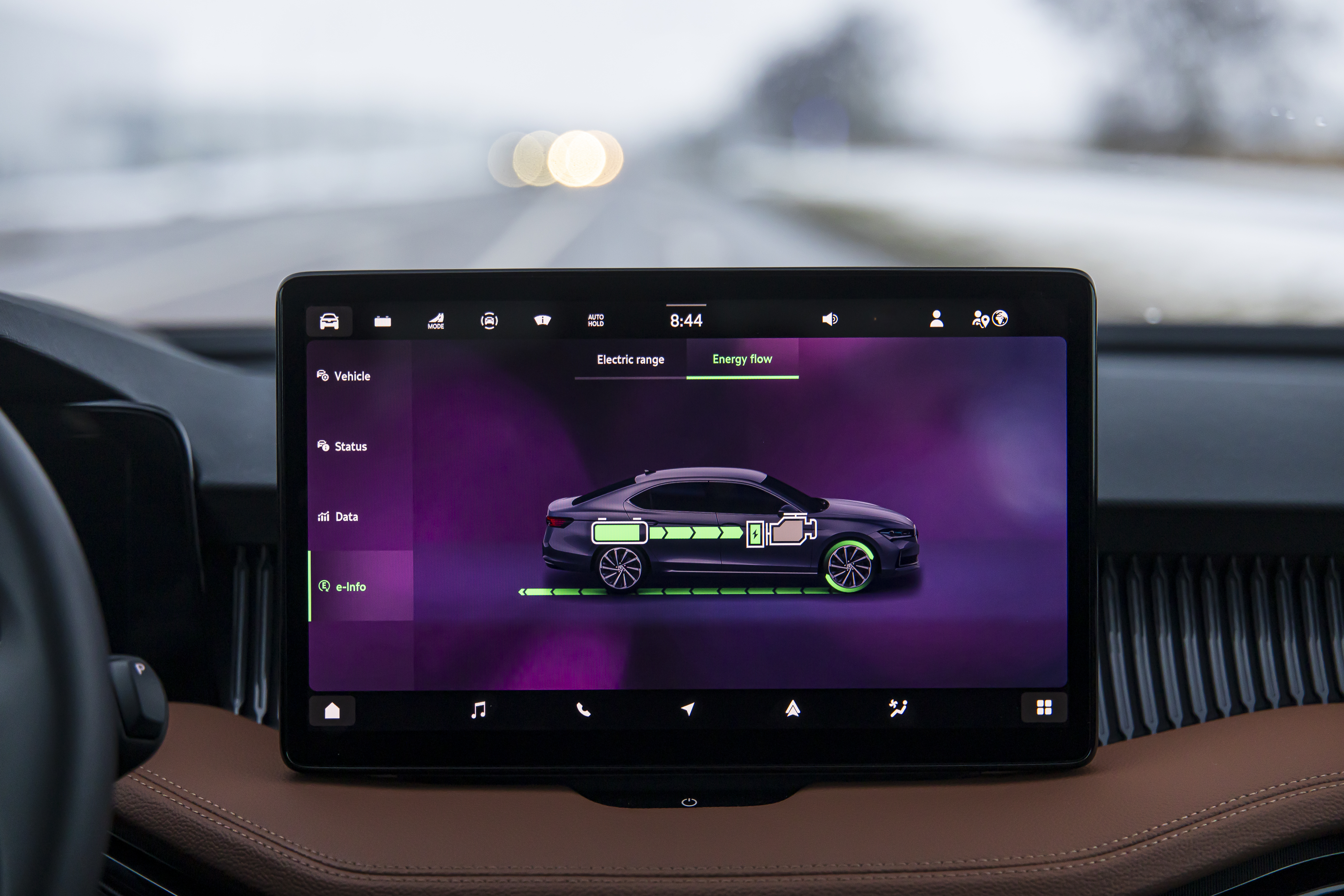
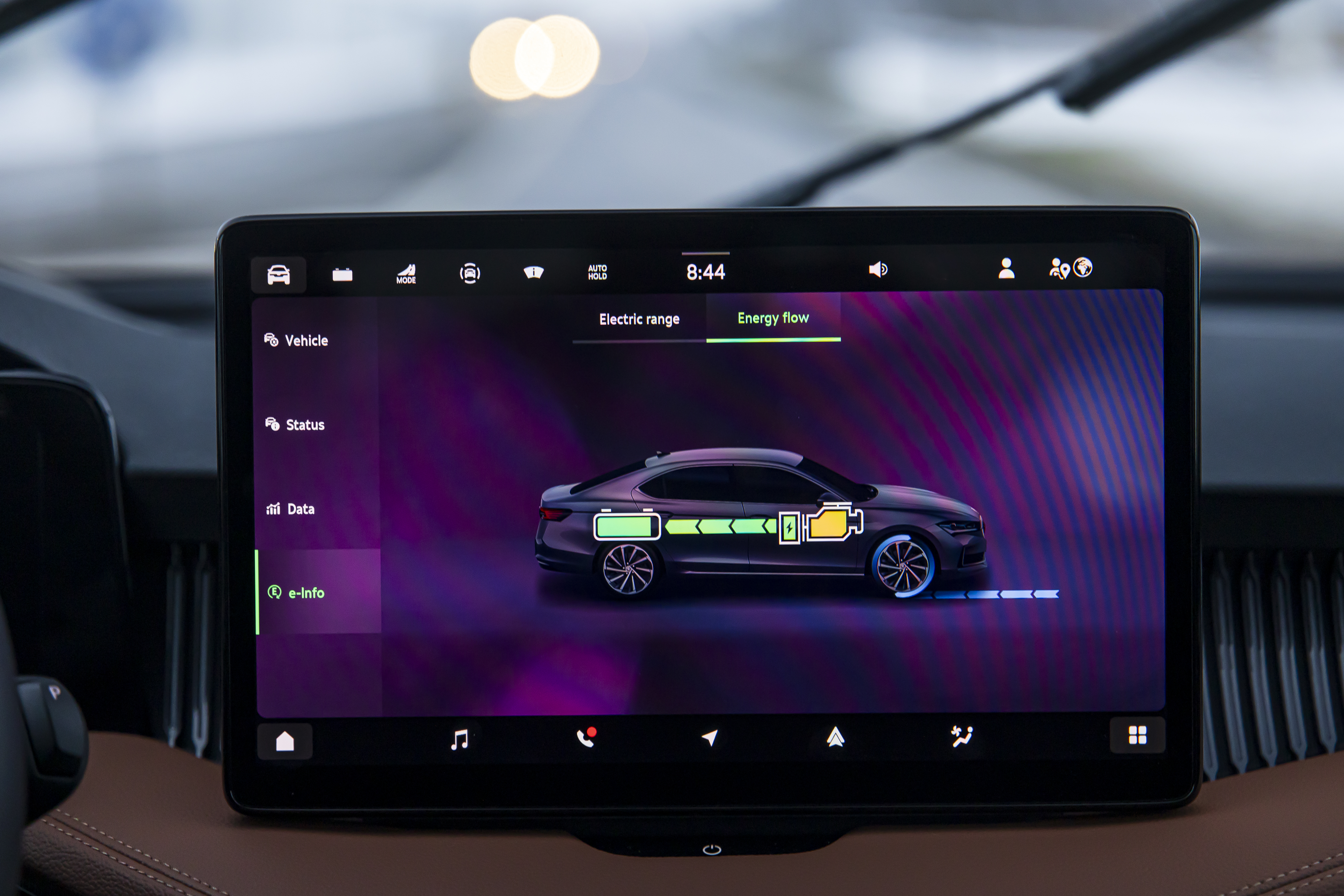
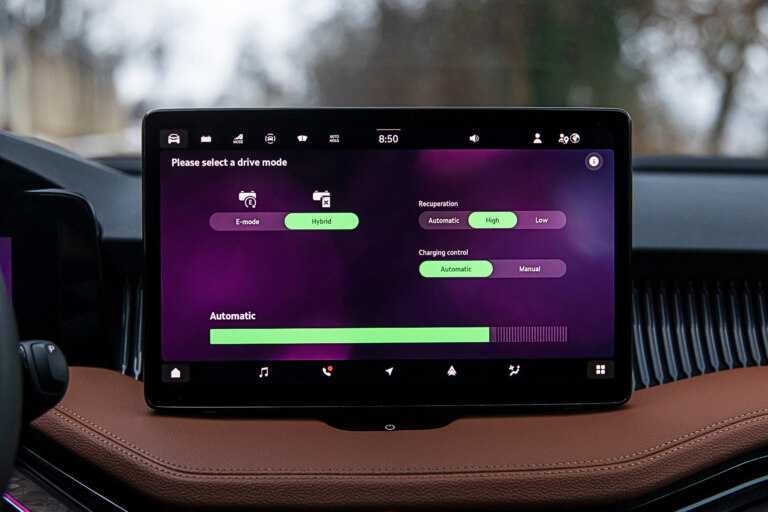
When sufficient battery capacity is available, the Superb iV and Kodiaq iV operate in all-electric E-Mode upon start-up. The vehicle automatically switches to Hybrid mode in several scenarios: when the battery is depleted, or when the driver demands maximum performance, for example by fully depressing the accelerator pedal (kickdown), or at higher speeds and under increased load, when the electric motor alone would not provide sufficient performance. Hybrid mode can also be activated manually by the driver, and the vehicle can subsequently switch back to all-electric mode once sufficient battery charge is available again. 

Driving with zero local emissions is highly comfortable, and in electric mode the Superb iV and Kodiaq iV become an oasis of silence. In addition to the quiet operation, both models offer a high level of comfort, further enhanced by their ability to coast efficiently and make use of kinetic energy. Even when the internal combustion engine engages, it remains very well insulated, with no significant vibrations perceived by the occupants. 

Longer journeys in hybrid mode 

It is also advantageous to start longer journeys with a fully charged battery; however, a plug-in hybrid provides a degree of reassurance for those who do not wish, or are not able, to manage charging during extended trips. Depending on the route profile, the driver can select from various strategies for managing the vehicle’s electric energy. Through the vehicle menu, it is possible to maintain a selected battery charge level (current or lower) and reserve electric energy for later use. On motorways, the vehicle can therefore run on the combustion engine with hybrid electric assistance, while retaining sufficient charge for all-electric driving at the destination. 

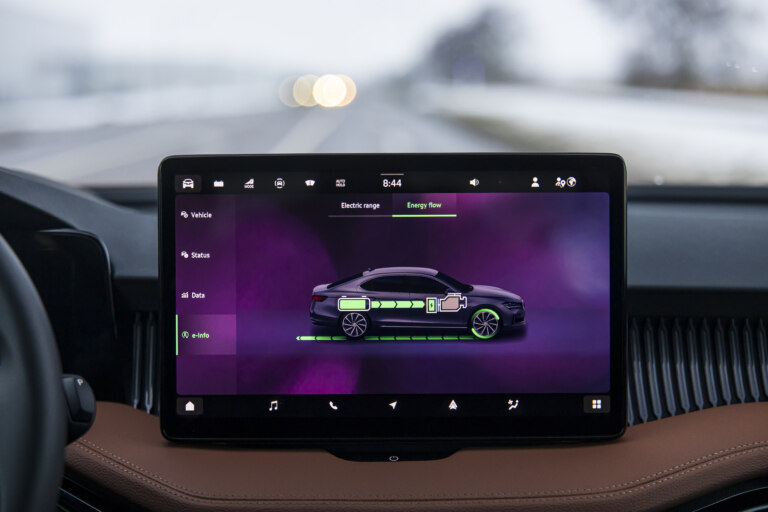
The internal combustion engine is not used to recharge the battery; in hybrid mode, it is only capable of maintaining the current level of charge. However, the battery can be recharged through recuperation, for example during long downhill sections. Recuperation operates by default in an automatic mode, in which the vehicle adjusts the level of energy recovery according to the current driving situation (route profile, traffic conditions, battery state of charge). The driver can also manually select higher or lower levels of recuperation. 

What shouldn’t come as a surprise  

When refuelling, plug-in hybrid drivers may encounter a specific feature. As the vehicle can operate for extended periods without using the internal combustion engine, fuel vapours may accumulate in the tank and thus may not be released from it. These must then be safely vented before refuelling. After pressing the fuel flap release button, it is therefore necessary to wait briefly before the flap unlocks and can be opened from the outside. 

It is also not a malfunction if the plug-in hybrid occasionally starts the combustion engine even when in electric mode. Doing so once in a while is advisable for the sake of engine maintenance.

For every occasion 

In practice, a plug-in hybrid powertrain delivers notable advantages from both worlds: internal combustion engines and electric vehicles. On longer journeys, there is no need to rely on charging, while on shorter trips there is no need to refuel — for example when rushing to work in the morning. The Superb iV and Kodiaq iV models are therefore excellent everyday vehicles that showcase their individual strengths in a variety of situations. 

Škoda Superb iV 150 kW: Combined fuel consumption (hybrid): 1.2 – 1.4 l/100 km & 12.6 – 13.0 kWh/100 km, combined fuel consumption with depleted battery: 4.9 – 5.4 l/100 km, combined CO₂ emissions (hybrid): 26 – 33 g/km.  

Škoda Superb Combi iV 150 kW: Combined fuel consumption (hybrid): 1.2–1.5 l/100 km & 12.9–13.4 kWh/100 km, combined energy consumption with depleted battery: 5.0–5.6 l/100 km, combined CO₂ emissions (hybrid): 28–35 g/km.  

Škoda Superb iV 200 kW: Combined fuel consumption (hybrid): 1.4–1.5 l/100 km & 12.5–13.2 kWh/100 km, combined energy consumption with depleted battery: 5.3–5.6 l/100 km, combined CO₂ emissions (hybrid): 31–34 g/km.  

Škoda Kodiaq iV 150 kW: Combined fuel consumption (hybrid): 1.5 – 1.8 l/100 km & 14.0 – 14.5 kWh/100 km, combined energy consumption with depleted battery: 5.7 – 6.1 l/100 km, combined CO₂ emissions (hybrid) CO₂: 34–40 g/km.  

Fuel consumption and CO₂ emission values are provided as ranges and depend on the selected vehicle equipment. 

Media Box

12 images
Show more Show less
Related Stories Based on tags: 2026, Kodiaq, Superb