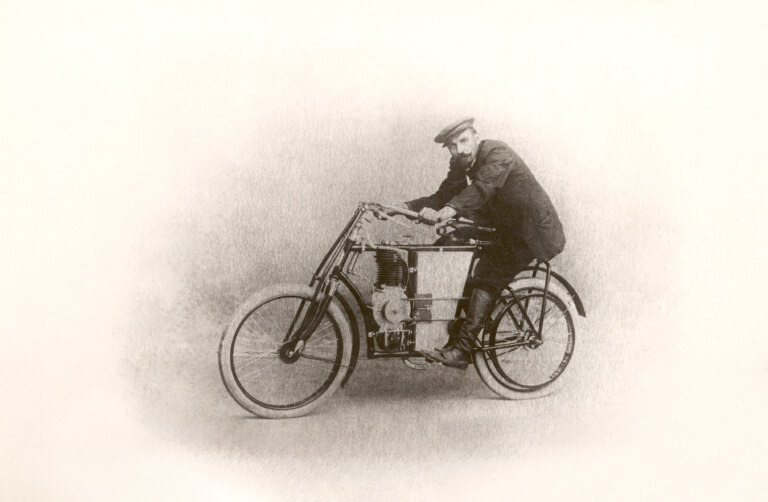
› The history of Škoda Motorsport began 125 years ago this year, back in 1901 with the L&K Slavia Type B motorcycle
› The brand entered automobile racing in 1906, shortly after it began manufacturing cars
› Anniversary celebrations include a themed exhibition at the Škoda Museum, special equipment for the Fabia RS Rally2 competition car and the limited-production Fabia Motorsport Edition
Mladá Boleslav, 12 October 2026 – This year, Škoda Auto is celebrating 125 years in motorsport. The company began competing on racing circuits and courses at home and abroad shortly after it was founded and quickly achieved notable success. Škoda Motorsport’s history spans achievements in motorcycle racing, endurance events, circuit racing, and rallying.
Motorsport has long been a proving ground for technical expertise and vehicle endurance and reliability. It also supports the development of technologies and the testing of components, with the resulting solutions often finding their way into the production vehicles. Little wonder, then, that Laurin & Klement motorcycles began racing just a few years after the company was founded.
Václav Laurin and Václav Klement founded their bicycle manufacturing company in 1895. In 1901, one of their motorcycles entered its first motor race: the Laurin & Klement Slavia Type B took part in the long-distance Paris–Berlin race. Narcis Podsedníček was the only motorcycle rider to complete the 1,196-kilometre, three-day event. However, his arrival at the finish after dark was not properly recorded, and he was not classified in the official results.
Undeterred by the lack of recognition, factory foreman and racer Narcis Podsedníček went on to take one of the top two places in the Neuwaldegg–Exelberg hill climb on 11 May 1902, alongside Václav Laurin. In June, Laurin & Klement motorcycles finished third and fourth in the four-day, 1,750-kilometre Paris–Vienna race – an exceptional achievement, as no other motorcycles reached the finish.
Laurin & Klement continued to enjoy success, both major and minor, on two wheels until 1905, when it ended bicycle production and began manufacturing cars. Its cars soon proved competitive too: in 1906, L&K cars finished first, second, and fourth in their category at the Schottwien–Semmering hill climb in Austria.
In March 1908, at the inaugural Zbraslav–Jíloviště hill climb, the brand took six first places, five second places, and one third place across various categories. That same year, a 16 hp L&K FC won its class in the 686-kilometre St Petersburg–Moscow race, beating rival cars with outputs of up to 100 hp. The FCS later set a class speed record for the brand, reaching 118.72 km/h on the world’s first purpose-built motor racing circuit.
The long run of success was interrupted only in the mid-1920s, when the Mladá Boleslav car manufacturer had to suspend its motorsport activities. The company’s overall situation led to its merger with the Škoda engineering group in Plzeň in 1925. The brand soon returned to motorsport, however, with Škoda cars once again lining up for events at home and abroad. In June 1933, for example, they finished second, third, and fourth in their category in the inaugural 1000 Miles of Czechoslovakia.
Škoda also enjoyed success at the Monte Carlo Rally, where the Popular roadster finished second in the up-to-1,500 cc class in January 1936. The Rapid coupé followed with a successful showing in 1937. These and subsequent achievements are recalled by the Monte Carlo designation, which Škoda now uses for sporty versions of its smaller models.
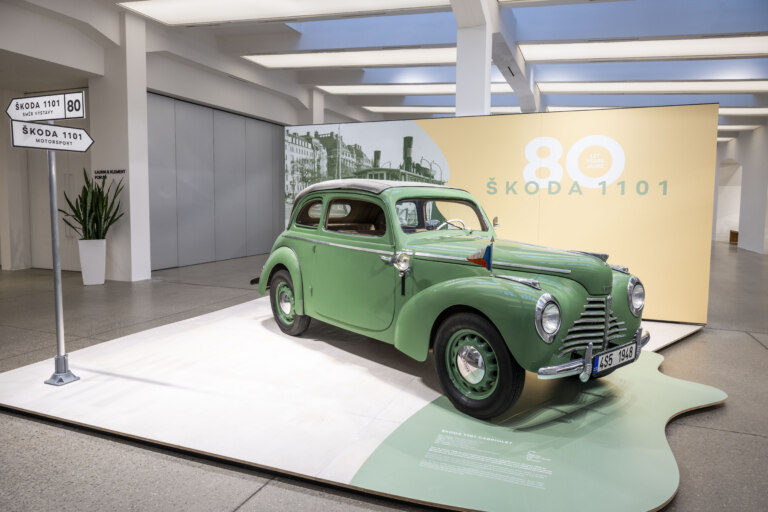
After the Second World War, three Škoda 1101 cars dominated their class in the 24-hour race at Spa in Belgium. This period also saw the development of Sport and Supersport circuit-racing specials, derived from the Škoda 1101 and fitted with supercharged engines. The Škoda 1100 OHC first appeared as a roadster in 1957, with the coupé version introduced in 1959. Then came the Škoda Octavia, which enjoyed considerable success in motorsport, including three consecutive class victories at the Monte Carlo Rally from 1961 to 1963.
In 1964, the Škoda 1000 MB took to the race track with a new rear-engined layout and a monocoque body. It was followed by the Škoda 110 L Rallye, the Škoda 120 S, and, most notably, the legendary Škoda 130 RS coupé. Nicknamed the “Porsche of the East”, the 130 RS repeatedly dominated its class, including at the Monte Carlo Rally in 1977 and the Acropolis Rally in 1978, 1979, and 1981. It also secured overall victory in the 1981 European Touring Car Championship manufacturers’ standings.
The modern era of Škoda’s involvement in motorsport began in the 1989 season with the Favorit hatchback competing at Finland’s 1000 Lakes Rally. Škoda then competed with the Felicia and Octavia Kit Car before developing the Octavia WRC for the newly introduced WRC category in 1999. The Fabia WRC replaced the Octavia as the brand’s top-level rally car from 2003 to 2007.
The Fabia Super 2000 marked a move into a different competition category. The Škoda works crew of Jan Kopecký and Pavel Dresler won back-to-back championship titles with the car – first in the ERC drivers’ standings and then in the APRC. Between 2009 and 2014, drivers competing in Škoda Fabia Super 2000 cars won a total of 50 national and international titles.
In 2015, the Škoda Fabia R5 became the manufacturer’s flagship rally car, later giving way to the Fabia Rally2. Between 2015 and 2019, Škoda Motorsport works crews won five world championship titles in the manufacturers’ standings, while customer teams added another five FIA titles and 23 national championship victories. Driving the Fabia Rally2 evo, introduced in 2019, Kalle Rovanperä became the youngest world champion in history.
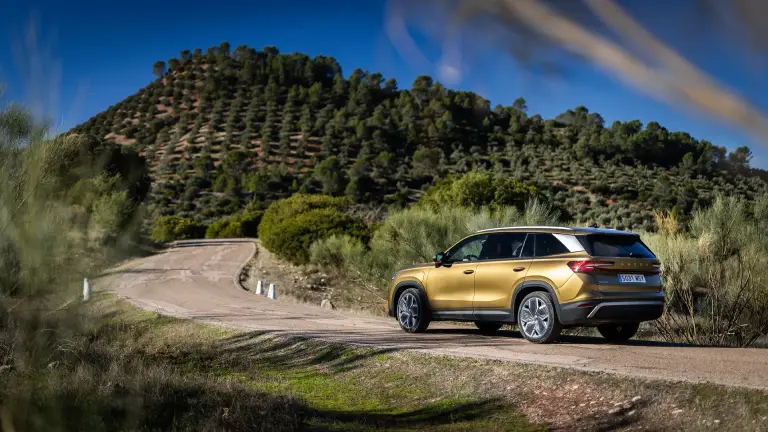
The Fabia RS Rally2 is Škoda Motorsport’s current competition car. In its first full season in 2023, Andreas Mikkelsen claimed the WRC2 championship title behind its wheel. A few days ago, Estonian driver Robert Virves secured this year’s WRC2 title in a Fabia RS Rally2, with rounds to spare (subject to FIA approval). Since its debut, the Fabia RS Rally2 has built on its predecessors’ achievements. To mark Škoda Motorsport’s 125th anniversary, cars delivered to customers this year come with additional special features.
The Enyaq RS Race study offers a glimpse of the future of Škoda competition cars. It explores the potential of electric racing cars and of lightweight materials that could be used in production vehicles. To celebrate 125 years in motorsport, Škoda Auto has also created a limited-edition Fabia – the Motorsport Edition. Based on the special Fabia 130 model, it combines a 1.5 TSI engine producing 130 kW with sporty styling inspired by the Fabia RS Rally2 competition car.
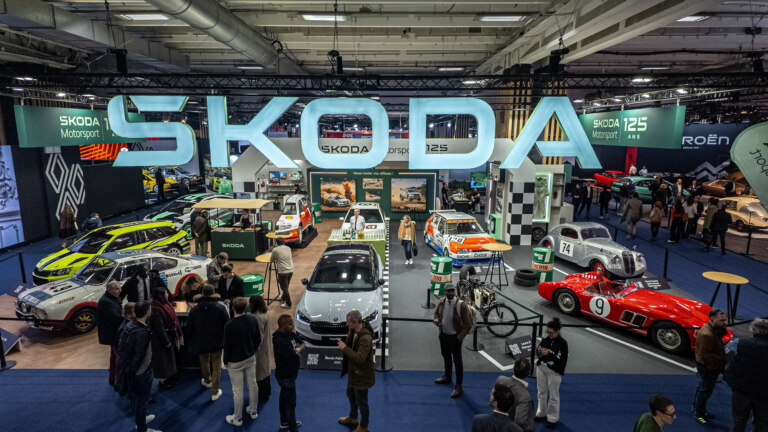
The anniversary programme also included a special edition of the Sosnová Classic motorsport event. The Sosnová circuit near Česká Lípa welcomed numerous renowned Škoda works drivers from different eras, all of whom had achieved outstanding results in the brand’s competition cars. The event also featured an exhibition of more than ten iconic competition cars alongside their modern successors.
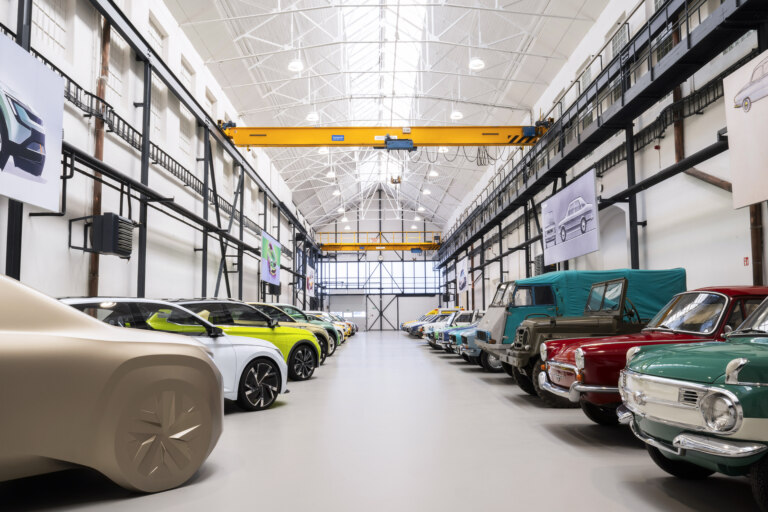
At the Škoda Museum, a themed exhibition tracing 125 years of Škoda Motorsport runs until January 2027. Visitors can see a range of competition cars and explore the different eras of Škoda’s motorsport history. Almost 20 vehicles are on display in the Depo Motorsport hall, while other areas feature a drivers’ gallery, a display case containing valuable trophies, and an exhibition of drivers’ safety equipment.
 |
Prozkoumejte kanál 'What's up, Škoda?': go.skoda.eu/whatsapp |


Vítězslav Kodym
Head of Product Communications
+420 604 292 131
vitezslav.kodym@skoda-auto.cz
Kateřina Boukalová
Spokesperson Product Communications
+420 734 299 812
katerina.boukalova@skoda-auto.cz