› The production of Škoda’s first post-war model began 80 years ago
› More than 70,000 units were built between 1946 and 1952
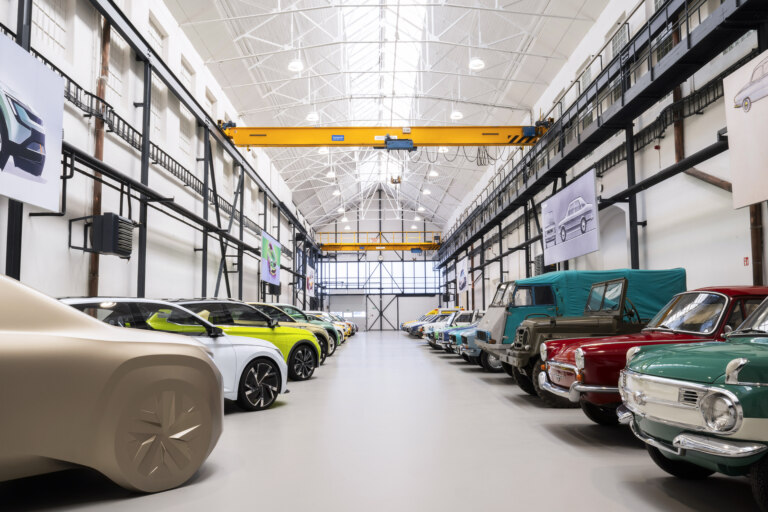
› An exhibition at the Škoda Museum commemorated the ‘Tudor’s 80th anniversary
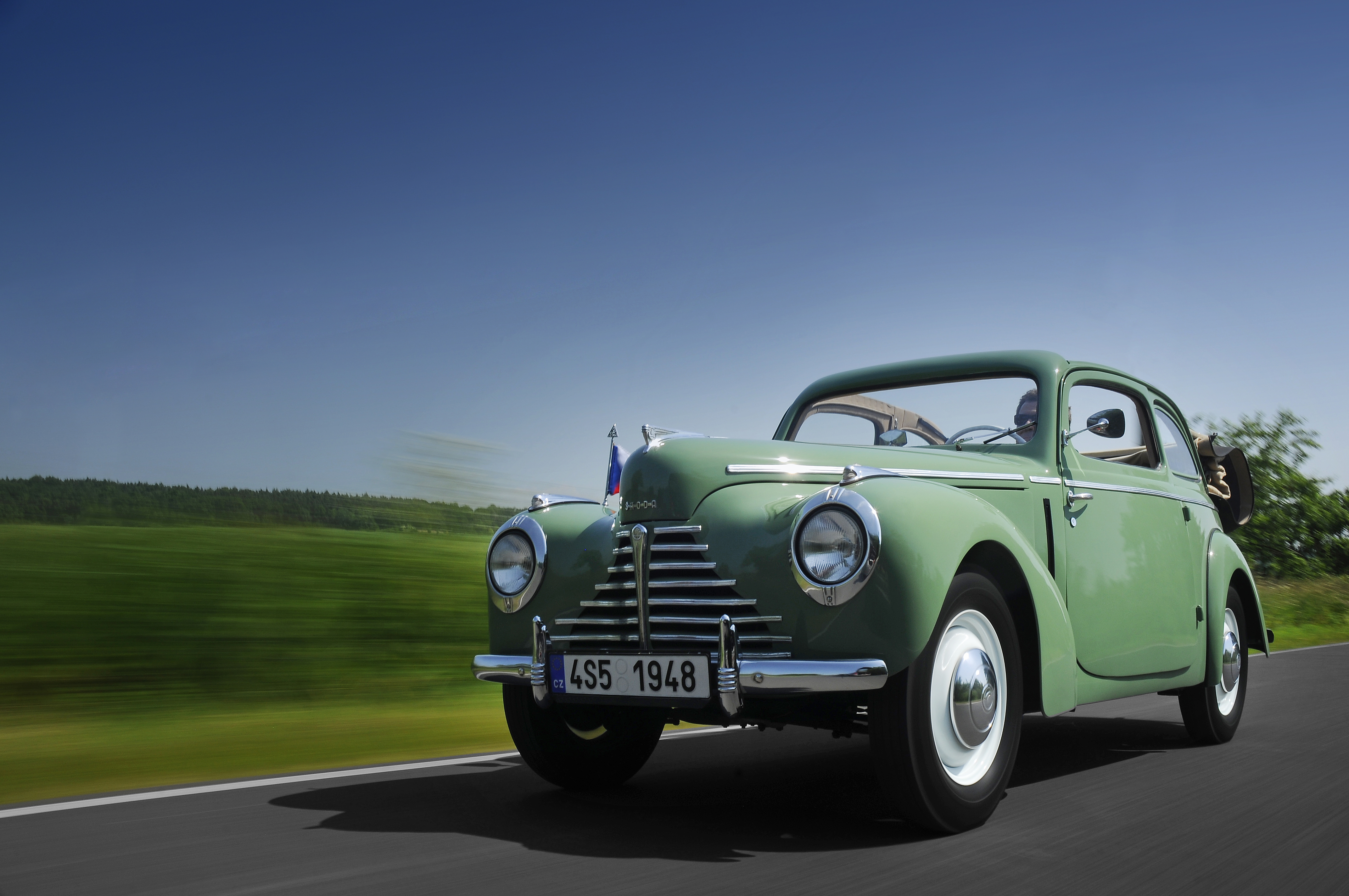
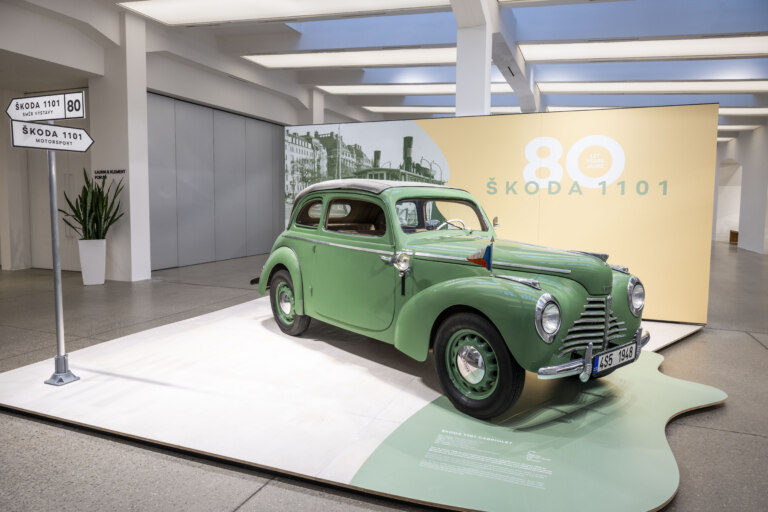
Mladá Boleslav, 12 October 2026 – Škoda celebrates a special anniversary this year. Production of its first post-war model began 80 years ago. The Škoda 1101 ‘Tudor’, the first production example of which was completed on 6 May 1946, marked the start of a new stage in the Czech automobile manufacturer’s development. An exhibition at the Škoda Museum in Mladá Boleslav commemorated the successful model earlier this year.
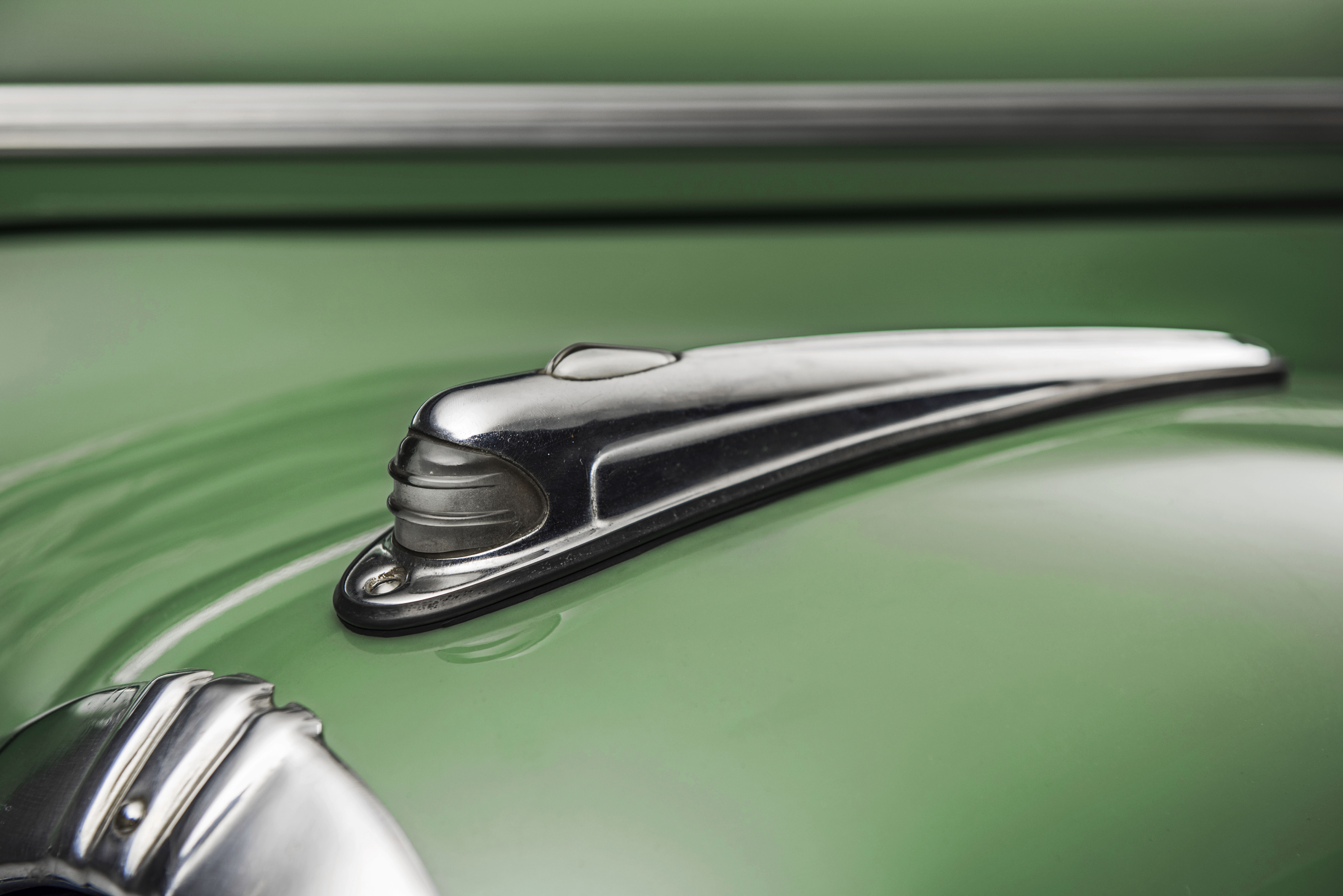
The model series Škoda 1101 featured an attractive design and modern technical concept for the time. It included a bifurcated central tube frame, independent suspension, powerful hydraulic brakes and a powerful and economical four-cylinder engine with a displacement of 1,089 cm3 23.5 kW (32 hp).
From 1946, the closed two-door formed the basis of the broad model range. It was actually the English adjective ‘two-door’ from which the popular name ‘Tudor’ arose. Initially, a four-door saloon was added to meet the needs of customers at home and abroad. This would later be used by the Czechoslovak ministries and the diplomatic corps as a service vehicle, and was the most frequently built variant from 1949.
The open-top model range included the popular ‘Tudor’ convertibles with the doors set in a rigid frame and the folding part of the roof made of material. Then there were the elegant Roadsters. Offering high everyday practicality, there was the van with two side windows and the estate version that was known as a station wagon, marked ‘STW’. At that time, they already had a folding rear seat, which increased size of the loading space to 1490 mm in length and 1380 mm in width. A special chapter of the ‘Tudor’ story was written by the Škoda 1101 VO (vojenský otevřený, military model – open) and 1101 P (pohotovostní, standby/emergency) with its jeep body. These versions were used by the armed forces of several countries, including Portugal, Saudi Arabia and Egypt.
The production of the Škoda model series 1101 (following modernization, known as 1102) was carried out at a state-owned company, known officially as AZNP (Automobilové závody, národní podnik English: Automobile Plants, National Corporation). The chassis with complete technology emerged in Mladá Boleslav; the body was constructed at the newly integrated plants of Kvasiny and Vrchlabí – today, these three locations comprise Škoda’s production network in the Czech Republic. When the model was first launched in May 1946, the Czech market price for a Škoda 1101 was 67,700 crowns, and due to the difficult economic situation of the time, customers even required a ration coupon.
Between 1946 and 1952, 66,904 Škoda ‘Tudor’ models were constructed for civilian use, and 4237 special versions were built especially for the armed forces. Almost two thirds of all Škoda 1101/1102 ever produced were exported – in 1947 to 36 countries around the world, four years later that figure had risen to 76. Among the most important markets were Poland, the Netherlands, Belgium and the Federal Republic of Germany. The model, however, was also firmly established in Australia, Brazil, India, in the Union of South Africa and Canada.
The Škoda 1101/1102 also scored major successes in motorsport. In 1948 Three ‘Tudor’ in the <1100 cm3 class were victorious in the 24-hour race in Spa, Belgium. The special edition Škoda Sport and Supersport had uprated engines in different versions, including a version with 1490 cm3, which featured a Roots blower, and reached more than 200 km/h with its 132 kW (180 hp) output. Its success in motorsport proved to be a great advertisement for the Škoda 1101/1102 on export markets. At the same time, this allowed for production to be continuously improved – even the supercharged cars used many of the same parts as the series produced models.
The Škoda 1101/1102 takes a place of honour in the long history of the brand from Mladá Boleslav. The following model series successfully continued this technical concept until 1964 when production began on a completely new generation of vehicles – the Škoda 1000 MB with rear engine and self-supporting all-metal body.
 |
Explore the ‘What’s up, Škoda?’ channel: go.skoda.eu/whatsapp |


Vítězslav Kodym
Head of Product Communications
+420 604 292 131
vitezslav.kodym@skoda-auto.cz
Kateřina Boukalová
Spokesperson Product Communications
+420 734 299 812
katerina.boukalova@skoda-auto.cz