Virtual Homologation of Driver Assistance Systems: A Škoda Innovation
Computer simulations are now routinely used by carmakers in vehicle development. However, Škoda Auto has developed a unique solution in the field of driver assistance systems that also helps with vehicle approval for road use, known as homologation. The brand has already applied for a patent in connection with this innovation.
16. 11. 2026 Škoda WorldA First Step
When developing the system, specialists from Škoda Auto and its subsidiary Digiteq Automotive drew on their previous experience with the company's internal virtual testing of camera systems. Škoda uses this approach to test, for example, its High Beam Assist, traffic sign recognition, lane keeping and other ADAS functions (Advanced Driver Assistance Systems). Intelligent Speed Assistance proved to be an ideal candidate for virtualising a significant part of the homologation process. Recent developments in European legislation have also contributed to this, as they increasingly allow physical tests to be replaced by virtual ones.
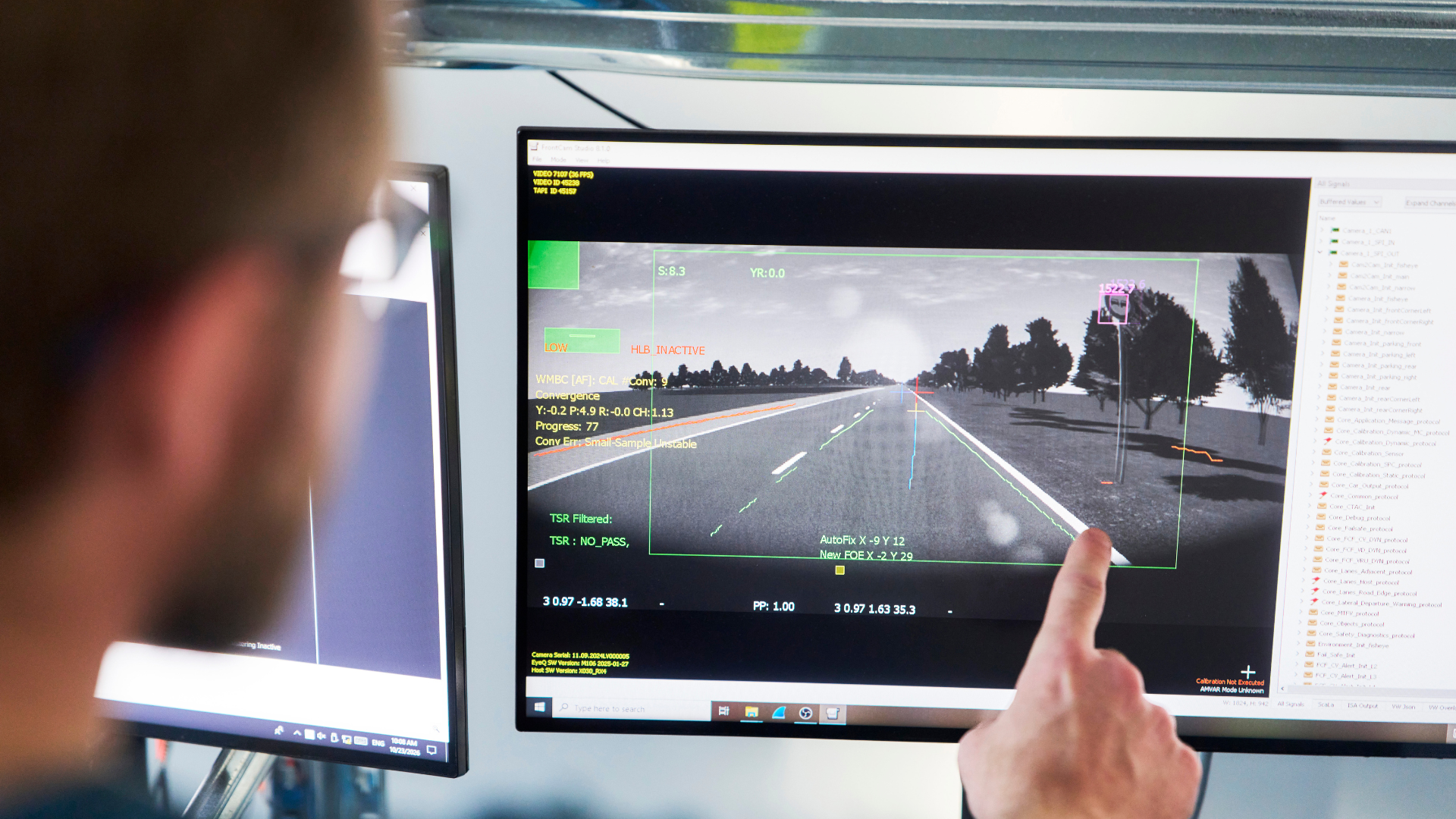 An example of how the camera recognizes individual objects in an image. Note, for example, the detection of horizontal markings or a vertical traffic sign.
Guarantee of Reliability
For ISA homologation to be carried out using virtual testing, a special test rig had to be developed. It was also necessary to ensure that the simulations worked reliably and that their results corresponded with sufficient accuracy to how the assistance system would behave in real-world conditions. The independent technical testing and certification organisation TÜV SÜD Czech played an important role in assessing the reliability of virtual testing.
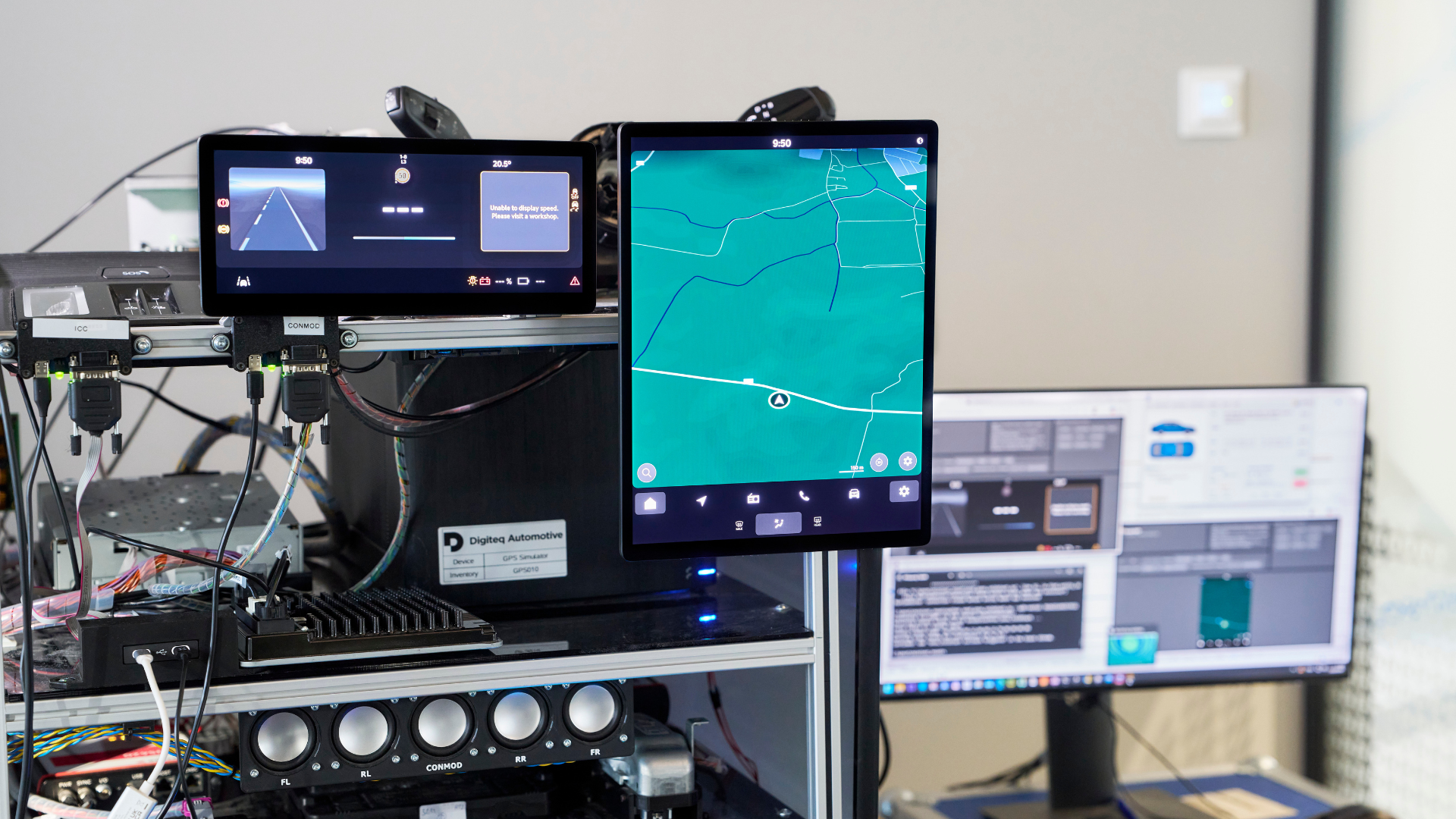
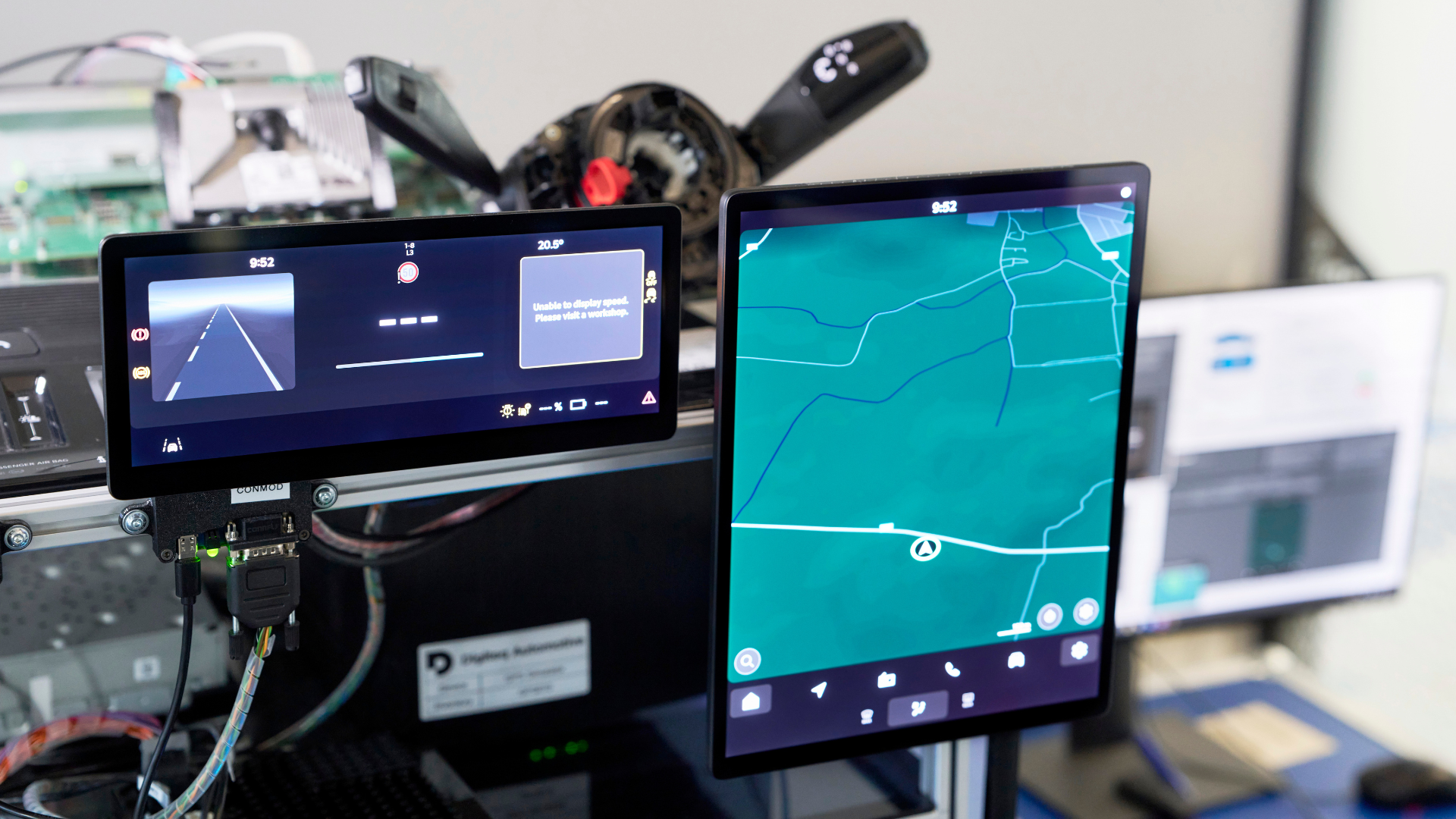
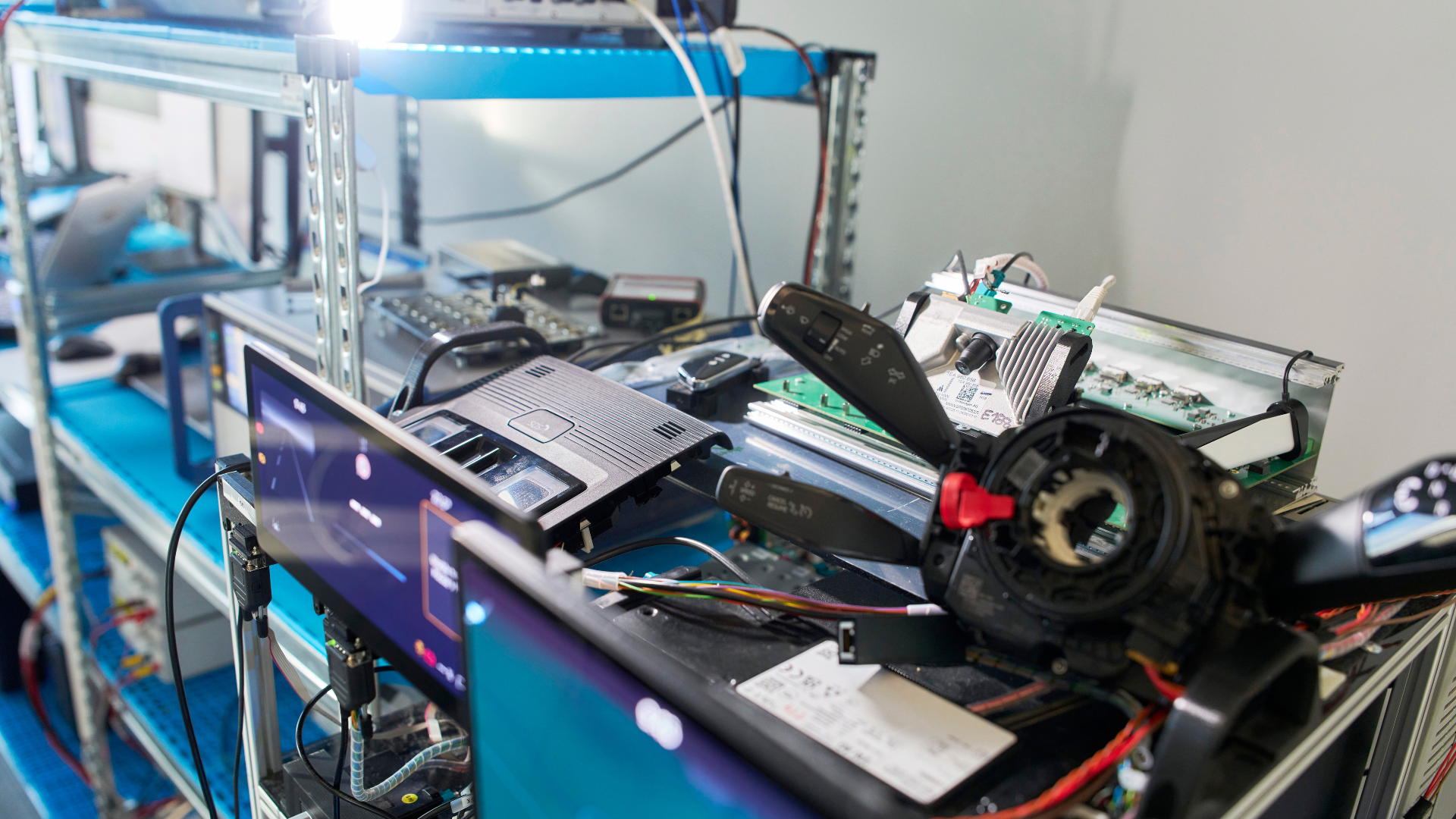 A test setup for virtual type approval (known as HIL) consists of specific components used in the vehicle and additional computer equipment.
"We helped translate the requirements for simulation reliability into the design of the entire simulation environment. This involved not only technical aspects, but above all determining what requirements the environment and the related processes had to meet so that their results could be used as reliable evidence for homologation," says Vladislav Kocián, a representative of TÜV SÜD. "We brought the perspective of an independent authority into the development process, as such an authority needs clear and verifiable evidence of the reliability of the results," Kocián explains. TÜV SÜD also monitored, for example, the transparency of the development of the simulation environment itself, as well as a number of other aspects related to virtual testing process.
The result is not only a dedicated HIL (hardware-in-the-loop) test rig, but also documentation of approximately 400 pages. This describes in detail how the equipment meets the individual requirements for the so-called credibility of virtual test results and how the individual steps of the homologation process are carried out. This documentation forms the key basis for the patent application.
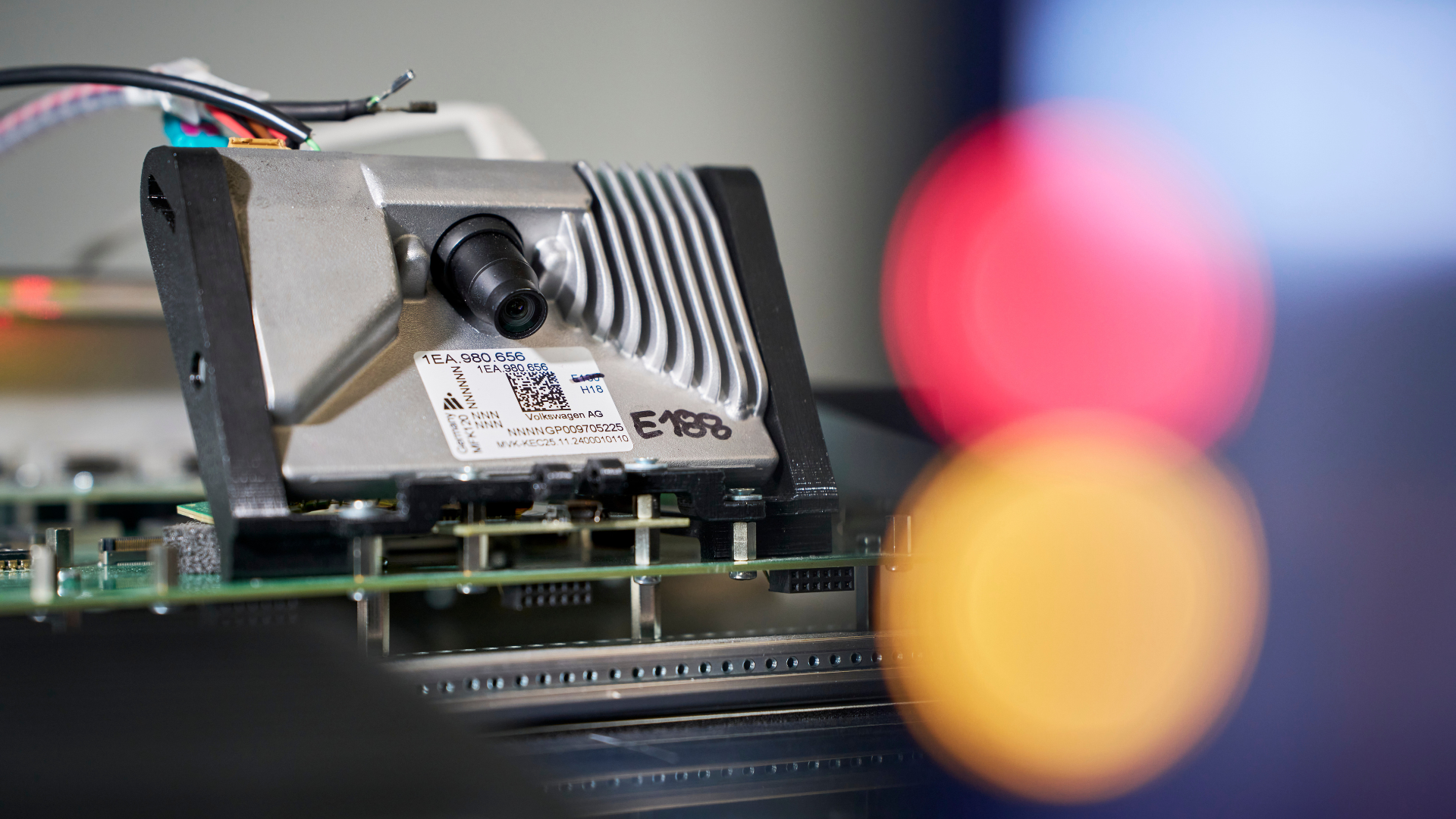 During testing, the solution uses the camera exactly as it is installed in the production vehicle.
Just Like in the Real World
The test rig includes a camera for traffic sign recognition, a GPS simulator, an antenna and an on-board infotainment control unit. Naturally, it also includes a computer that generates a virtual environment for the system under test, along with other vehicle equipment. "For example, we have a key reader here, because we found that physically implementing it is easier than simulating the presence of the key virtually," says Jakub Prchal from Digiteq Automotive, whose team worked on the solution.
According to him, one particularly interesting element is the GPS simulator used in combination with the vehicle's standard antenna. The antenna is shielded from publicly available GPS signals, and the test rig sends it data about the simulated position on the track, generated by the GPS simulator. "This separation of the simulations ensures that the camera system responsible for recognising speed limits behaves as it would in real-world conditions," says Prchal. The routes used for the simulations are virtualised versions of real roads. This makes it possible to verify that the results correspond to those of real-world tests. At the same time, it is the only way to ensure that the ISA system can function in the laboratory at all, as it would not work without map data.
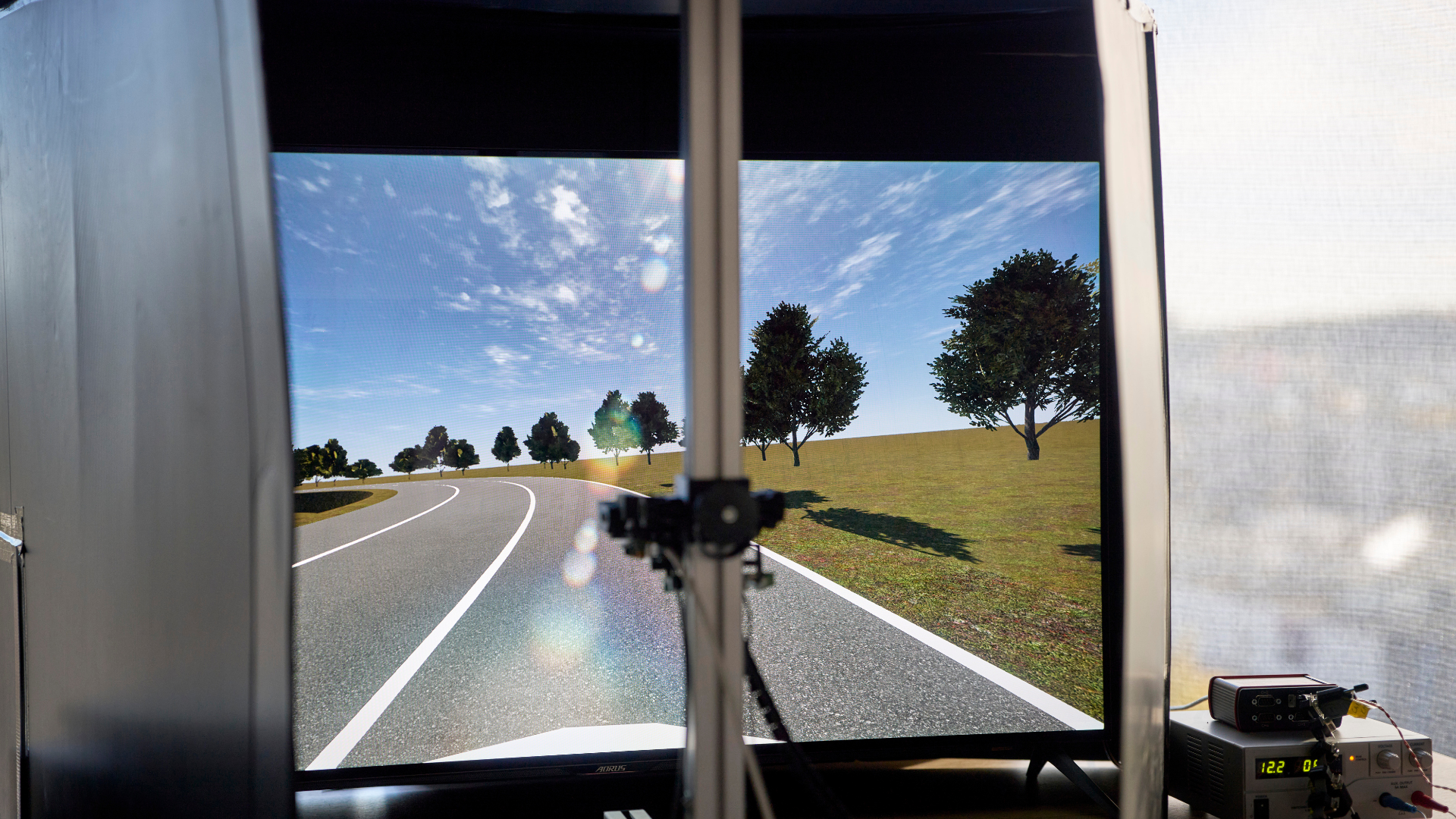 The team can also perform simpler tests by projecting the camera's image onto a screen in front of it. However, this procedure is not sufficient for type-approval tests.
The computer does not project image data onto a display for the camera to capture (although this method can be used for simpler tests). Instead, it sends the data in a special graphics format directly to the camera chip. "This ensures that the camera reads the environment as if it were real," says Prchal, explaining that projecting an image onto a display could cause unwanted deviations from real-world conditions.
Incidentally, the virtual tests also run in real time, which is another requirement for ensuring that they correspond to reality. "They cannot be accelerated. The standard camera used in production vehicles would literally become confused," explains Prchal. Even so, the solution saves time, as tests can also be carried out outside normal working hours or over the weekend, and the time-consuming preparation of the vehicle is no longer necessary. There is also no need to find a driver. The first vehicles to use the new technology for ISA homologation in practice were the Peaq, Enyaq and Elroq electric vehicles in their current model-year versions.
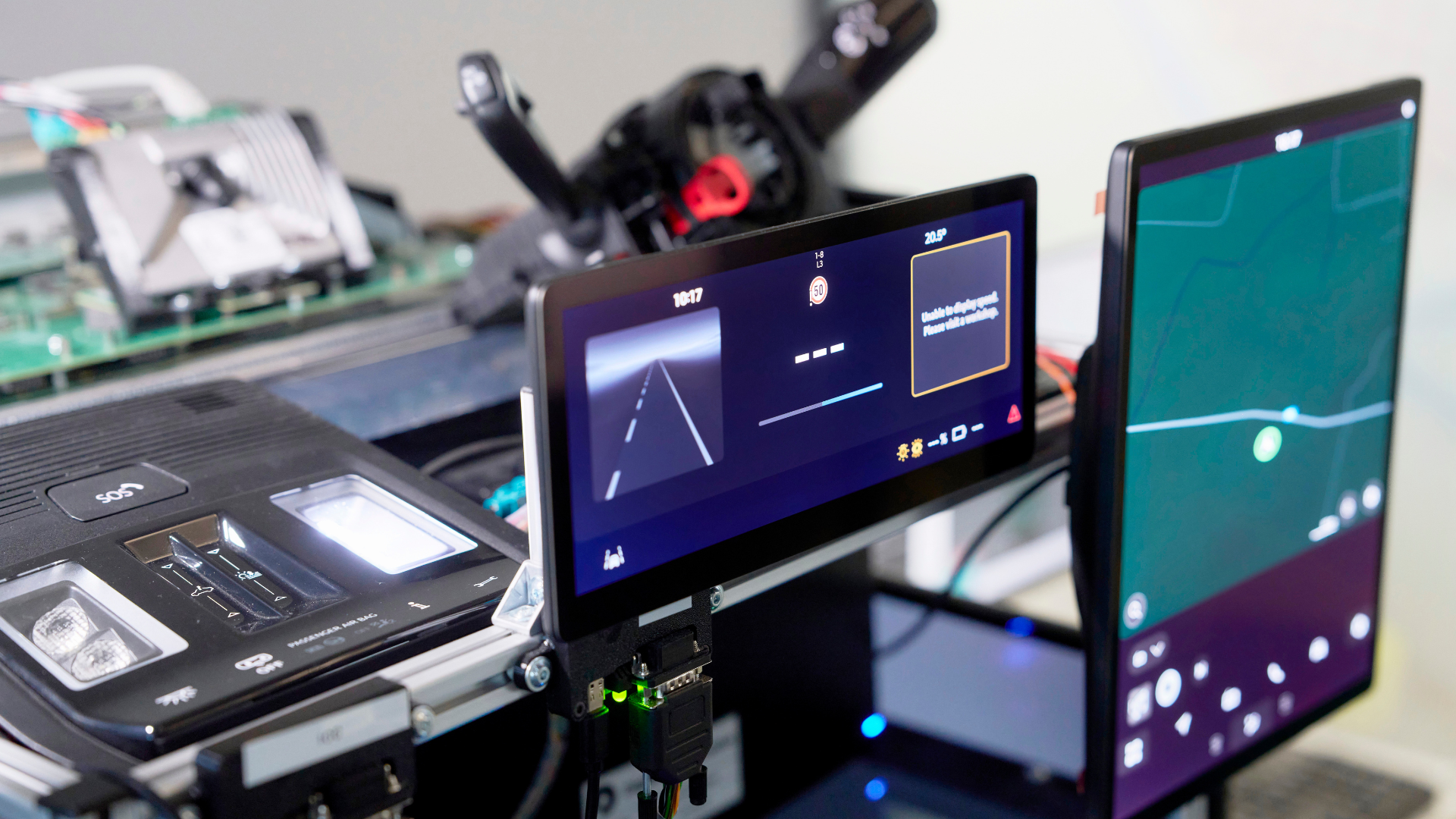 The test setup also includes the instrument panel, the infotainment display, and the headliner, which incorporates certain functions that would otherwise be difficult to simulate during testing.
Be the first
to get the latest stories
Explore more
Media Box
6 images
Show more
Show less