From your hands to the road: How car steering works
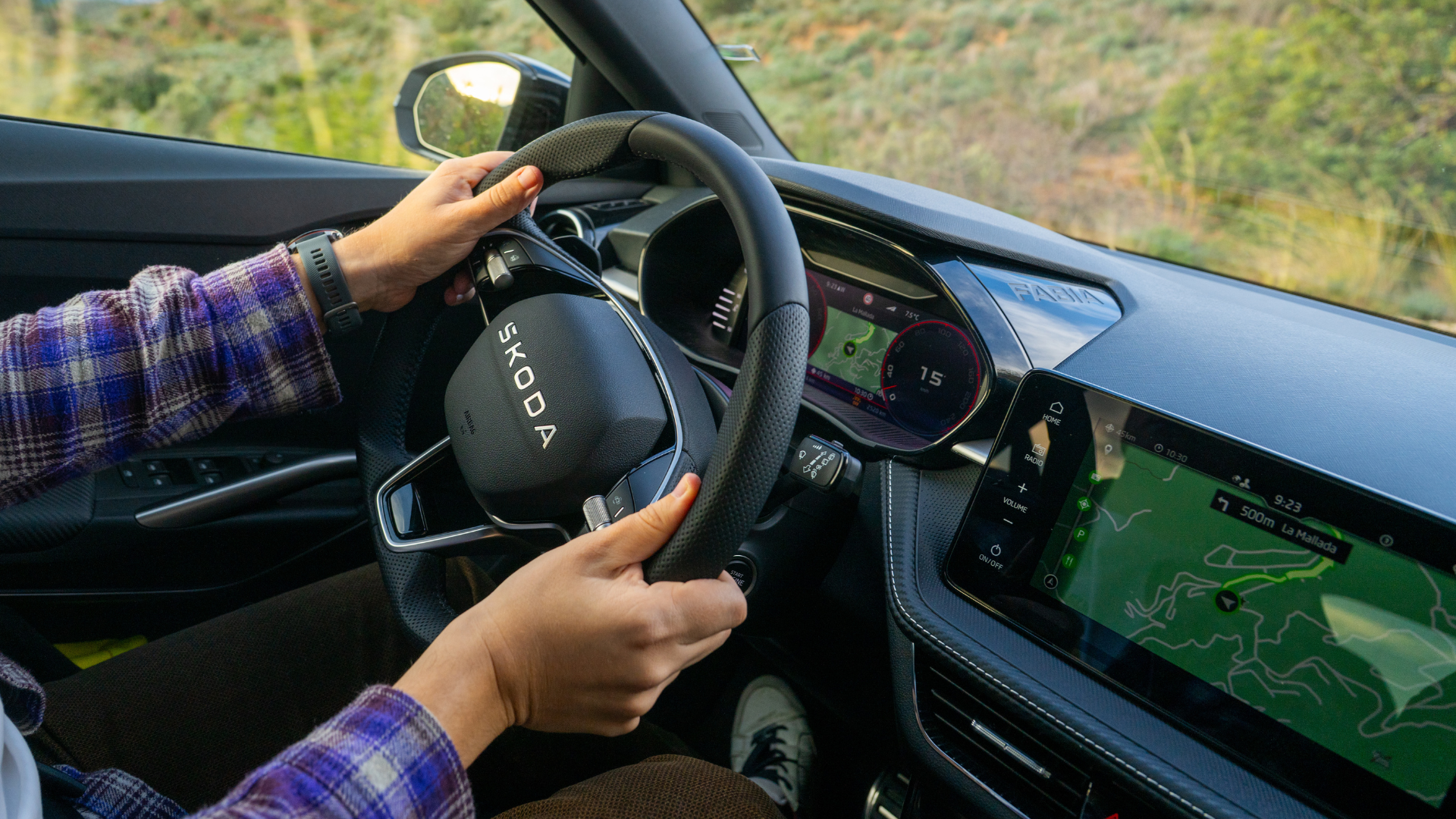
To navigate a corner, the driver turns the steering wheel in the required direction, which correspondingly turns the front wheels. Every child understands this simple principle. But what exactly happens between the steering wheel and the wheels, and in what ways can steering be further improved? Take a peek behind the scenes with the experts from Škoda Auto.
30. 4. 2026 Škoda World Innovation & technology Technology“Steering is a set of mechanical vehicle components that has been part of the automobile from the very beginning. Without it, vehicles would only travel forwards and backwards,” says David Štěpán from steering development at Škoda Auto, introducing the topic. Let us briefly revisit the history. Early automobiles often did not even have a steering wheel, with direction instead controlled by a tiller. The widespread adoption of steering wheels came at the end of the 19th century, and the first cars built in Mladá Boleslav also relied on them.
In the first half of the 20th century, two systems in particular dominated – worm steering and rack-and-pinion steering. Turning demanded significant effort from drivers, especially at low speeds when the steering wheel was heavy to operate, making vehicle control far from effortless. Perhaps you know the old joke that after parking a classic car, there is no need to go to the gym anymore. So how did we arrive at a point where a steering wheel can now be turned with one finger and cars can park themselves?
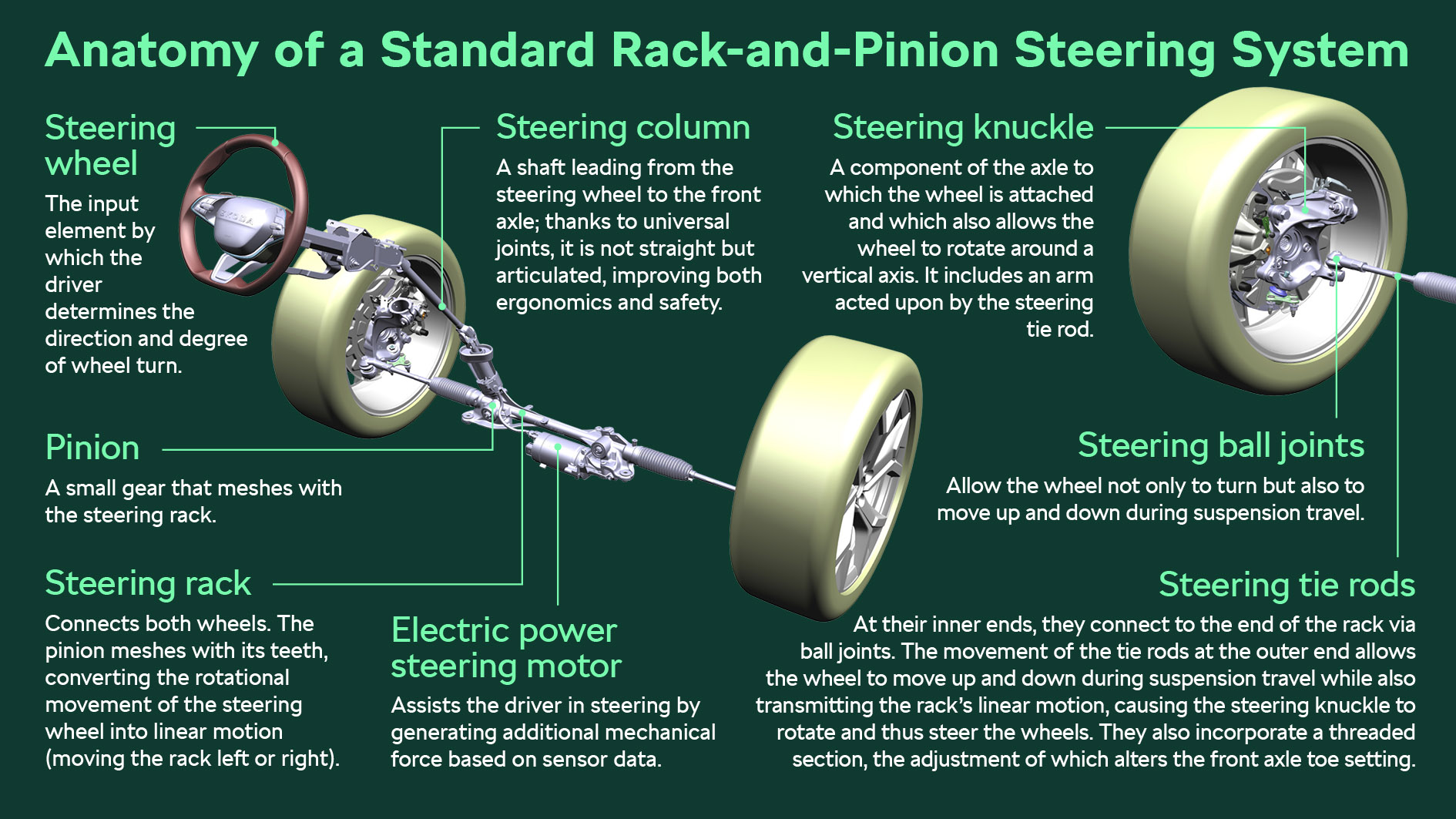
Rack-and-pinion steering remains in use today and is fitted to all current Škoda Auto models. “The mechanical principle of rack-and-pinion steering has essentially been known forever. Its advantage is high precision combined with simplicity. Thanks to that, and continuous development, it remains in use,” David Štěpán explains.
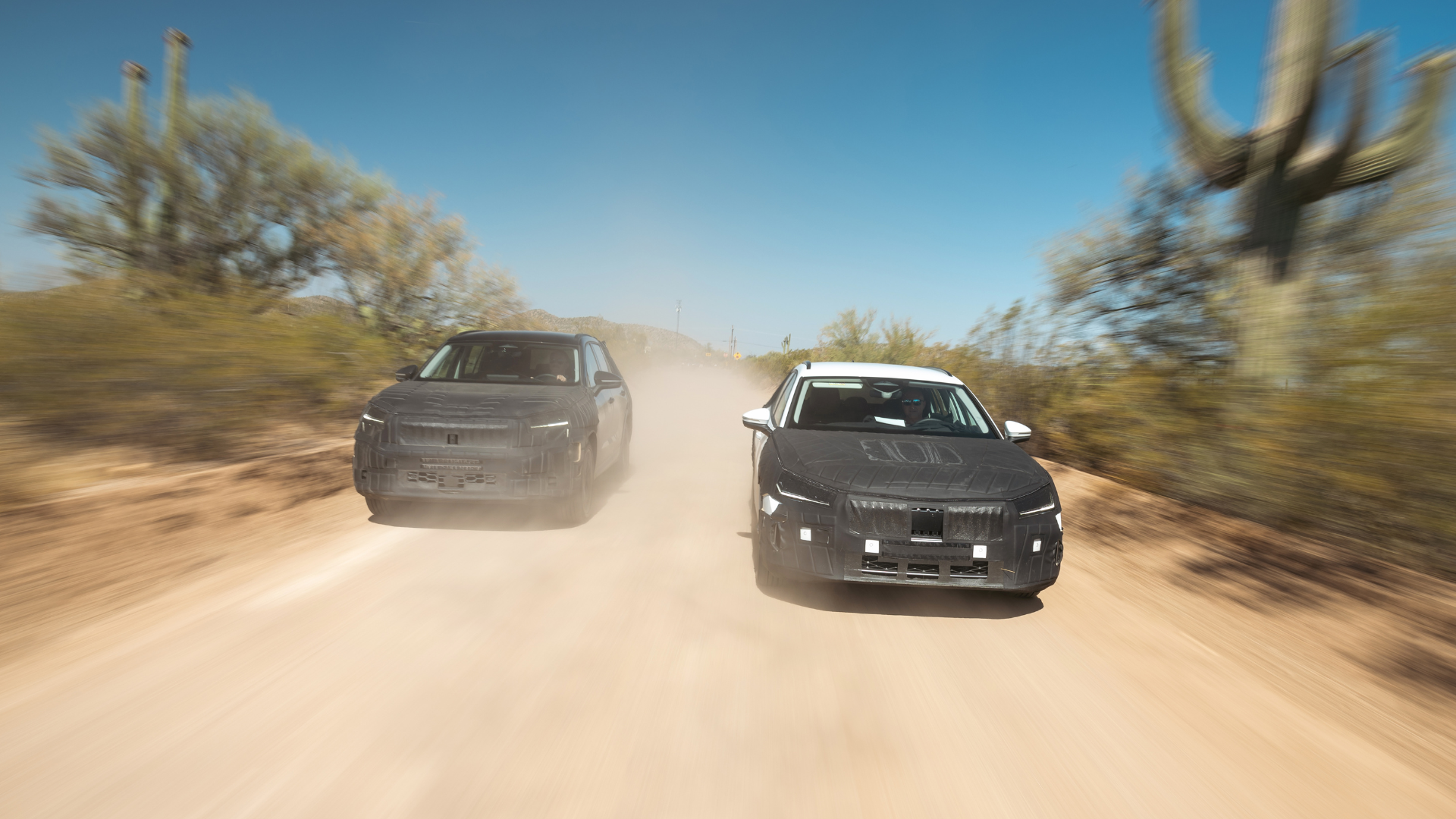 Management development doesn't just happen behind a desk, it also requires working directly in the field
A major revolution in driving comfort came with the arrival of hydraulic power steering. Suddenly the steering wheel could be turned lightly even when stationary, without requiring such physical effort. The next evolution was electro-hydraulic steering, which adjusts power steering according to vehicle speed.
Steering development also brought fuel savings
With the new millennium came a revolution – electromechanical power steering, replacing hydraulics with an electric motor and now used in all current Škoda Auto models. Compared with hydraulic systems, these are less demanding in service and maintenance terms and, above all, significantly more reliable. Vehicles equipped with them also consume less fuel, because the former hydraulic pump ran continuously, whereas electromechanical steering has only minimal energy demand, for example when driving straight ahead.
For drivers, this system brings a range of advantages, such as even better and more sensitive variation of steering assistance according to different factors. The primary one is speed.
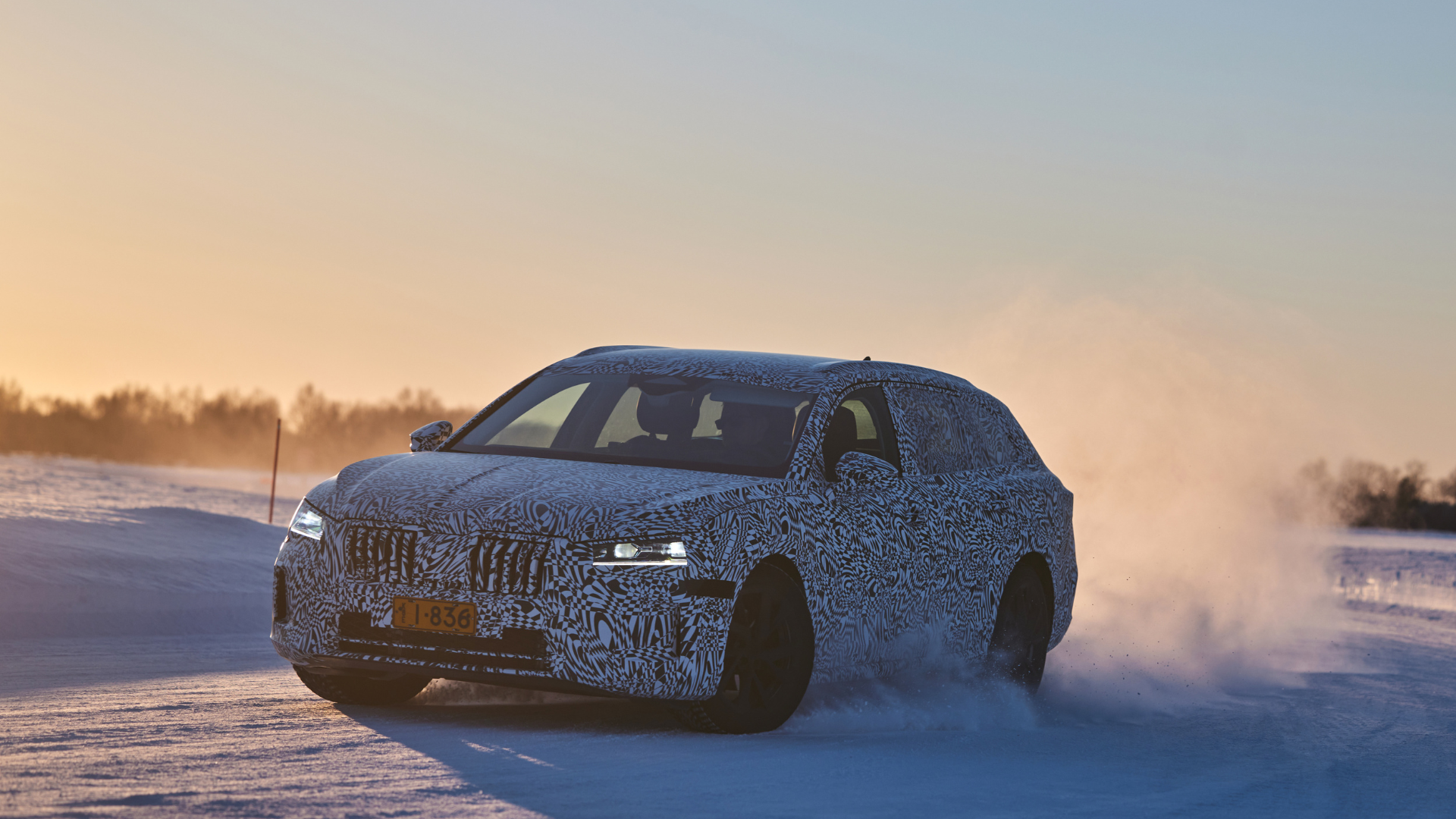 During development, Škoda vehicles are put through their paces even in the most demanding conditions
“Notice that during parking the steering wheel turns lightly. That is achieved through a higher level of assistance. On the motorway the opposite happens – the steering gains a firmer feel in the hands and precision around the straight-ahead position increases significantly. This ensures the driver has maximum feedback and can feel exactly what the car is doing, for example during lane changes,” explains Štěpán.
A special case is represented by the RS models, with sportier steering calibration, particularly in Sport driving mode, which creates an even more engaging driving experience. But how does the power steering know how much assistanceto apply at any given moment? Its calibration is adjusted within milliseconds using sensors, based on several factors: vehicle speed, steering wheel angle, and the level of input torque from the driver.
Progressive magic
Drivers with a sporting orientation especially appreciate the progressive steering function, available as an option on selected models and fitted as standard on RS versions. “It is something of a technical treat for us, and we are pleased to be able to offer it,” continues David Štěpán.
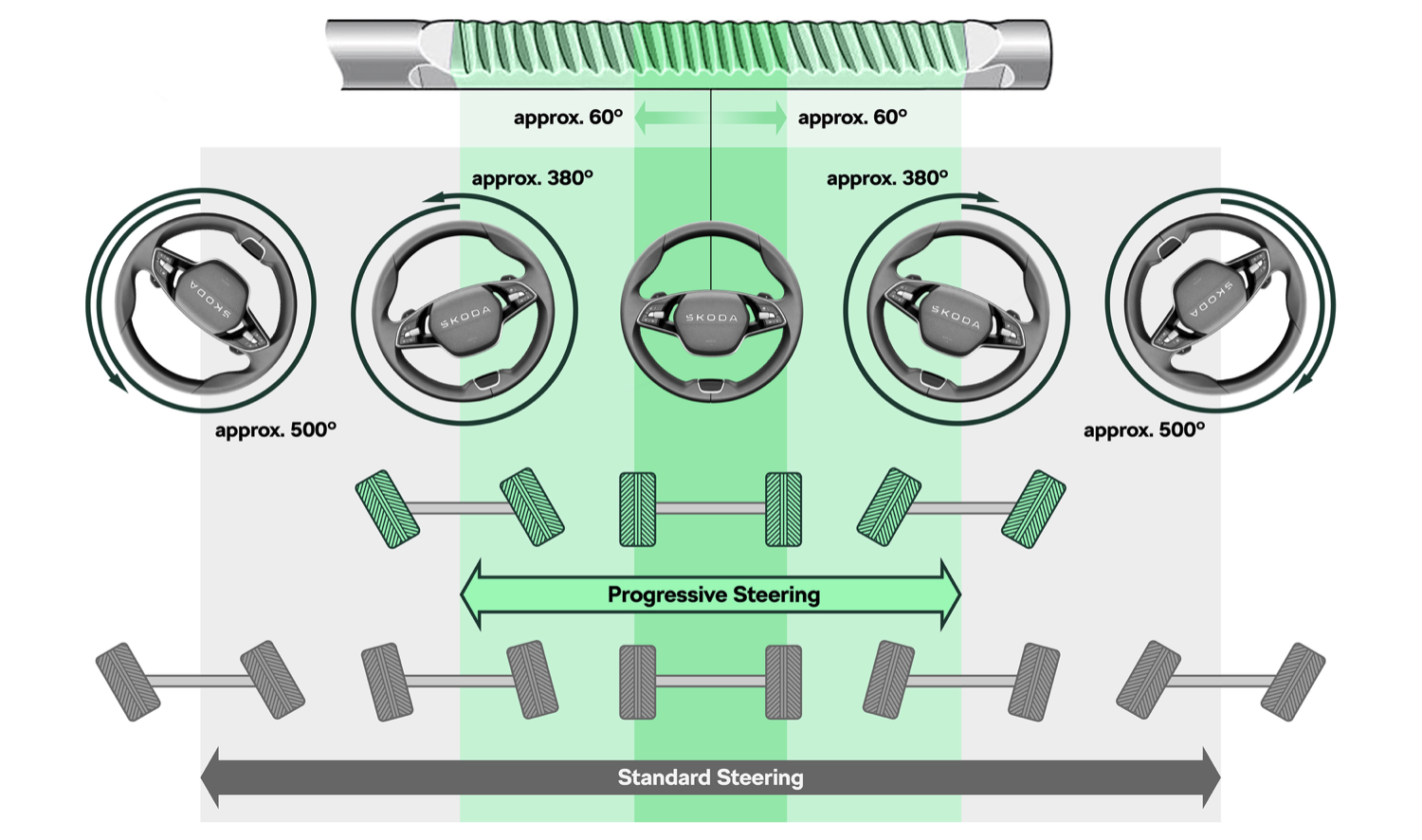 Progressive steering is available for the Octavia, Karoq, Superb, Kodiaq, Enyaq, and Elroq models.
The main difference compared with the standard solution is a steering rack with non-linear gearing. Around the steering wheel’s centre position, it differs little from the standard system, so the vehicle remains stable and precise during highway driving. In corners, however, the altered gearing makes it more agile, and on winding roads the driver does not need to turn the steering wheel as much. The maximum steering angle of the wheels remains the same; with progressive steering, you simply reach it more quickly. This is also useful when parking.
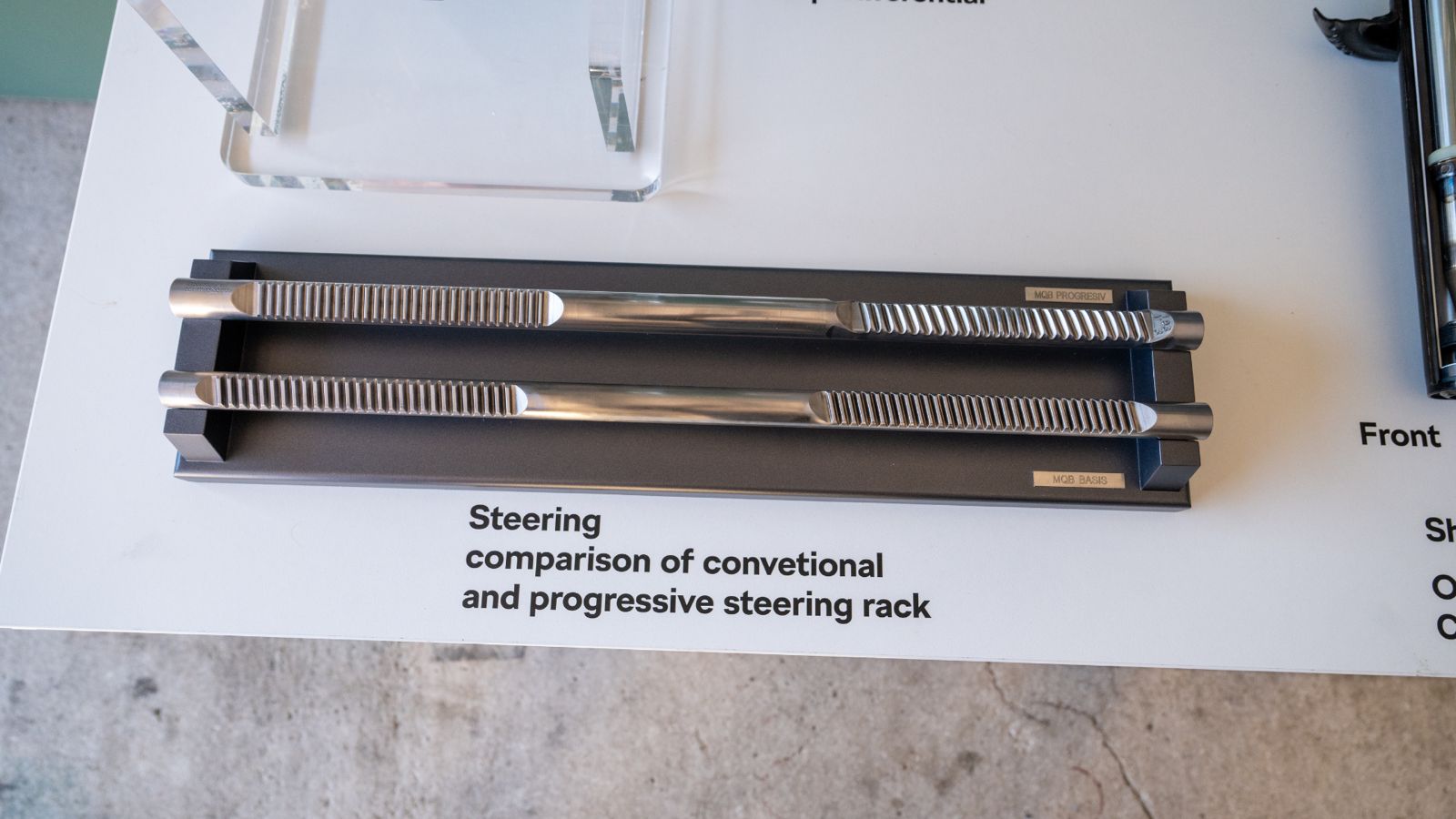 Here you can clearly see the difference between the standard (bottom) and progressive comb bar (top)
Be the first
to get the latest stories
Explore more
Media Box
6 images
Show more
Show less